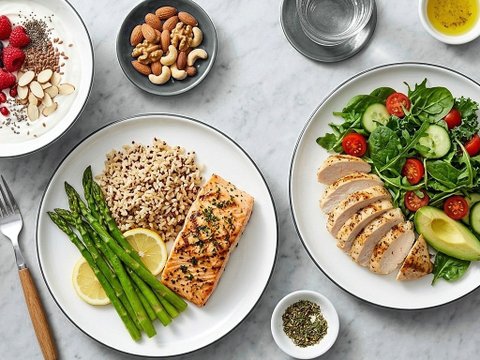
Whole-wheat spaghetti with fresh tomatoes, basil, garlic, and pecorino cheese
| Parameter | Value | Parameter | Value |
|---|---|---|---|
|
Preparation time
|
30 min |
Number of portions
|
2 |
|
Cena (Walmart)
|
$2.59 |
Cost of one portion
|
$1.30 |
|
Number of ingredients needed for preparation
|
9 |
Total calories
|
821 kcal |
|
Glycemic Index (GI)
|
IG 34 |
Glycemic Load (GL)
|
GL 10.0 |
Ingredients





Show Supermarket Price Comparison & Trend
Compare grocery chains & historical meal cost
Supermarket Chain Price Comparator — Whole-wheat spaghetti with fresh tomatoes, basil, garlic, and pecorino cheese
Compare estimated shopping costs across major supermarket chains, scale portions or weight, and calculate the route to your nearest store.
| Select supermarket chain | 1 portion | 1 portion | 2 portions | 4 portions | Find store on map & calculate route |
|---|---|---|---|---|---|
Aldi
Cheapest
|
1,18 € | 1,18 € | 2,36 € | 4,72 € | |
Lidl
+2%
|
1,20 € | 1,20 € | 2,40 € | 4,80 € | |
Tesco
+10%
|
1,30 € | 1,30 € | 2,60 € | 5,20 € | |
Carrefour
+14%
|
1,34 € | 1,34 € | 2,68 € | 5,36 € | |
SPAR
+17%
|
1,38 € | 1,38 € | 2,76 € | 5,52 € |
Recipe Summary & Culinary Insights
This sun-ripened Southern Italian classic pairs the nutty depth of wholegrain spaghetti cooked al dente with the vibrant freshness of firm, ripe tomatoes. By carefully removing the watery seed cores and warming the diced tomato flesh only briefly in extra-virgin olive oil infused with translucent sautéed onion and garlic, the tomatoes retain their delicate structure and sweet acidity without turning into a watery sauce. Tossed immediately with fine ribbons of aromatic fresh basil, freshly cracked black pepper, and sharp, salty grated Italian Pecorino sheep's milk cheese, every forkful delivers a refined contrast of tender pasta, structured warm tomatoes, and rich savory undertones.
From a clinical nutrition perspective, combining fiber-rich wholegrain durum wheat pasta with heart-healthy monounsaturated fats from extra-virgin olive oil and satisfying protein from aged cheese promotes steady, sustained energy release. The intact dietary fiber slows carbohydrate digestion, supporting stable post-meal blood glucose responses, prolonged satiety, and smooth digestive comfort. Furthermore, gently warming the tomatoes in olive oil enhances the bioavailability of antioxidant lycopene, while natural potassium and phytonutrients from garlic, onion, and fresh basil help nourish overall cardiovascular and metabolic vitality.
The culinary character of this dish relies on effortless precision, where warming the seeded tomato cubes just moments before draining the pasta preserves their bright texture and garden-fresh aroma. Fitting seamlessly into a Mediterranean, vegetarian, or blood-sugar-conscious lifestyle, this wholesome recipe makes an ideal centerpiece for a busy weekday lunch or a restorative evening meal. It proves that mindful, diabetic-friendly cooking can remain deeply rooted in authentic culinary tradition while nourishing the body with clean, balanced ingredients.
Recipe preparation steps
Culinary & Clinical Tip: Removing the watery seed cores from the ripe tomatoes and warming the 1 cm tomato cubes in the hot onion-garlic olive oil for just a few moments right before draining the pasta ensures the tomatoes become warm and fragrant without turning into a watery sauce. Pairing wholegrain durum wheat spaghetti with extra-virgin olive oil and aged sheep's milk Pecorino delivers a low glycemic index (GI 44), abundant potassium and bioavailable lycopene, and 21 g of satisfying protein per serving.
Show Full Micronutrient Profile, Allergens & Glucose Curve
Vitamins, minerals, amino acids & glycemic load simulation
Nutrients
Precise micro- and macronutrient analysis with daily reference intake (RDA) coverage (1 portion)

Whole-wheat spaghetti with fresh tomatoes, basil, garlic, and pecorino cheese
Argentina
Ash
Calcium
Carbohydrates
Chlor
Chlor
Cholesterol
Chromium
Cobalt
Copper
Fat
Fiber
Fluor
Fructose
Glucose
Glutamine
Insoluble fiber
Inulin
Iodine
Iron
Lutein
Lysine
Magnesium
Manganese
Molybdenum
Monounsaturated fatty acids
Omega 3
Omega 6
Phosphorus
Polyunsaturated fatty acids
Potassium
Protein
Salt
Saturated fatty acids
Selenium
Sodium
Soluble fiber
Starch
Sucrose
Sugar
Sulfur
Trans fatty acids
Vitamin A
Vitamin B1 (Thiamine)
Vitamin B2 (Riboflavin)
Vitamin B3 (Niacin)
Vitamin B5 (Pantothenic acid)
Vitamin B6 (Pyridoxine)
Vitamin B9 (Folic acid)
Vitamin C (Ascorbic acid)
Vitamin D
Vitamin E
Vitamin K
Water
Zeaxanthin
Zinc
| Name | Category | Amount | % RDA |
|---|---|---|---|
| Argentina | - | 0.01 g | - |
| Ash | - | 0.86 g | - |
| Calcium | - | 27.99 mg | 4% |
| Carbohydrates | - | 39.15 g | 15% |
| Chlor | - | 600 mg | - |
| Chlor | - | 8.25 mg | - |
| Cholesterol | - | 1.18 mg | - |
| Chromium | - | 0.01 µg | - |
| Cobalt | - | 0.01 µg | - |
| Copper | - | 0.14 mg | - |
| Fat | - | 19.98 g | 29% |
| Fiber | - | 9.62 g | 39% |
| Fluor | - | 0.01 mg | - |
| Fructose | - | 0.67 g | - |
| Glucose | - | 1 g | - |
| Glutamine | - | 0.03 g | - |
| Insoluble fiber | - | 3.06 g | - |
| Inulin | - | 0.24 g | - |
| Iodine | - | 50.81 µg | 34% |
| Iron | - | 1.28 mg | 9% |
| Lutein | - | 95.5 µg | - |
| Lysine | - | 0.01 g | - |
| Magnesium | - | 33.87 mg | 9% |
| Manganese | - | 1.01 mg | - |
| Molybdenum | - | 0.01 µg | - |
| Monounsaturated fatty acids | - | 0.49 g | - |
| Omega 3 | - | 0.04 g | - |
| Omega 6 | - | 0.86 g | - |
| Phosphorus | - | 88.36 mg | 13% |
| Polyunsaturated fatty acids | - | 0.92 g | - |
| Potassium | - | 202.97 mg | 10% |
| Protein | - | 18.47 g | 37% |
| Salt | - | 1.54 g | - |
| Saturated fatty acids | - | 0.33 g | - |
| Selenium | - | 15.56 µg | 28% |
| Sodium | - | 392.04 mg | 20% |
| Soluble fiber | - | 1.21 g | - |
| Starch | - | 16.28 g | - |
| Sucrose | - | 1.22 g | - |
| Sugar | - | 2.82 g | 6% |
| Sulfur | - | 17.83 mg | - |
| Trans fatty acids | - | 0.63 g | - |
| Vitamin A | - | 0.14 µg | - |
| Vitamin B1 (Thiamine) | - | 0.13 mg | - |
| Vitamin B2 (Riboflavin) | - | 0.04 mg | - |
| Vitamin B3 (Niacin) | - | 0.98 mg | - |
| Vitamin B5 (Pantothenic acid) | - | 0.07 mg | - |
| Vitamin B6 (Pyridoxine) | - | 0.14 mg | - |
| Vitamin B9 (Folic acid) | - | 16.6 µg | - |
| Vitamin C (Ascorbic acid) | - | 4.58 mg | - |
| Vitamin D | - | 0.02 µg | - |
| Vitamin E | - | 0.2 mg | 2% |
| Vitamin K | - | 1.95 µg | 3% |
| Water | - | 56.19 g | - |
| Zeaxanthin | - | 2.75 µg | - |
| Zinc | - | 0.88 mg | 9% |
No nutrients matching your search criteria
Nutritional Profile Comparison
📈 Interactive ChartNutrient content comparison per serving
Blood Glucose Curve & Glycemic Index
Biochemical model of blood glucose dynamics (0-180 min) accounting for fat, protein, and fiber buffering.
Blood Glucose Curve (0-180 min)
Biochemical model of blood glucose dynamics (0-180 min) accounting for fat, protein, and fiber buffering.
Glycemic Load (GL) combines both the Glycemic Index (GI) and the actual amount of digestible carbohydrates in a serving.
Clinical thresholds: Low ≤ 10 pts • Moderate 11–19 pts • High ≥ 20 pts