Pasta – Composition, Varieties, The Science of Al Dente Cooking, and Balanced Recipes

| Diets Premium Expert Mateusz Pawlak | min read 5 min | Scientifically reviewed by a clinical dietitian 23.10.2026 |
Smart Voice
•Listen to the article content live
Want to apply these guidelines in your daily diet?
Our smart diet generator creates a tailored meal plan in 3 minutes based on the recommendations in this article.
Pasta in Balanced Nutrition – Complex Carbohydrates and Sustained Energy
Complex carbohydrates supply the fundamental metabolic substrate for human physiology, notably powering central nervous system function and contracting skeletal musculature. Pasta crafted from durum wheat fulfills dietary guidelines seamlessly:
- Sustained energy kinetics – enriched in amylose-dense starches, quality pasta hydrolyzes gradually, averting abrupt glucose crashes and reactive hypoglycemia.
- Plant protein and micronutrients – 100 g of dry durum semolina delivers 12–14 g of structural protein alongside essential bioavailable iron, magnesium, phosphorus, zinc, and B-complex vitamins (thiamine, niacin, folate).
- Microbiome support – whole-grain iterations provide fermentable prebiotic arabinoxylans and celluloses supporting short-chain fatty acid biosynthesis.
Ingredients and Manufacturing – Durum Semolina, Common Wheat, and Egg Pasta
Pasta functionality and mouthfeel depend upon botanical sourcing and engineering:
- Durum wheat semolina (Triticum durum) – coarse, golden groats with vitreous endosperm rich in lutein carotenoids; forms an intractable gluten network that resists overcooking.
- Common wheat flour (Triticum aestivum) – frequently utilized in budget pasta; exhibits softer starches that gelatinize rapidly, yielding a stickier, softer cooked texture.
- Egg-enriched pasta – incorporating whole eggs (traditionally 4–5 eggs per kilogram of flour) introduces emulsifying lecithin, choline, and fat-soluble vitamin A, producing velvety sheets ideal for tagliatelle and lasagne.
- Bronze die extrusion (trafilata al bronzo) – extrusion through artisanal bronze plates creates a microscopically rough, porous surface, ensuring sauces cling tenaciously to every strand.
Pasta Classification – Shapes and Culinary Pairings
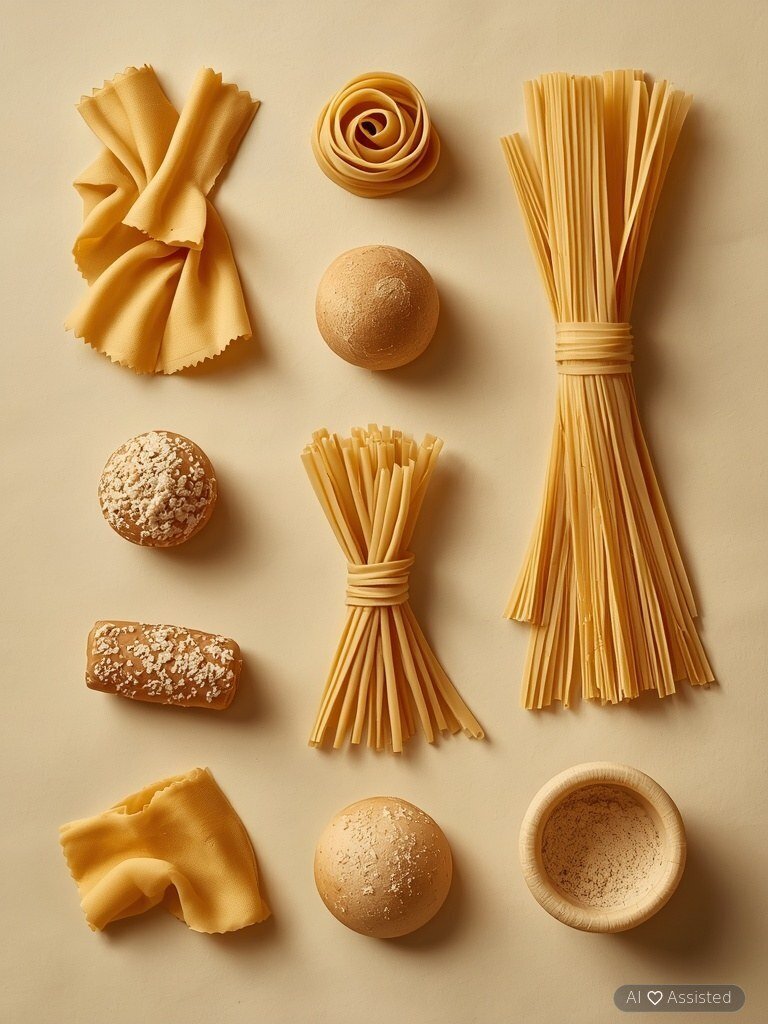
Centuries of culinary evolution have produced over 300 distinct pasta shapes, each calibrated for specific sauce viscosity:
- Long strands (pasta lunga) – spaghetti, linguine, bucatini, fettuccine; optimized for light oil-based emulsions (aglio e olio), smooth pomodoro, and delicate seafood reductions.
- Short ridged tubes (pasta corta rigata) – penne rigate, fusilli, rigatoni; ridges and internal hollows effectively capture thick vegetable medleys, chunky bolognese ragù, and pesto.
- Large cavities for stuffing – jumbo conchiglioni, cannelloni; engineered for oven baking filled with ricotta, wilted spinach, or seasoned minced poultry.
- Soup pastina – orzo (risoni), stelline, thin vermicelli; designed for enriched broths, clear vegetable soups, and cold Mediterranean grain salads.
Dietary Selection and the Golden Rules of Cooking Al Dente
Precise cooking technique governs both sensory excellence and clinical glycemic control:
- The 1 – 10 – 100 ratio – utilize 1 liter of water and 10 g of salt per 100 g of dry pasta. Copious water dilutes starch leaching and prevents clump formation.
- Timing the salt – add salt only once the water has reached a vigorous rolling boil, right before dropping the pasta.
- No oil in the cooking water – adding oil is a widespread culinary error; surface lipid films prevent sauces from clinging to the pasta ridges.
- Mastering al dente – remove the pasta when the center still displays a pinhead-sized core of firm starch. The pasta finishes cooking directly in the simmering sauce for 1–2 minutes.
- Never rinse with cold water – rinsing washes away surface starch essential for emulsifying pan sauces into a creamy glaze (with the sole exception of cold pasta salads).
Scratch-Made Fresh Pasta – Step-by-Step Recipe and Technique
Crafting authentic fresh pasta at home requires minimal ingredients and yields superior flavor:
Baseline formula:
- 100 g of finely ground durum semolina (or Italian Tipo 00 flour) per 1 large egg (~55–60 g), with a pinch of fine sea salt.
Step-by-step technique:
- Step 1: Kneading – mound the flour on a clean surface and form a deep central well. Crack the egg into the center, whisk with a fork, gradually incorporating flour from the inner rim. Knead vigorously for 8–10 minutes until smooth and springy.
- Step 2: Gluten relaxation – wrap the dough ball tightly in clingfilm and rest at room temperature for at least 30 minutes to ease gluten tension for effortless rolling.
- Step 3: Rolling and shaping – dust the surface with semolina, roll dough paper-thin (~1 mm), gently fold into a loose cylinder, and slice into tagliatelle ribbons.
- Step 4: Cooking – fresh egg pasta cooks in just 2–3 minutes in salted boiling water.
Balanced Pasta Dishes – Healthy Home Recipes
Two nutrient-dense, balanced pasta recipes pairing low glycemic response with vibrant flavor:
1. Whole-Grain Penne with Crisp Green Vegetables:
- Ingredients: 60 g whole-durum penne, 150 g broccoli florets, 50 g sweet green peas, 50 g tender green beans, 1 garlic clove, 1 tbsp extra virgin olive oil (10 g), freshly chopped parsley, sea salt, black pepper.
- Preparation: Cook penne al dente. Blanch broccoli, peas, and green beans for 3 minutes until vibrant. Warm olive oil and minced garlic in a skillet, add vegetables and pasta, toss with fresh parsley, and season to taste.
2. Ribbon Pasta with Homemade Walnut-Parsley Pesto:
- Ingredients: 60 g tagliatelle ribbons, 1 generous bunch flat-leaf parsley, 20 g raw walnuts, 1 tbsp olive oil, 1 tsp fresh lemon juice, 1 garlic clove, 80 g sweet cherry tomatoes.
- Preparation: Blend fresh parsley with walnuts, garlic, olive oil, and lemon juice into an antioxidant-rich green pesto. Cook pasta al dente, toss with pesto and halved cherry tomatoes, emulsifying with a splash of hot pasta water.

mgr Mateusz Pawlak
✓Diets Premium Expert
Diets Premium team expert. Specializes in nutrition plans, strength sports, and training plans.
View Profile →