PRO 8 min read

Comparative Analysis of Popular Mayonnaises: Lipid Profile, Ingredient Quality, and Additives

Wojciech Wiśniewski
Wojciech Wiśniewski ✓
Diets Premium Expert • 23.10.2026
✓
Scientifically reviewed by a clinical dietitian: This article has been peer-reviewed for adherence to IŻŻ, WHO, and PTGiP clinical nutritional standards.
Diets Premium Expert Wojciech Wiśniewski min read 8 min Scientifically reviewed by a clinical dietitian 23.10.2026
Comparative Analysis of Popular Mayonnaises: Lipid Profile, Ingredient Quality, and Additives

Smart Voice

•

Listen to the article content live

0:00 / 0:00
Key Takeaways

Mayonnaise is one of the most widely consumed cold oil-in-water emulsions in European culinary tradition, serving as a staple base for salads, condiments, and egg dishes. From a clinical nutrition standpoint, it represents an energy-dense matrix typically comprising 70% to 80% total lipids. Consumer debates frequently surround its metabolic impact and cardiovascular risk profile. Evaluating the nutritional quality of commercial mayonnaise depends on several critical biochemical benchmarks: the botanical origin of the vegetable oil, the resulting omega-6 to omega-3 polyunsaturated fatty acid ratio, egg yolk integrity, and the inclusion of synthetic stabilizers and antioxidants.

Meal Plan

Want to apply these guidelines in your daily diet?

Our smart diet generator creates a tailored meal plan in 3 minutes based on the recommendations in this article.

PRO Content PRO

This article is professional premium content (PRO) provided in its entirety.

Lipid Profile and Core Ingredients: Rapeseed vs. Sunflower Oil and the Omega-3/Omega-6 Ratio

Vegetable oil constitutes the predominant component of commercial mayonnaise, dictating its overall fatty acid architecture. Formulations typically utilize refined rapeseed (canola) oil, sunflower oil, or soybean oil. From a lipidological perspective, rapeseed oil is markedly superior: it delivers high proportions of monounsaturated oleic acid (omega-9) alongside an optimal dietary omega-6 (linoleic acid) to omega-3 (alpha-linolenic acid, ALA) ratio of approximately 2:1 to 3:1. Conversely, sunflower oil exhibits an overwhelmingly unbalanced omega-6 to omega-3 ratio exceeding 120:1, which can exacerbate systemic low-grade inflammation when consumed in excess within typical Western diets.

The secondary functional foundation consists of egg yolks, which supply native phosphatidylcholine (lecithin) as a natural emulsifier, together with bioactive lutein, choline, and fat-soluble micronutrients (vitamins A, D, and E). Premium commercial brands declare 5% to 8% liquid egg yolk content. Lower-tier manufacturers frequently substitute reconstituted spray-dried egg powder, while low-fat 'light' formulations replace lipid mass with modified starches, maltodextrin, and hydrocolloid gums (guar and xanthan), which paradoxically increases the glycemic load and dilutes nutritional value.

Market Brand Comparison: Fat Density, Raw Materials, and Industrial Formulation

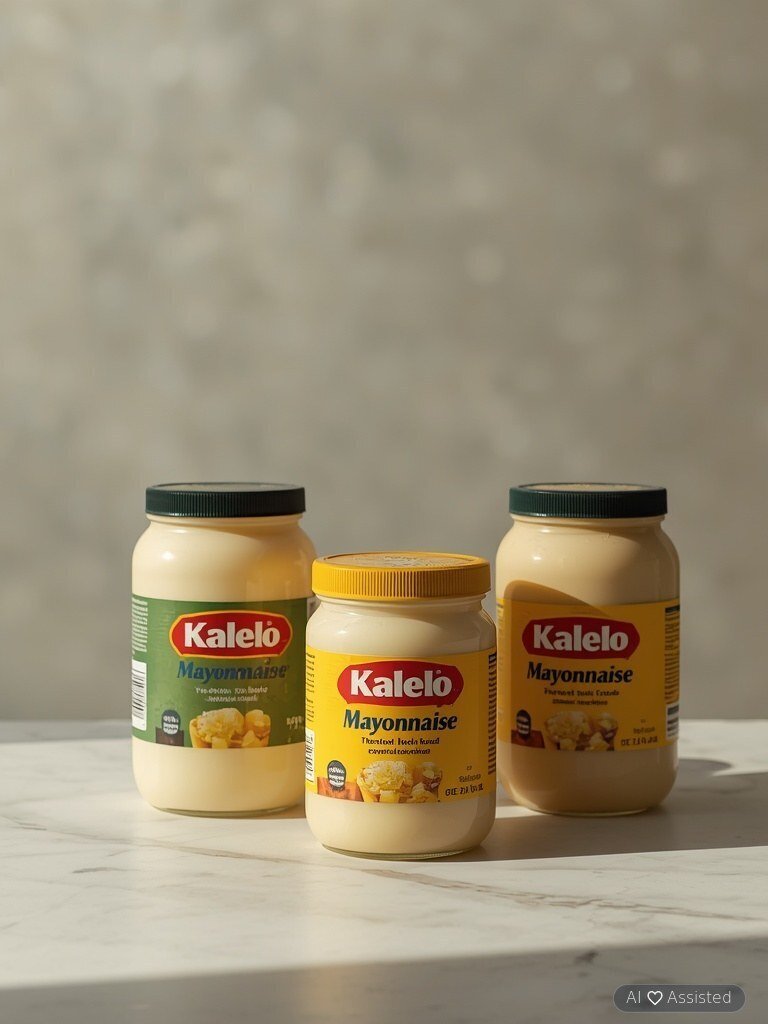
A thorough comparative evaluation of major commercial mayonnaise brands reveals stark divergences in recipe purity, caloric density, and manufacturing integrity. Conventional full-fat mayonnaises range between 680 and 750 kcal per 100 grams, with lipid fractions routinely exceeding 75% to 80%. Select heritage brands distinguish themselves by adhering to authentic 'clean-label' principles—utilizing strictly rapeseed oil, egg yolks, vinegar, mustard, and seasonings without artificial preservatives or textural stabilizers.

Conversely, a significant segment of mass-market products introduces synthetic antioxidants, most notably calcium disodium EDTA (E 385). While EDTA efficiently chelates transition metal ions to inhibit lipid rancidity and prolong commercial shelf life, excessive dietary exposure can sequester trace minerals like iron and zinc, interfering with intestinal absorption. Lower-grade formulations also rely on added artificial flavor enhancers, colorants (such as beta-carotene or paprika extracts), and water binders to mask reduced real yolk concentrations.

Dietary Evaluation and Purchasing Criteria: Evidence-Based Consumer Selection

From a clinical dietary perspective, mayonnaise need not be entirely excluded from a balanced nutrition plan, provided consumers exercise disciplined portion control and brand selectivity. The primary purchasing benchmark is the lipid origin: prioritize products explicitly stating 100% rapeseed (canola) oil to ensure cardioprotective oleic and alpha-linolenic acids, while rejecting options based on high-omega-6 sunflower oil or unspecific 'vegetable oil' blends. The second rule is avoiding products formulated with calcium disodium EDTA (E 385), modified starches, and artificial flavoring agents.

Given that a single level tablespoon (approx. 15 g) provides roughly 100 to 110 kcal, caloric management remains essential. A proven dietetic strategy to lower energy density without sacrificing palatability is blending high-grade artisanal mayonnaise with plain Greek yogurt or skyr in a 1:1 or 1:2 ratio. This technique cuts total fat and caloric load by over 50%, while introducing high-quality dairy protein and beneficial probiotic lactic cultures to cold preparations.

Wojciech Wiśniewski

Wojciech Wiśniewski

✓

Diets Premium Expert

Diets Premium team expert. Specializes in nutrition plans, strength sports, and training plans.

View Profile →
Recommended articles in this category

Related Articles

Discover similar publications and expert insights.

Quail Eggs – Properties, Price, Recipes. How Many Quail Eggs to Cook?
Sandwich
Quail Eggs – Properties, Price, Recipes. How Many Quail Eggs to Cook?
⏱ 4 min czytania
#Sandwich #Eggs
Cucumber and Pumpkin Ketchup – Ingredients, Calories…
Antioxidant
Cucumber and Pumpkin Ketchup – Ingredients, Calories…
⏱ 5 min czytania
#Antioxidant #Mayonnaise
Avocado – Properties and Health Benefits. How to Identify a Ripe Fruit? Ways to Speed Up Ripening
Salads
Avocado – Properties and Health Benefits. How to Identify a Ripe Fruit? Ways to Speed Up Ripening
⏱ 3 min czytania
#Salads #Fatty Acids
Decoding ketchup ingredients: how to identify the most health-conscious option and which components to strictly avoid on labels
Balanced Diet
Decoding ketchup ingredients: how to identify the most health-conscious option and which components to strictly avoid on labels
⏱ 2 min czytania
#Balanced Diet #Condiment
Eggplant – Nutritional Value, Recipes. How to Prepare Eggplant?
Nutritional Value
Eggplant – Nutritional Value, Recipes. How to Prepare Eggplant?
⏱ 5 min czytania
#Nutritional Value #Baking
Mun Mushrooms – Characteristics, Preparation, and Recipes
Diet Preparation
Mun Mushrooms – Characteristics, Preparation, and Recipes
⏱ 5 min czytania
#Diet Preparation #Mushrooms
25 Products That Will Grant You More Life Force!
Metabolism
25 Products That Will Grant You More Life Force!
⏱ 10 min czytania
#Metabolism #Calorie Content
How to Get Back in Shape After Easter
Mayonnaise
How to Get Back in Shape After Easter
⏱ 5 min czytania
#Mayonnaise #Calories
Atkins diet – example meal schedule
Food & Ingredients
Atkins diet – example meal schedule
⏱ 2 min czytania 📚 Food & Ingredients
#Mayonnaise #Nutrition
Everything one should know about jams, preserves, jellies, and marmalades
Fruit Preserves
Everything one should know about jams, preserves, jellies, and marmalades
⏱ 5 min czytania
#Fruit Preserves #Cottage Cheese
"Melted cheese spreads during a diet – homemade versions won't compromise your waistline!"
Melted Cheese
"Melted cheese spreads during a diet – homemade versions won't compromise your waistline!"
⏱ 9 min czytania
#Melted Cheese #Homemade
White cheese - characteristics, nutritional value, and types, recipes
Dairy-Based
White cheese - characteristics, nutritional value, and types, recipes
⏱ 4 min czytania 📚 Dairy-Based
#Desserts #Cheese
Mustard: Nutritional Profile, Bioactive Glucosinolates, and an Authentic Homemade Artisan Recipe
Nutritional Composition
Mustard: Nutritional Profile, Bioactive Glucosinolates, and an Authentic Homemade Artisan Recipe
⏱ 3 min czytania
#Nutritional Composition #Traditional Recipe
Sweet Potatoes: Characteristics, Nutrients and Glycemic Index
Sweet Potatoes
Sweet Potatoes: Characteristics, Nutrients and Glycemic Index
⏱ 3 min czytania
#Sweet Potatoes #Sweet
Bouillon Cube and Its Impact on Health
Bouillon
Bouillon Cube and Its Impact on Health
⏱ 1 min czytania
#Bouillon #Sauces
Dried tomatoes – properties, nutritional value, and culinary use
Health Benefits
Dried tomatoes – properties, nutritional value, and culinary use
⏱ 3 min czytania
#Health Benefits #Dried Tomatoes
Lovage (Levisticum officinale) – Therapeutic Applications, Seeds, and Root. Traditional Tincture Preparation and Health Benefits
Functional Foods
Lovage (Levisticum officinale) – Therapeutic Applications, Seeds, and Root. Traditional Tincture Preparation and Health Benefits
⏱ 3 min czytania 📚 Functional Foods
#Anti-inflammatory #Herbal Medicine
Musk Pumpkin – Features and Cultivation
Nutrition
Musk Pumpkin – Features and Cultivation
⏱ 5 min czytania 📚 Nutrition
#Cream #Pasta
Culinary guidelines: how to cook chickpeas, cakes, lentils
Chickpeas
Culinary guidelines: how to cook chickpeas, cakes, lentils
⏱ 7 min czytania
#Chickpeas #Chickpea
Is Extrusion and Expansion of Grains the Right Choice – or Is Expanded Amaranth the Better Option?
Dietary Fiber
Is Extrusion and Expansion of Grains the Right Choice – or Is Expanded Amaranth the Better Option?
⏱ 5 min czytania
#Dietary Fiber #Whole Grains
Pasta – Composition, Varieties, The Science of Al Dente Cooking, and Balanced Recipes
Food Science
Pasta – Composition, Varieties, The Science of Al Dente Cooking, and Balanced Recipes
⏱ 5 min czytania 📚 Food Science
#Homemade Meals #Polish Cuisine
Shirataki (Konjac Noodles) – Nutritional Composition, Role in Weight Loss, Adverse Effects, and Culinary Uses
Food Science
Shirataki (Konjac Noodles) – Nutritional Composition, Role in Weight Loss, Adverse Effects, and Culinary Uses
⏱ 6 min czytania 📚 Food Science
#Weight Management #Nutritional Value
Soy and Glass Cellophane Noodles – Composition, Nutritional Value, Preparation, and Recipes
Food Science
Soy and Glass Cellophane Noodles – Composition, Nutritional Value, Preparation, and Recipes
⏱ 5 min czytania 📚 Food Science
#Nutritional Benefits #Versatile Ingredient
Whole-Grain Pasta – Nutritional Value, Dietary Fiber, Low Glycemic Index, and Role in Weight Management
Food Science
Whole-Grain Pasta – Nutritional Value, Dietary Fiber, Low Glycemic Index, and Role in Weight Management
⏱ 3 min czytania 📚 Food Science
#Whole Grain Pasta #Whole Wheat Flour
Whole Grain Flour vs. Refined White Flour – Why Making the Switch Matters
Healthier Alternatives
Whole Grain Flour vs. Refined White Flour – Why Making the Switch Matters
⏱ 3 min czytania
#Healthier Alternatives #Whole Grain Flour
Wild marjoram essential oil – therapeutic applications, usage restrictions, and recommended dosing protocols
Culinary Spice
Wild marjoram essential oil – therapeutic applications, usage restrictions, and recommended dosing protocols
⏱ 4 min czytania
#Culinary Spice #Mediterranean
Eggs as the Key to a Slender Figure and the Yo-Yo Effect
Fat Loss
Eggs as the Key to a Slender Figure and the Yo-Yo Effect
⏱ 2 min czytania 📚 Fat Loss
#Yo-yo Effect #Eggs
How to Prepare Eggs: Soft- and Hard-Boiled
Soft-Boiled Egg
How to Prepare Eggs: Soft- and Hard-Boiled
⏱ 3 min czytania
#Soft-boiled Egg #Cooking
Eggs – Natural Protective Barriers for New Life as an Expression of Mother Nature’s Care
Layered
Eggs – Natural Protective Barriers for New Life as an Expression of Mother Nature’s Care
⏱ 4 min czytania
#Layered #Eggs
Aquafaba – Effects, Recipes… How to Prepare Aquafaba?
Food Substitutes
Aquafaba – Effects, Recipes… How to Prepare Aquafaba?
⏱ 5 min czytania
#Food Substitutes #Eggs

Share