Shirataki (Konjac Noodles) – Nutritional Composition, Role in Weight Loss, Adverse Effects, and Culinary Uses

Sophia Williams
Sophia Williams ✓
Diets Premium Expert • 23.10.2026
✓
Scientifically reviewed by a clinical dietitian: This article has been peer-reviewed for adherence to IŻŻ, WHO, and PTGiP clinical nutritional standards.
Diets Premium Expert Sophia Williams min read 6 min Scientifically reviewed by a clinical dietitian 23.10.2026
Shirataki (Konjac Noodles) – Nutritional Composition, Role in Weight Loss, Adverse Effects, and Culinary Uses

Smart Voice

•

Listen to the article content live

0:00 / 0:00
Key Takeaways
Featuring virtually zero calories and free from digestible carbohydrates, fat, and gluten, shirataki (konjac) noodles have emerged as a staple in weight-loss and ketogenic nutrition. Derived from the corms of Amorphophallus konjac, these translucent noodles comprise 97% water and 3% glucomannan—a highly viscous, water-soluble dietary fiber. This comprehensive guide examines the nutritional profile of shirataki, the physiological mechanisms driving satiety and glycemic stability, potential gastrointestinal contraindications, and evidence-based culinary preparation techniques.
Meal Plan

Want to apply these guidelines in your daily diet?

Our smart diet generator creates a tailored meal plan in 3 minutes based on the recommendations in this article.

PRO Content PRO

This article is professional premium content (PRO) provided in its entirety.

What is Shirataki and the Konjac Plant?

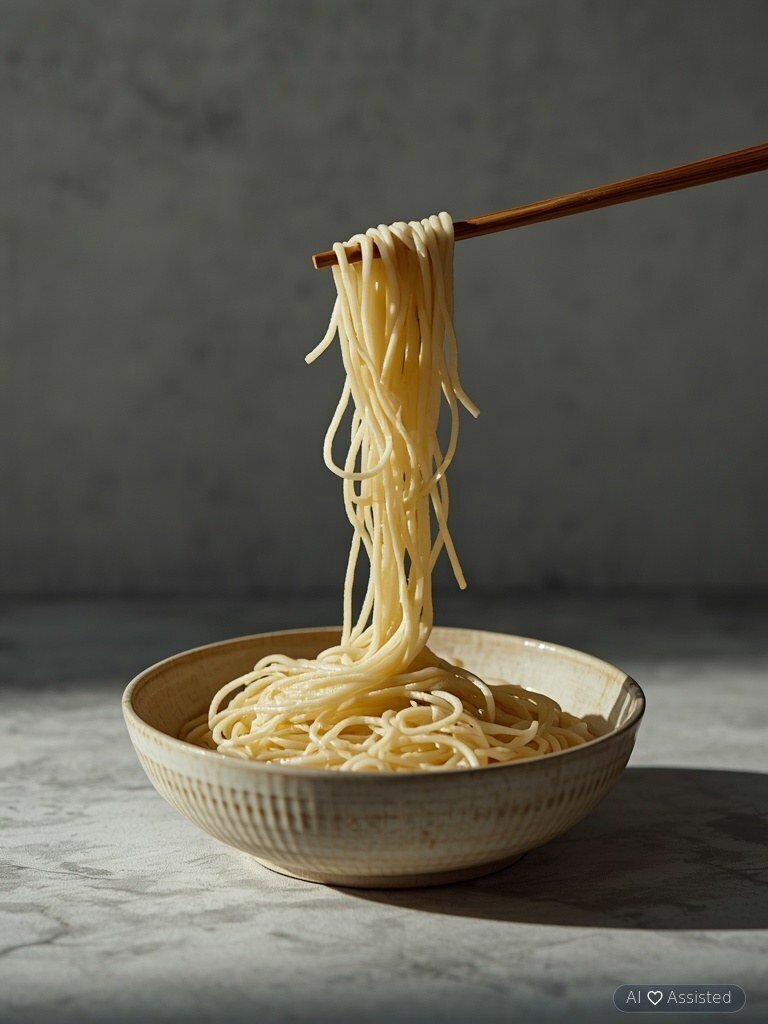
Shirataki noodles, historically known in Japan as 'white waterfall' owing to their translucent, cascading strands, are manufactured from the tuberous corm of Amorphophallus konjac (commonly known as the konjac plant or elephant yam). Cultivated across East and Southeast Asia for centuries, it has served both traditional Chinese medicine and local gastronomy as a gelling and thickening staple.

The root tubers of konjac are exceptionally dense in a distinct polysaccharide known as glucomannan. In food production, glucomannan flour is blended with water and a food-grade alkaline setting agent (typically calcium hydroxide / limewater), extruded into various noodle shapes (vermicelli, fettuccine, or rice-like grains), and boiled. The resulting product is characterized by a gelatinous, slightly chewy texture preserved in a mild liquid brine.

Nutritional Profile and Physiological Mechanics of Glucomannan

The nutritional matrix of shirataki noodles is unparalleled among staple foods:

  • Minimal caloric density – 100 g of cooked noodles delivers only 8–10 kcal, representing a minute fraction compared to traditional dry durum pasta (~350 kcal/100 g).
  • Water and fiber equilibrium – composition is strictly 96–97% water and 3–4% glucomannan; digestible carbohydrates, protein, and dietary fats are effectively zero.
  • Hydration capacity – glucomannan possesses the highest water-holding capacity among soluble dietary fibers, expanding up to 50 times its dry weight to form a viscous hydrogel in the stomach.
  • Metabolic regulation – this gel matrix substantially delays gastric emptying and carbohydrate uptake, moderating postprandial glycemic excursions and binding bile salts to lower serum LDL cholesterol levels.

Shirataki Noodles in Weight Management – Satiety Mechanisms and Clinical Evidence

Shirataki noodles represent one of the select functional foods whose active constituent—glucomannan—holds an authorized health claim from the European Food Safety Authority (EFSA), affirming that it contributes to weight reduction within an energy-restricted dietary regimen (at daily doses of 3 g glucomannan taken in three 1 g portions with 1–2 glasses of water before meals).

Key physiological pathways facilitating fat loss include:

  • Prolonged satiety signaling – gastric volumetric expansion stimulates gastric mechanoreceptors, triggering the release of anorexigenic gut hormones (cholecystokinin, PYY, and GLP-1) while down-regulating ghrelin.
  • Substantial caloric deficit without deprivation – swapping a standard serving of boiled pasta (~250 kcal) for shirataki (~15 kcal) eliminates over 200 kcal per meal while preserving visual plate volume and psychological meal satisfaction.

Adverse Effects, Gastrointestinal Contraindications, and Drug Interactions

While generally safe for healthy adults, the physicochemical characteristics of shirataki present definite clinical precautions:

  • Choking and esophageal obstruction hazard – owing to their slippery elasticity and structural cohesion, noodles must be thoroughly masticated and accompanied by generous fluids. Individuals with dysphagia or mechanical esophageal strictures should avoid them completely.
  • Gastrointestinal symptoms – rapid introduction of concentrated glucomannan into an unadapted gut microbiota can provoke abdominal cramps, flatulence, bloating, and osmotic diarrhea.
  • Impaired drug bioavailability – the high-viscosity matrix can entrap oral pharmaceutical compounds (including levothyroxine, oral hypoglycemics, and contraceptives), attenuating therapeutic absorption. A minimum window of 1–2 hours between medication and shirataki intake is mandatory.

Culinary Preparation – Deodorization, Texture Optimization, and Cooking Tips

First-time consumers are often deterred by a noticeable fishy or brine-like aroma upon opening the vacuum pack, which stems from the alkaline calcium hydroxide brine. Proper kitchen preparation entirely neutralizes this odor:

  • Step 1: Thorough cold water rinsing – drain noodles in a fine colander and rinse vigorously under running cold water for 2–3 minutes to wash away residual brine.
  • Step 2: Quick blanching – plunge rinsed noodles into boiling water for 1–2 minutes, then drain thoroughly.
  • Step 3: Dry pan-frying – transfer drained noodles to a dry, non-stick skillet over medium heat without oil for 2–4 minutes until excess moisture evaporates and the strands squeak slightly. This improves mouthfeel and enables the noodles to soak up sauces effectively.
  • Step 4: Flavor pairing – having virtually zero inherent flavor, shirataki shines when tossed into bold Asian stir-fries (tamari, sesame, ginger, chili), rich vegetable broths (miso or ramen), or hearty tomato-herb sauces.
Sophia Williams

Sophia Williams

✓

Diets Premium Expert

Diets Premium team expert. Specializes in nutrition plans, strength sports, and training plans.

View Profile →
Recommended articles in this category

Related Articles

Discover similar publications and expert insights.

Durum Wheat (Triticum durum): Semolina Properties, Health Attributes, and Selection Criteria for Premium Pasta
Complex Carbohydrates
Durum Wheat (Triticum durum): Semolina Properties, Health Attributes, and Selection Criteria for Premium Pasta
⏱ 3 min czytania
#Complex Carbohydrates #Gluten Sensitivity
Soy and Glass Cellophane Noodles – Composition, Nutritional Value, Preparation, and Recipes
Food Science
Soy and Glass Cellophane Noodles – Composition, Nutritional Value, Preparation, and Recipes
⏱ 5 min czytania 📚 Food Science
#Nutritional Benefits #Versatile Ingredient
Pasta – Composition, Varieties, The Science of Al Dente Cooking, and Balanced Recipes
Food Science
Pasta – Composition, Varieties, The Science of Al Dente Cooking, and Balanced Recipes
⏱ 5 min czytania 📚 Food Science
#Homemade Meals #Polish Cuisine
Whole-Grain Pasta – Nutritional Value, Dietary Fiber, Low Glycemic Index, and Role in Weight Management
Food Science
Whole-Grain Pasta – Nutritional Value, Dietary Fiber, Low Glycemic Index, and Role in Weight Management
⏱ 3 min czytania 📚 Food Science
#Whole Grain Pasta #Whole Wheat Flour
Dietary Fiber and Weight Management
Diet
Dietary Fiber and Weight Management
⏱ 3 min czytania 📚 Diet
#Weight Management #Dietary Fiber
Introducing gluten into a child's diet - contemporary guidelines
Nutrition
Introducing gluten into a child's diet - contemporary guidelines
⏱ 3 min czytania
#Nutrition #Gluten
Sprue - causes, symptoms, treatment, and diet
Diet Therapy
Sprue - causes, symptoms, treatment, and diet
⏱ 4 min czytania 📚 Diet Therapy
#Nutrition #Gluten
Dairy-free nutrition - strategies and culinary recipes
Health Conditions
Dairy-free nutrition - strategies and culinary recipes
⏱ 6 min czytania 📚 Health Conditions
#Lactose Intolerance #Dairy-free Diet
Nutritionists on the Introduction of Gluten into a Child's Diet
Celiac Disease
Nutritionists on the Introduction of Gluten into a Child's Diet
⏱ 1 min czytania
#Celiac Disease #Nutrition
Mango – nutritional calorie value, vitamin composition, and weight-management benefits: A comprehensive guide to identifying ripe fruit and proper harvesting techniques
Fruits
Mango – nutritional calorie value, vitamin composition, and weight-management benefits: A comprehensive guide to identifying ripe fruit and proper harvesting techniques
⏱ 4 min czytania 📚 Fruits
#Nutritional Value #Caloric Content
Is Extrusion and Expansion of Grains the Right Choice – or Is Expanded Amaranth the Better Option?
Dietary Fiber
Is Extrusion and Expansion of Grains the Right Choice – or Is Expanded Amaranth the Better Option?
⏱ 5 min czytania
#Dietary Fiber #Whole Grains
Meal Prep Box – Planning, Batch Cooking, and Safe Food Storage Strategies
Functional Foods
Meal Prep Box – Planning, Batch Cooking, and Safe Food Storage Strategies
⏱ 3 min czytania 📚 Functional Foods
#Weight Management #Adipose Tissue
Whole-Grain Rye Pasta (Type 720) – Nutritional Value, Low Glycemic Index, and Microbiome Benefits
Food Science
Whole-Grain Rye Pasta (Type 720) – Nutritional Value, Low Glycemic Index, and Microbiome Benefits
⏱ 2 min czytania 📚 Food Science
#Bioactive Compounds #Whole Grain Pasta
Barley flakes – Nutritional composition, glycemic index, and functional role in weight management
Nutritional Composition
Barley flakes – Nutritional composition, glycemic index, and functional role in weight management
⏱ 5 min czytania
#Nutritional Composition #Health Benefits
Inappropriate Immune Response to Gluten – Symptoms and Prognosis. Celiac Disease and Inappropriate Immune Response to Gluten
Health Consequences
Inappropriate Immune Response to Gluten – Symptoms and Prognosis. Celiac Disease and Inappropriate Immune Response to Gluten
⏱ 4 min czytania
#Health Consequences #Gluten
Gluten intolerance in children - symptoms, tests, causes - When should a child be introduced to a gluten-containing diet?
Pediatrics
Gluten intolerance in children - symptoms, tests, causes - When should a child be introduced to a gluten-containing diet?
⏱ 3 min czytania 📚 Pediatrics
#Nutrition #Gluten
Glycemic Index – Foods with High and Low GI. Who Should Follow a Glycemic Diet?
Dietetics
Glycemic Index – Foods with High and Low GI. Who Should Follow a Glycemic Diet?
⏱ 6 min czytania 📚 Dietetics
#Nutrition #Glycemic Index
Carbohydrate substitutes in diabetes – use and calculation
Type 2 Diabetes
Carbohydrate substitutes in diabetes – use and calculation
⏱ 7 min czytania
#Type 2 Diabetes #Carbohydrates
Carbohydrates - classification, significance in nutrition and effects on GI levels
Carbohydrate
Carbohydrates - classification, significance in nutrition and effects on GI levels
⏱ 4 min czytania 📚 Carbohydrate
#Starch #Nutrition
Carbohydrates – their significance, division into simple and complex... where is the most carbohydrate?
Carbohydrate
Carbohydrates – their significance, division into simple and complex... where is the most carbohydrate?
⏱ 4 min czytania 📚 Carbohydrate
#Nutrition #Calories
FODMAP diet – phases, foods, and sample meal plan
Carbohydrates
FODMAP diet – phases, foods, and sample meal plan
⏱ 5 min czytania
#Carbohydrates #FODMAP Diet
Fig Vinegar: Health Properties, Antioxidant Profile, and Culinary Applications
Vasodilation
Fig Vinegar: Health Properties, Antioxidant Profile, and Culinary Applications
⏱ 3 min czytania
#Vasodilation #Dietary Fiber
Comprehensive Analysis of the Adverse Health Effects of Sugar-Sweetened Beverages and Juices
Pregnancy & Motherhood
Comprehensive Analysis of the Adverse Health Effects of Sugar-Sweetened Beverages and Juices
⏱ 2 min czytania 📚 Pregnancy & Motherhood
#Simple Carbohydrates #Obesity
Gluten – What It Actually Is, Which Products Contain It, and Whether It’s Truly Harmful
Gluten
Gluten – What It Actually Is, Which Products Contain It, and Whether It’s Truly Harmful
⏱ 3 min czytania
#Gluten
Hashimoto’s Disease – Impact of Vitamin D and Gluten. How to Eat with Hashimoto’s?
Hashimoto's Disease
Hashimoto’s Disease – Impact of Vitamin D and Gluten. How to Eat with Hashimoto’s?
⏱ 3 min czytania
#Hashimoto's Disease #Vitamin B9
Barley groats
Pregnancy & Motherhood
Barley groats
⏱ 2 min czytania 📚 Pregnancy & Motherhood
#Gluten #Zinc
The BBB diet in autism – rationale for excluding gluten, casein, and simple sugars
Food & Ingredients
The BBB diet in autism – rationale for excluding gluten, casein, and simple sugars
⏱ 4 min czytania 📚 Food & Ingredients
#Casein #Gluten
Thick coconut paste with a velvety-smooth texture
Food & Ingredients
Thick coconut paste with a velvety-smooth texture
⏱ 2 min czytania 📚 Food & Ingredients
#Lactose Intolerance #Dietary Choices
Identifying celiac disease: Cutaneous, neurological, and other symptoms – what diagnostic tests confirm gluten-sensitive enteropathy?
Essential Nutrients
Identifying celiac disease: Cutaneous, neurological, and other symptoms – what diagnostic tests confirm gluten-sensitive enteropathy?
⏱ 3 min czytania
#Essential Nutrients #Celiac Disease
Coconut Chips and Flakes – Health Properties, Nutrition, and Calories
Nutritional Values
Coconut Chips and Flakes – Health Properties, Nutrition, and Calories
⏱ 3 min czytania
#Nutritional Values #Sweet Treats

Share