Barley flakes – Nutritional composition, glycemic index, and functional role in weight management

| Diets Premium Expert Mia Hoffmann | min read 5 min | Scientifically reviewed by a clinical dietitian 23.10.2026 |
Smart Voice
•Listen to the article content live
Barley flakes (derived from Hordeum vulgare) represent an ancient whole-grain staple possessing extraordinary cardiometabolic and prebiotic benefits. Their hallmark nutritional asset is an abundant concentration of viscous soluble dietary fiber, specifically beta-glucans. These natural polysaccharides actively lower serum LDL cholesterol, attenuate postprandial glycemic excursions, and sustain deep physiological satiety.
Want to apply these guidelines in your daily diet?
Our smart diet generator creates a tailored meal plan in 3 minutes based on the recommendations in this article.
Barley flakes – production processing and botanical characteristics
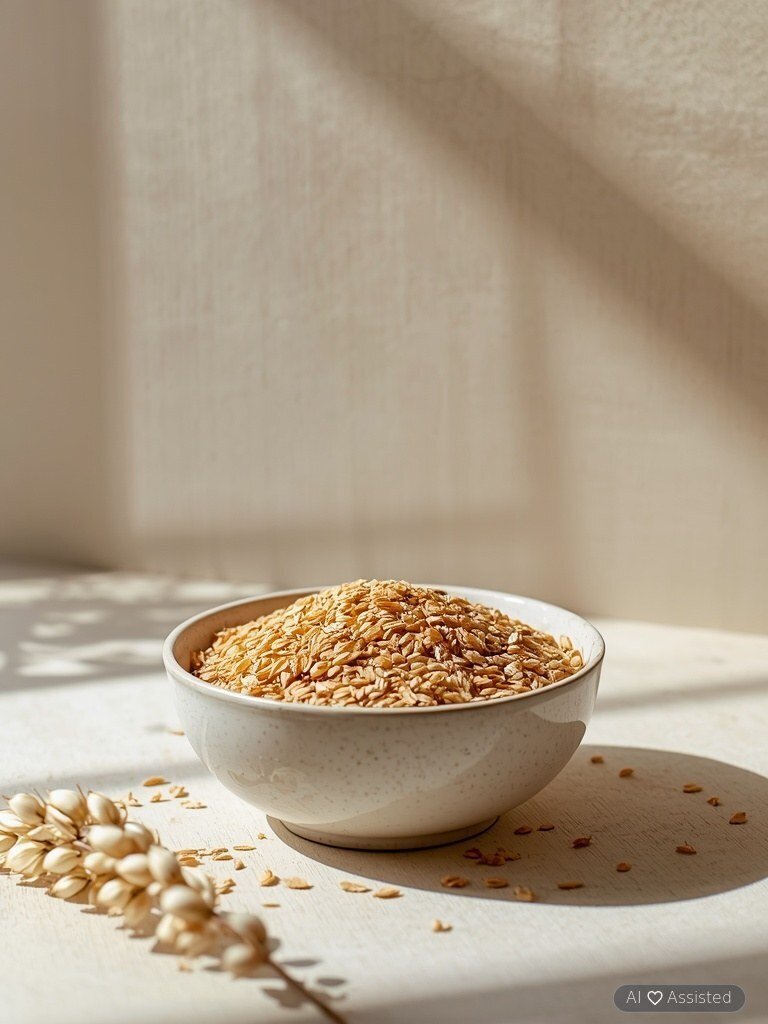
Barley flakes are manufactured from conditioned whole kernels of common barley. Following hydrothermal steaming, the softened grains pass through heavy industrial rollers to form flattened flakes. Ranging from whole rolled flakes to quick-cooking cuts, they preserve the mineral-dense aleurone and bran layers. Barley flakes feature a firm texture, a rich earthy taste, and robust structural integrity that resists turning mushy during culinary preparation.
Therapeutic benefits and the clinical significance of barley beta-glucans
The premier nutritional attribute of barley flakes lies in their concentrated fraction of beta-glucans. In the gastrointestinal lumen, beta-glucans form a viscous gel matrix that entraps bile acids, preventing their reabsorption and compelling hepatic clearance of circulating LDL cholesterol. Authoritative clinical consensus confirms that consuming 3 g of barley beta-glucan daily measurably decreases serum cholesterol. In the colon, these fibers undergo bacterial fermentation into short-chain fatty acids (SCFAs, predominantly butyrate), nourishing colonocytes and fostering systemic anti-inflammatory resilience.
Nutritional metrics, caloric density, and low glycemic index
Per 100 g dry measure, barley flakes supply roughly 355 kcal, 10 g of protein, 2 g of lipids, and 73 g of carbohydrates, anchored by an impressive 10 to 12 g of dietary fiber. Uniquely, barley flakes maintain a genuinely low glycemic index (GI approximately 40–45). The gelatinous mesh created by soluble fiber retards gastric emptying and slows amylase-driven carbohydrate digestion, mitigating reactive hypoglycemia and supplying sustained energy.
Barley flakes in weight reduction diets and practical menu implementation
Owing to their exceptional water-holding capacity, barley flakes swell substantially in the stomach, stimulating gastric stretch mechanoreceptors and triggering satiating gut hormones (cholecystokinin and PYY). Consequently, they represent an optimal dietary asset in fat loss protocols. Prepare them by simmering 4–5 tablespoons in water or low-fat milk for 5 minutes, blend them into hearty vegetable broths, or bake them into rustic seed crackers for satisfying between-meal crunch.
Tags

Mia Hoffmann
✓Diets Premium Expert
Diets Premium team expert. Specializes in nutrition plans, strength sports, and training plans.
View Profile →