Oat Bran vs. Rolled Oats – Milling Technology, Nutritional Profile, and Clinical Health Benefits

| Diets Premium Expert Anna Schmidt | min read 3 min | Scientifically reviewed by a clinical dietitian 23.10.2026 |
Smart Voice
•Listen to the article content live
For more than two millennia, oats have served as a dietary cornerstone, valued for their exceptional agronomic traits as well as their therapeutic benefits and substantial nutritional density. Contemporary grocery selections now feature an extensive array of oat-based products—ranging from flour and groats to flakes and bran. This article provides a comprehensive examination of the latter two categories, elucidating their distinctive properties alongside their versatile applications in both culinary and nutritional contexts.
Want to apply these guidelines in your daily diet?
Our smart diet generator creates a tailored meal plan in 3 minutes based on the recommendations in this article.
How Rolled Oats and Oat Bran Are Produced: Technological Differences
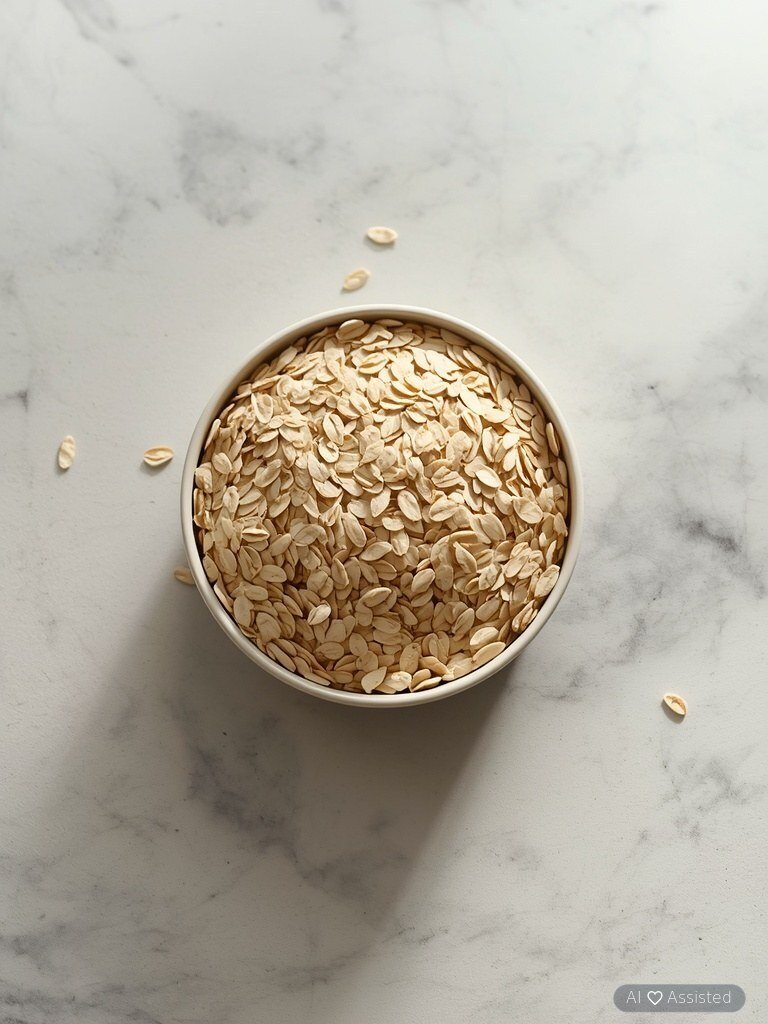
Although both rolled oats and oat bran originate from the same cereal grain—common oats (Avena sativa)—their milling processes yield anatomically and nutritionally distinct products. To produce rolled oats (oatmeal), the entire dehulled oat groat (comprising the starchy endosperm, germ, and outer bran layers) is cleaned, kiln-steamed to deactivate lipid-splitting enzymes, and flattened between heavy steel rollers. Depending on processing intensity, rolled oats are categorized into old-fashioned whole-grain flakes, quick-cooking flakes (rolled from steel-cut groats), and instant flakes.
Oat bran, by contrast, is separated during the milling of dehulled oat groats into refined oat flour: it consists specifically of the grain’s nutrient-dense outer envelopes—the pericarp, seed coat (testa), aleurone layer, and sub-aleurone tissues along with a portion of the germ. Because soluble fibers, B vitamins, and trace minerals are heavily concentrated within these peripheral layers, oat bran offers an even higher functional density of bioactive compounds per gram than standard rolled oats.
Nutritional Comparison: Calories, Protein, Fiber, and Micronutrients
A side-by-side analytical comparison per 100 grams highlights the nutritional strengths of both oat products:
- Energy and Carbohydrates: While both supply a comparable caloric value of roughly 350–375 kcal per 100 g, oat bran contains significantly less digestible starch (approx. 45–50 g carbohydrates vs. 60–62 g in rolled oats) and exhibits a lower glycemic load.
- Plant Protein: Oat bran provides approximately 17–18 g of protein per 100 g compared to 12–13 g in rolled oats, offering an exceptional amino acid spectrum among cereal grains.
- Total Fiber and Beta-Glucans: Oat bran contains roughly twice the total dietary fiber of rolled oats (approx. 15–19 g vs. 7–10 g per 100 g) and nearly double the concentration of soluble beta-glucans (approx. 6–8 g vs. 3–4 g).
- Micronutrient Density: Oat bran delivers markedly higher levels of magnesium (approx. 235 mg vs. 130 mg), phosphorus, iron, zinc, potassium, and B-complex vitamins (thiamin B1, folate B9, and pantothenic acid B5).
Clinical Effects of Oat Beta-Glucans and Avenanthramides
The primary therapeutic agents in both oat bran and rolled oats are (1→3),(1→4)-β-D-glucans—high-molecular-weight, water-soluble non-starch polysaccharides. Upon contact with fluids in the stomach and small intestine, beta-glucans form a viscous hydrogel that coats the gastrointestinal mucosa and entraps bile acids in the intestinal lumen. By increasing fecal bile acid excretion, beta-glucans compel hepatocytes to upregulate LDL receptors and draw circulating LDL cholesterol from the bloodstream for de novo bile acid synthesis.
According to the European Food Safety Authority (EFSA), a daily intake of 3 grams of oat beta-glucan (achievable via roughly 40 g of oat bran or 75–80 g of rolled oats) clinically lowers blood LDL cholesterol levels. Simultaneously, this viscous matrix slows carbohydrate digestion, blunts postprandial glycemic and insulinemic responses, and undergoes colonic fermentation by beneficial bacteria into short-chain fatty acids (such as butyrate). Furthermore, oats uniquely contain avenanthramides—specialized phenolic alkaloids that exert potent antioxidant, anti-inflammatory, and nitric-oxide-stimulating vasodilatory effects.
Rolled Oats or Oat Bran – Practical Selection and Culinary Integration
In clinical meal planning, rolled oats and oat bran are not competing alternatives; rather, they complement each other seamlessly. Rolled oats (especially minimally processed old-fashioned flakes) serve as an ideal foundation for a complete meal—such as warm morning porridge, overnight oats, homemade muesli, or savory oat patties—where a standard serving is 40 to 60 grams.
Oat bran functions best as a concentrated nutritional booster (typically 1 to 3 tablespoons or 15–30 g daily) stirred into yogurt, kefir, smoothies, pancake batters, soups, or even added directly into a bowl of rolled-oat porridge to double its beta-glucan content. Clinical tip: When increasing oat bran intake, introduce it gradually alongside ample fluid consumption, and maintain a 2-hour window between high-bran meals and oral medications (such as levothyroxine or iron supplements) to prevent fiber-mediated reductions in drug absorption.

Anna Schmidt
✓Diets Premium Expert
Diets Premium team expert. Specializes in nutrition plans, strength sports, and training plans.
View Profile →