Rice bran oil – characteristics, applications for hair and in culinary use, including frying and cooking

| Diets Premium Expert David Janitzek | min read 5 min | Scientifically reviewed by a clinical dietitian 23.10.2026 |
Smart Voice
•Listen to the article content live
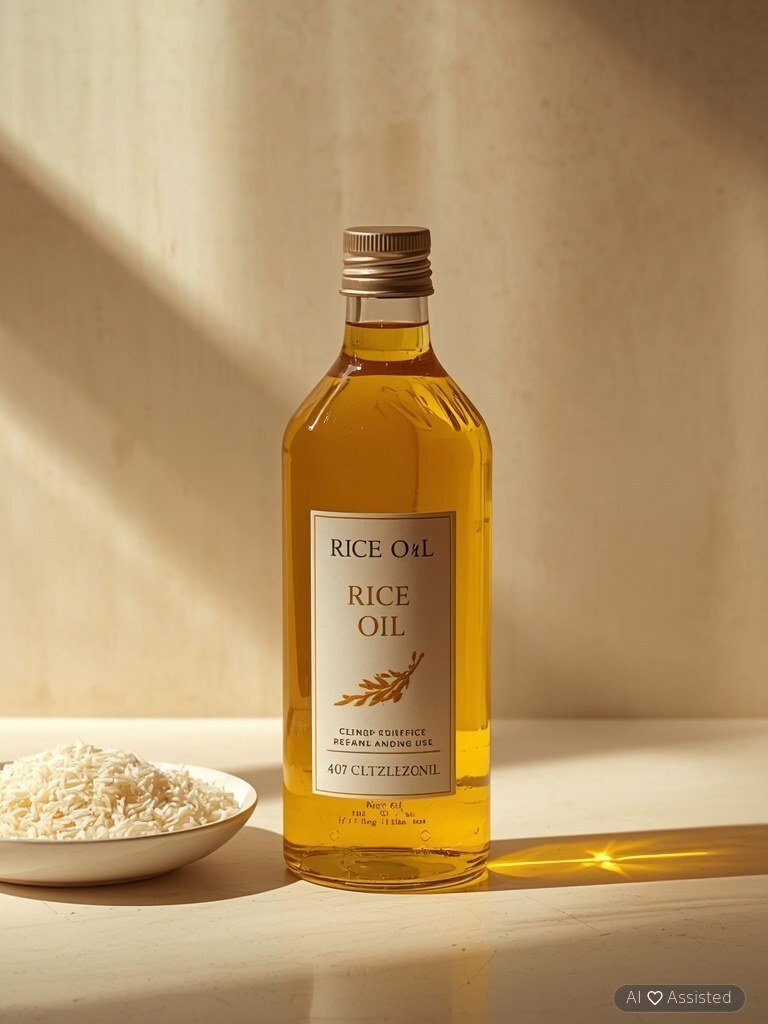
Rice bran oil, extracted from the nutrient-dense outer husk of rice grains (Oryza sativa), is increasingly celebrated in modern clinical nutrition and dermatology. It is characterized by an exceptional suite of bioactive antioxidants, most notably gamma-oryzanol, tocotrienols, and plant sterols. Featuring an exceptionally high smoke point and a delicate, neutral palate, rice bran oil ranks among the most versatile and thermally resilient culinary oils available.
Want to apply these guidelines in your daily diet?
Our smart diet generator creates a tailored meal plan in 3 minutes based on the recommendations in this article.
Extraction and characteristics of rice bran oil
Rice bran oil has long been an integral element of Asian culinary traditions, particularly in Japan where it is reverently dubbed the 'heart oil'. The raw material consists of fresh rice bran, representing only about 8% of brown rice grain mass but harboring the overwhelming majority of its lipids and antioxidants.
Stabilized immediately after milling to prevent enzymatic degradation, the bran yields a clear, golden oil with a mild, agreeable flavor that never overpowers culinary ingredients.
Bioactive compounds: gamma-oryzanol and phytosterols
The crowning bioactive constituent of rice bran oil is gamma-oryzanol—a unique molecular complex of ferulic acid esters and plant sterols, present in concentrations up to 1.5–2%. It exhibits free-radical scavenging capacity significantly superior to conventional alpha-tocopherol.
Clinical trials indicate that gamma-oryzanol, acting synergistically with phytosterols, significantly hinders intestinal cholesterol absorption, promoting favorable reductions in total and LDL cholesterol. Additionally, rice bran oil provides tocotrienols, an advanced form of vitamin E with pronounced vascular protective actions.
High smoke point and high-heat frying
A defining culinary merit of rice bran oil is its remarkably elevated smoke point, reaching 230–250°C (446–482°F). Consequently, it does not scorch, smoke, or form harmful polar compounds during high-temperature wok cooking, deep frying, or roasting.
Its fatty acid matrix is exceptionally balanced: roughly 45–47% monounsaturated (oleic), 33–35% polyunsaturated (linoleic), and 20% saturated fats. Due to its clean viscosity, foods prepared in rice bran oil absorb up to 20% less oil during frying compared to standard cooking fats.
Applications in hair and skin care
Rice bran oil has achieved iconic status within Japanese skincare rituals (J-beauty). Its intrinsic squalene, ferulic acid, and vitamin E moieties deeply hydrate dermal layers, accelerate cellular regeneration, and help attenuate hyperpigmentation.
In trichology and hair care, it fortifies hair cuticles, prevents split ends, and bestows a radiant, weightless sheen. It serves equally well as a pre-wash warm oil treatment or a protective leave-in serum for damp ends.
Tags

mgr David Janitzek
✓Diets Premium Expert
Diets Premium team expert. Specializes in nutrition plans, strength sports, and training plans.
View Profile →