5 min read
Celery – Health Benefits, Fresh Juice, and Nutritious Culinary Recipes

Laura Schneider
✓
Diets Premium Expert • 23.10.2026
✓
Scientifically reviewed by a clinical dietitian:
This article has been peer-reviewed for adherence to IŻŻ, WHO, and PTGiP clinical nutritional standards.
| Diets Premium Expert Laura Schneider | min read 5 min | Scientifically reviewed by a clinical dietitian 23.10.2026 |
Smart Voice
•Listen to the article content live
0:00
/
0:00
Key Takeaways
National celery is a vegetable that is predominantly recognized as a weight-loss aid, and it turns out that many people unknowingly consume it to provide their bodies with a wide range of nutrients and, above all, it results in a number of health benefits... It's worth exploring additional positive effects that we can achieve by incorporating it into our snacks or main meals.
Meal Plan
Want to apply these guidelines in your daily diet?
Our smart diet generator creates a tailored meal plan in 3 minutes based on the recommendations in this article.
Stalk celery of ancient provenance and historical cultivation
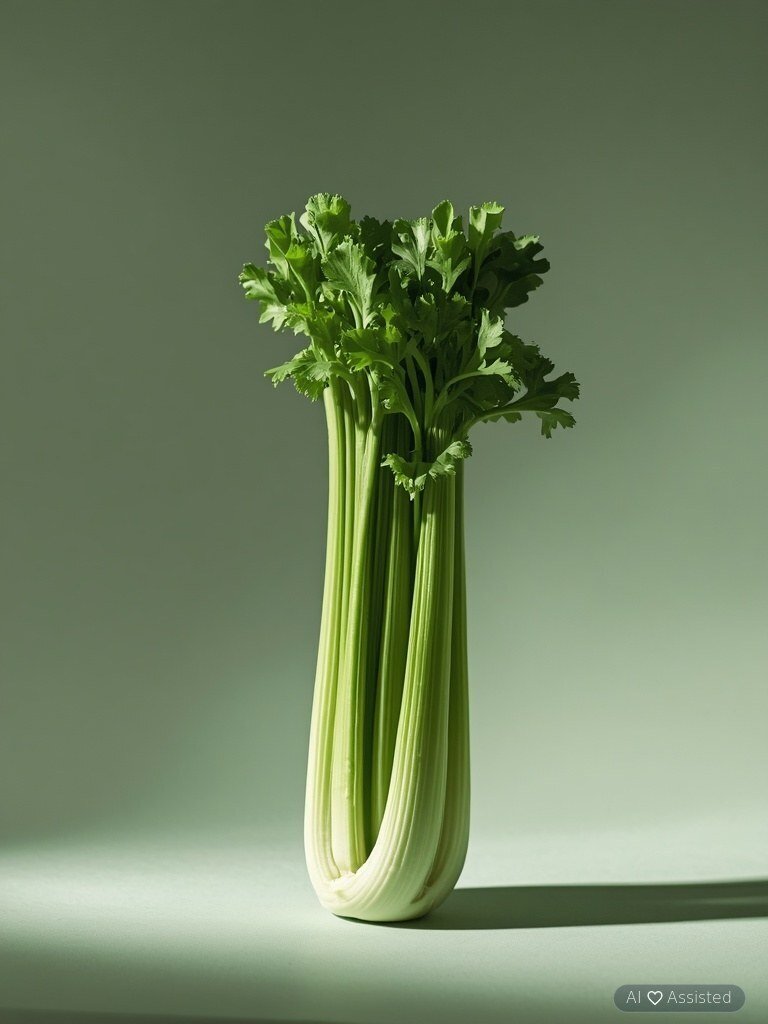
This botanical specimen, steeped in antiquity, was already valued in classical eras for its dual role as a nervine tonic to soothe agitation and as a stimulant believed to enhance sexual desire. Historical records suggest its introduction to Polish territories occurred circa the 16th century, transported from the Italian peninsula. Initially confined to culinary use as a flavoring agent, its applications have since diversified substantially. The stalks exhibit a distinctive flavor profile that balances subtle pungency with a delicate aromatic undertone. From a biochemical perspective, its composition is dominated by water, constituting approximately 94% of its mass, supplemented by a vitamin complex—including retinol (vitamin A), tocopherol (vitamin E), B-group vitamins, ascorbic acid (vitamin C), and folate (folic acid)—as well as an array of essential minerals. Owing to its propensity for nitrate (NO₃⁻) bioaccumulation, nutritional guidelines advise moderate consumption and caution against its adoption as a dietary staple.
Celery stalk – comprehensive health properties and therapeutic applications
Owing to its rich mineral composition—including potassium, magnesium, phosphorus, manganese, iron, and molybdenum—celery stalk demonstrates significant efficacy in preventing atherosclerotic changes and arthritic conditions. Its active compounds, particularly essential oils, stimulate digestive processes while supporting the function of vital organs such as the kidneys. Research confirms its ability to lower blood pressure and reduce cholesterol levels, encompassing both LDL fractions and triglycerides, thereby diminishing the risk of myocardial infarction and cerebrovascular accidents. Additionally, due to its psoralen content, celery is utilized in the treatment of psoriasis. Its high water content makes it an excellent hydrating agent, while simultaneously providing twice the vitamin C content of citrus fruits. With an exceptionally low caloric value (a single stalk contains merely 10 kcal), it serves as an optimal aid in weight management. Regular consumption exhibits diuretic effects, suppresses cravings for sweets, facilitates fat digestion, and alleviates stress, thereby enhancing nervous system function and improving sleep quality. The presence of apigenin—a compound with documented anticancer properties—positions celery as a valuable adjunct in oncological therapy or prophylaxis for ovarian, lung, liver, pancreatic, and prostate cancers. Furthermore, its pheromone content enhances blood circulation and may act as a natural aphrodisiac, supporting sexual potency. Scientists also highlight its beneficial effects on vision and skin rejuvenation.
What are the optimal methods for incorporating national celery into daily meals?
Owing to its distinctive, highly aromatic leaf profile, national celery serves as a remarkably versatile culinary ingredient that can be enjoyed both in its fresh state and when subjected to drying processes. It proves exceptionally well-suited to enhancing an extensive array of dishes—ranging from broth-based and creamy soups to rich, multilayered sauces, as well as crisp raw vegetable preparations, light mixed greens salads, and refreshing beverages such as freshly pressed juices or nutrient-dense smoothies. The mildly pungent, characteristic flavor inherent in its stalks further renders it an ideal pairing for an assortment of dipping sauces, thereby allowing its full gustatory potential to be fully appreciated.
Freshly extracted celery stalk juice – preparation method and practical consumption guidelines
While it is entirely feasible to consume this as a standalone beverage, its pronounced pungent flavor profile strongly suggests blending it with milder apple juice to enhance palatability—particularly for individuals who have not yet developed an appreciation for its distinctive aromatic complexity. **Celery-Apple Juice Preparation Guide**: 1. Thoroughly rinse celery stalks under cold water, separate them from the base, and trim the ends. 2. Wash apples, remove cores, and cut into manageable segments. 3. Process both ingredients using a cold-press juicer to preserve maximum nutrient density. 4. For those preferring a pulp-free texture, employ a fine-mesh strainer or cheesecloth for additional filtration. 5. Consume immediately post-preparation to prevent enzymatic degradation of bioactive compounds. **Blender Alternative Method**: Combine ingredients in a high-speed blender until smooth, then optionally dilute with purified water to achieve the desired viscosity.
Celery in the Kitchen – Tested and Nutritious Recipes
Exploring culinary ideas reveals hundreds of recipes where celery stalks play a starring or supportive role. Below are four nutritious, tested recipes incorporating celery into daily meals:
1. Tomato Soup with Celery Stalks: Ingredients: 4 celery stalks, 2 carrots, 2 tablespoons rapeseed oil, 500 ml tomato passata, 1.5 liters vegetable broth, 100 g brown rice, 1 tablespoon Provençal herbs, fresh parsley, salt, and black pepper. Preparation: Slice celery stalks into 5-10 cm segments and cut carrots into rounds. Sauté gently in rapeseed oil, pour in hot vegetable broth, add tomato passata and herbs, then simmer for approximately 30 minutes. Add brown rice and cook until tender. Season to taste and garnish with chopped parsley.
2. Crunchy Celery Salad: Ingredients: 1 head iceberg lettuce, 400 g celery stalks, 1 green bell pepper, 1 cucumber, 1 tablespoon pitted olives, 2 tablespoons extra virgin olive oil, juice of half a lime, salt, and pepper. Preparation: Thinly slice celery, olives, and cucumber; dice iceberg lettuce and bell pepper. Whisk olive oil with fresh lime juice, salt, and pepper. Combine all vegetables in a bowl, dress thoroughly, and serve crisp.
3. Celery, Pear, and Kale Green Smoothie: Ingredients: 1 celery stalk, 1 kiwi, 1 ripe pear, handful of fresh kale leaves, juice of half a lemon. Preparation: Peel kiwi and pear, chop celery and kale, combine in a high-speed blender with lemon juice and cold water, then blend until silky smooth.
4. Baked Herb Trout with Celery: Ingredients: 2 whole fresh trouts, 4 sprigs fresh rosemary, 4 celery stalks, 2 tablespoons olive oil, 4 teaspoons dried oregano, salt, and black pepper. Preparation: Preheat oven to 180°C. Slice celery stalks thinly. Clean and dry the trouts, rub thoroughly with olive oil and spices, and place celery slices and rosemary inside the cavity. Wrap loosely in parchment paper or foil and bake for 40 minutes.
In summary, celery stalks supply a rich spectrum of vitamins and minerals while retaining an exceptionally low caloric density. Their crisp, mildly pungent flavor makes them an ideal culinary enhancement; however, as with all nitrate-accumulating vegetables, celery should be enjoyed as part of a varied, balanced diet.

Laura Schneider
✓Diets Premium Expert
Diets Premium team expert. Specializes in nutrition plans, strength sports, and training plans.
View Profile →