Vegetables cooked by steaming - pots for steaming... Which vegetables should be cooked by steaming?

Alicja Kowalska
Alicja Kowalska ✓
Diets Premium Expert • 24.09.2026
✓
Scientifically reviewed by a clinical dietitian: This article has been peer-reviewed for adherence to IŻŻ, WHO, and PTGiP clinical nutritional standards.
Diets Premium Expert Alicja Kowalska min read 5 min Scientifically reviewed by a clinical dietitian 24.09.2026
Vegetables cooked by steaming - pots for steaming... Which vegetables should be cooked by steaming?

Smart Voice

•

Listen to the article content live

0:00 / 0:00
Key Takeaways
Billions of people prepare their meals in their homes, restaurants, or at a friend's place every day, using diverse methods of food preparation such as frying, steaming, baking, and stewing. Read the article to learn more about this method of food preparation that proves to be the healthiest. Discover which vegetables are the best for steaming and which devices should be used to achieve the best results.
Meal Plan

Want to apply these guidelines in your daily diet?

Our smart diet generator creates a tailored meal plan in 3 minutes based on the recommendations in this article.

Steam-prepared vegetables: a nutrient-preserving and flavor-enhancing culinary technique

Steam cooking is widely regarded as the optimal culinary technique for preserving the nutritional integrity of food. This method significantly reduces the loss of essential vitamins and minerals, which are otherwise susceptible to degradation or leaching when exposed to conventional boiling—where losses can reach up to 40% of the original nutrient content, and in the case of vitamin C, as much as 70%. Notably, steaming also retains the inherent textural and visual qualities of vegetables, such as crispness and vibrant coloration, which are often compromised by alternative thermal processing methods. Furthermore, this technique enhances the natural flavor profile of the ingredients, including their intrinsic subtle saltiness, thereby allowing for a reduction in added salt—a dietary component whose excessive intake is discouraged. Since steaming requires no added fats, the resulting dishes maintain a low caloric density comparable to that of raw vegetables. For these reasons, steam preparation is particularly advantageous for individuals managing body weight, as well as for patients adhering to easily digestible diets due to conditions such as diabetes, atherosclerosis, or hypertension.

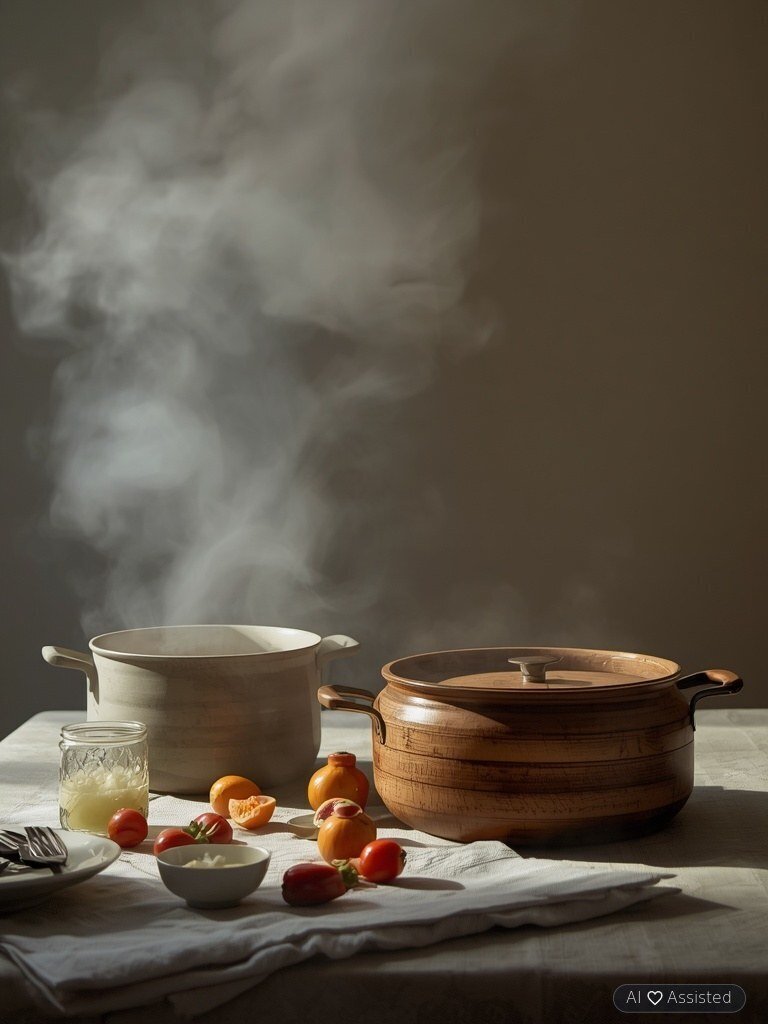
Multi-tiered steam cooking vessel with modular insert system for gentle food preparation

The technique of steam cooking represents one of the simplest yet most effective culinary methods, requiring minimal specialized equipment. The primary tool for this process is a **dedicated steam cooker**—a vessel specifically designed to facilitate this gentle heat-treatment method. However, even in the absence of such a device, this technique can be successfully employed by adapting a conventional flat-bottomed pot, a wide pan, or even a traditional wok. An essential accessory is a **perforated insert** or a woven basket made from natural fibers, which serves as a platform for the ingredients intended for cooking. It is critical to note that these components should only be placed into the pot **once the water has reached a full boil**, ensuring optimal heat utilization. To prevent delicate vegetables (such as broccoli or cauliflower) from sticking to the base of the insert, lining it with a **Napa cabbage leaf** or a silicone mat proves highly effective. **Advanced steam cookers**, on the other hand, are appliances comprising a **water reservoir** and **multiple (typically 2–3, though professional models may feature 4–5) stackable containers** with ventilated bases. This design enables the **simultaneous preparation of diverse food items**—ranging from root vegetables to fish or tender meats—within a single cooking cycle. A fundamental principle is the **stratification of ingredients by required cooking time**: the lowest tier accommodates items needing prolonged exposure to steam (e.g., potatoes, carrots), while the upper tiers hold those requiring less time (e.g., asparagus, fish fillets). High-quality steam cookers should boast a **minimum power output of 600–700 watts**, ensuring rapid attainment of the ideal steam temperature. The **standard capacity of such appliances typically ranges from 9 to 11 liters**, making them suitable for both domestic and semi-professional use. Particularly valuable are additional features such as a **digital programmable timer** or an **integrated countdown function**, which allow for precise control over cooking durations. Most contemporary models also include **comprehensive cooking-time charts**, offering guidelines for various food categories—from vegetables to seafood. This functionality empowers users to avoid both undercooking and overcooking, achieving the desired texture (whether *al dente* or tender) with consistency.

Which vegetables are best suited for steaming and how to avoid common preparation mistakes?

Steaming vegetables preserves not only their peak nutritional content but also their robust flavor, crisp texture, and vibrant color palette. However, not all varieties are well-suited to this cooking method—some may compromise their structural integrity or lose their taste profile. Crucially, precise timing is essential to ensure vegetables retain a slightly firm, *al dente* bite. Special consideration should be given to beets and tomatoes: the former are best roasted in foil to maintain their juiciness, while the latter, due to their fragile flesh and propensity to soften excessively, are better incorporated into salads or sauces. Conversely, vegetables such as broccoli, cauliflower, carrots, spinach, bell peppers, Brussels sprouts, zucchini, and potatoes excel when steamed, enhancing both their culinary appeal and nutritional density.

Steamed Vegetable Preparation – Tried-and-True Delicious Culinary Recipes

Steaming vegetables represents one of the simplest yet healthiest culinary techniques for meal preparation. The process involves cutting ingredients into uniform pieces, seasoning them with fragrant herbs or spice blends, and then gently cooking them in a dedicated steamer or a traditional colander suspended over boiling water. The outcome is dishes bursting with natural flavor, retaining maximum nutritional value and boasting vibrant, appetizing colors. Below, we present three exceptional recipe suggestions—ranging from a classic dill-infused sauce to a bold garlic-sunflower seed variation and an aromatic chicken combination—that will undoubtedly diversify everyday menus and delight household members.
Alicja Kowalska

Alicja Kowalska

✓

Diets Premium Expert

Diets Premium team expert. Specializes in nutrition plans, strength sports, and training plans.

View Profile →
Recommended articles in this category

Related Articles

Discover similar publications and expert insights.

Egg alternatives for vegetarian baking recipes
Vegetarian Baking Alternatives
Egg alternatives for vegetarian baking recipes
⏱ 3 min czytania
#Vegetarian Baking Alternatives #Animal By-Products
Manufacture and attributes of dried vegetables and fruits - examination of benefits and drawbacks
Food Science
Manufacture and attributes of dried vegetables and fruits - examination of benefits and drawbacks
⏱ 6 min czytania 📚 Food Science
#Vegetable #Fruit
Vegetable preserves – manufacturing process, advantages and disadvantages
Vegetables
Vegetable preserves – manufacturing process, advantages and disadvantages
⏱ 4 min czytania 📚 Vegetables
#Vegetable #Sauce
Optimal selection of culinary oils: Which are suitable for frying, steaming, and baking – an analysis of smoke point and applications
Health Benefits
Optimal selection of culinary oils: Which are suitable for frying, steaming, and baking – an analysis of smoke point and applications
⏱ 4 min czytania
#Health Benefits #Smoke Point
Carrots: a comprehensive guide to cultivar diversity, nutritional composition, and health-promoting attributes
Vegetables
Carrots: a comprehensive guide to cultivar diversity, nutritional composition, and health-promoting attributes
⏱ 5 min czytania 📚 Vegetables
#Nutritional Requirements #Nutritional Composition
Thermal Processing Methods – Selecting the Optimal Method
Nutritional Value
Thermal Processing Methods – Selecting the Optimal Method
⏱ 10 min czytania
#Nutritional Value #Baking
Presence of Acrylamide in Food and Its Impact on Health
Baking
Presence of Acrylamide in Food and Its Impact on Health
⏱ 3 min czytania
#Baking #Acrylamide In Food
Rice bran oil – characteristics, applications for hair and in culinary use, including frying and cooking
Bioactive Compounds
Rice bran oil – characteristics, applications for hair and in culinary use, including frying and cooking
⏱ 5 min czytania
#Bioactive Compounds #Cooking Activity
Eggplant – Nutritional Value, Recipes. How to Prepare Eggplant?
Nutritional Value
Eggplant – Nutritional Value, Recipes. How to Prepare Eggplant?
⏱ 5 min czytania
#Nutritional Value #Baking
Grape seed oil – characteristics, culinary and cosmetic uses, and facial skincare
Bioactive Compounds
Grape seed oil – characteristics, culinary and cosmetic uses, and facial skincare
⏱ 5 min czytania
#Bioactive Compounds #Grape Seed Oil
The onion - properties and applications... the onion in combating acne, scars, and hair care
Vegetables
The onion - properties and applications... the onion in combating acne, scars, and hair care
⏱ 4 min czytania 📚 Vegetables
#Syrup #Vegetable
Kalettes – Origin, Characteristics, and Application of the New Vegetable Kind
Health
Kalettes – Origin, Characteristics, and Application of the New Vegetable Kind
⏱ 3 min czytania 📚 Health
#Nutritional Properties #Vegetable
Health benefits of Kalarepa... Health benefits of Kalarepa during pregnancy, for infants, recipes... How to consume Kalarepa?
Health
Health benefits of Kalarepa... Health benefits of Kalarepa during pregnancy, for infants, recipes... How to consume Kalarepa?
⏱ 4 min czytania 📚 Health
#Antioxidants #Health Benefits
Artichoke recipes: The best recipes for artichokes
Health
Artichoke recipes: The best recipes for artichokes
⏱ 3 min czytania 📚 Health
#Vegetable #Vegetables
The Importance of Fruit and Vegetable Colors in Dietary Planning: Phytonutrient Power and the Rainbow Diet
Fruits
The Importance of Fruit and Vegetable Colors in Dietary Planning: Phytonutrient Power and the Rainbow Diet
⏱ 4 min czytania 📚 Fruits
#Diet Planning #Nutritional Planning
Cabbage (vegetable)
Health
Cabbage (vegetable)
⏱ 3 min czytania 📚 Health
#Vegetable #Vitamin C
Brussels Sprouts – a Cabbage-Family Vegetable with the Highest Vitamin C Content
Brussels Sprouts
Brussels Sprouts – a Cabbage-Family Vegetable with the Highest Vitamin C Content
⏱ 2 min czytania
#Brussels Sprouts #Vegetable
Kohlrabi – A Versatile Superfood, Best Enjoyed Fresh: Health Benefits, Vitamin C, and Culinary Uses
Vegetables
Kohlrabi – A Versatile Superfood, Best Enjoyed Fresh: Health Benefits, Vitamin C, and Culinary Uses
⏱ 1 min czytania
#Vegetables #Vegetable
Can Harmful Pesticides Be Removed from Fruits and Vegetables?
Organic Farming
Can Harmful Pesticides Be Removed from Fruits and Vegetables?
⏱ 2 min czytania
#Organic Farming #Vegetable
Beetroots. Vegetables with numerous features and high vitamin concentration
Polish Cuisine
Beetroots. Vegetables with numerous features and high vitamin concentration
⏱ 3 min czytania
#Polish Cuisine #Vegetable
How to Encourage Your Child to Eat Vegetables: Evidence-Based Strategies for Picky Eaters
Vegetables
How to Encourage Your Child to Eat Vegetables: Evidence-Based Strategies for Picky Eaters
⏱ 3 min czytania
#Vegetables #Vegetable
Optimal Additions to Fruit and Vegetable Smoothies – Maximizing Nutritional Value and Nutrient Density
Dietary Recommendations
Optimal Additions to Fruit and Vegetable Smoothies – Maximizing Nutritional Value and Nutrient Density
⏱ 4 min czytania
#Dietary Recommendations #Plant-Based Foods
Optimal thermal processing techniques for vegetables to preserve nutritional value
Nutritional Value
Optimal thermal processing techniques for vegetables to preserve nutritional value
⏱ 3 min czytania
#Nutritional Value #Antioxidant
Pattypan Squash (Patison) – Health Benefits, Nutritional Profile, and Culinary Applications
Food & Ingredients
Pattypan Squash (Patison) – Health Benefits, Nutritional Profile, and Culinary Applications
⏱ 3 min czytania 📚 Food & Ingredients
#Nutritional Composition #Nutritional Ingredients
Patulin – Mycotoxic Contamination in Fruit and Vegetable Produce and Health Risks
Food & Ingredients
Patulin – Mycotoxic Contamination in Fruit and Vegetable Produce and Health Risks
⏱ 3 min czytania 📚 Food & Ingredients
#Vegetables #Vegetable
Unlocking Your Child’s Taste Preferences: Encouraging Vegetable Consumption with Science and Creativity
Taste Preferences
Unlocking Your Child’s Taste Preferences: Encouraging Vegetable Consumption with Science and Creativity
⏱ 2 min czytania
#Taste Preferences #Vegetables
Spring’s early harvests demystified: A thorough guide to cultivating, fertilizing, preserving, and the principles of safe consumption for the season’s first vegetable offerings
Vegetables
Spring’s early harvests demystified: A thorough guide to cultivating, fertilizing, preserving, and the principles of safe consumption for the season’s first vegetable offerings
⏱ 5 min czytania
#Vegetables #Vegetable
Tomato: Nutritional profile, role in pregnancy, gout management, and healthy recipes
Pregnancy & Motherhood
Tomato: Nutritional profile, role in pregnancy, gout management, and healthy recipes
⏱ 6 min czytania 📚 Pregnancy & Motherhood
#Vegetable Cultivation #Nutritional Values
Traditional Japanese culinary arts: regional characteristics and iconic master dishes
Japanese Cuisine
Traditional Japanese culinary arts: regional characteristics and iconic master dishes
⏱ 5 min czytania
#Japanese Cuisine #Culinary Art
Freeganism: The Flavor of Food from Waste
Cake
Freeganism: The Flavor of Food from Waste
⏱ 3 min czytania
#Cake #Breakfast

Share