How to Encourage Your Child to Eat Vegetables: Evidence-Based Strategies for Picky Eaters

| Diets Premium Expert Emilia Szymańska | min read 3 min | Scientifically reviewed by a clinical dietitian 23.10.2026 |
Smart Voice
•Listen to the article content live
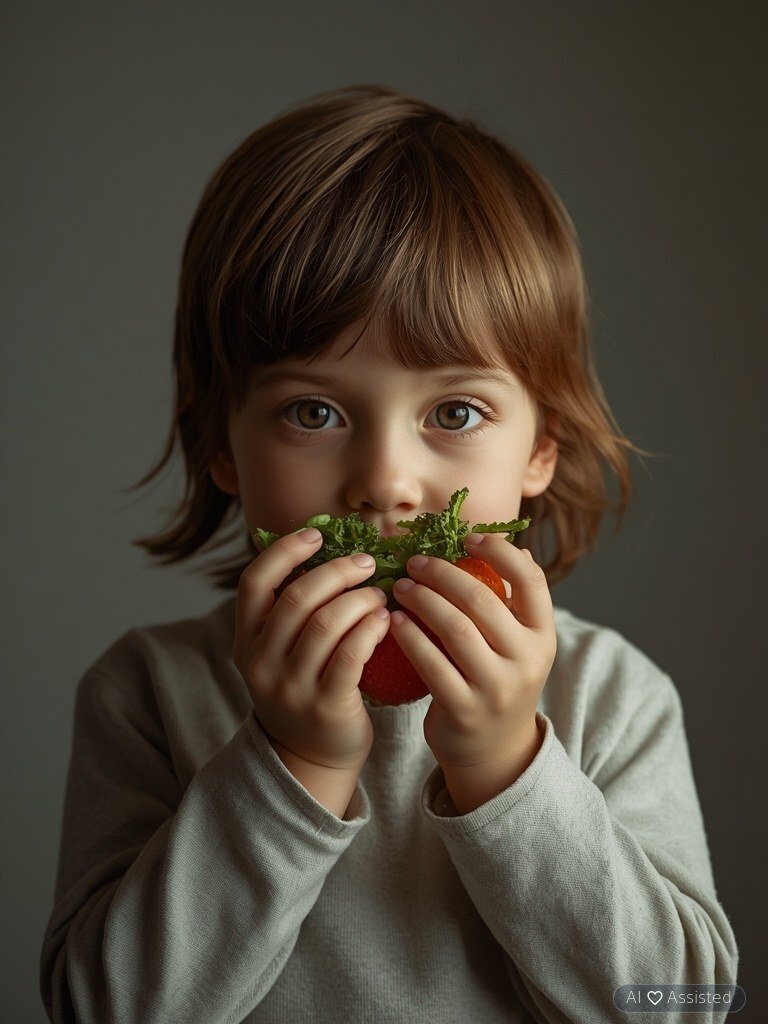
Introducing vegetables into a child's daily diet is one of the most common parenting hurdles. Food neophobia—the developmental reluctance to try unfamiliar tastes and textures—can be effectively navigated through patience, sensory exploration, and positive reinforcement. Discover evidence-based nutritional strategies to turn dinnertime struggles into joyful, healthy food habits.
Want to apply these guidelines in your daily diet?
Our smart diet generator creates a tailored meal plan in 3 minutes based on the recommendations in this article.
Taste Physiology and Psychology: Introducing Vegetables Without Friction
Fostering healthy food preferences in children begins with understanding innate human biology. Infants naturally exhibit a strong evolutionary preference for sweetness, which historically signaled safe energy sources and discouraged the ingestion of potentially toxic, bitter flora. Consequently, reluctance toward vegetables—often termed food neophobia—is a protective developmental phase rather than simple stubbornness.
To effectively guide children toward dietary diversity, pediatric nutritionists recommend key behavioral strategies:
- Early Exposure and Vegetable Prioritization: When initiating complementary feeding, introducing diverse vegetables before sweet fruits promotes taste receptor adaptation to savory and mildly bitter profiles.
- The Division of Responsibility (Ellyn Satter Model): Parents are responsible for what, when, and where food is offered, while the child determines whether and how much to eat. Pressuring a child to finish a plate directly amplifies resistance and negative associations.
- Visual and Sensory Engagement: Children respond strongly to visual aesthetics. Presenting vegetables in vibrant arrangements, finger-food sticks paired with nutritious dips, or playful shapes encourages autonomous exploration.
- Parental Role Modeling: Observational learning is paramount. When caregivers visibly relish fresh vegetables at family meals, children naturally internalize these choices as positive social norms.
The Flavor vs. Health Paradox: A Proven Psychological Breakthrough for Picky Eaters
Groundbreaking research conducted by Prof. Michal Maimaran (Northwestern University’s Kellogg School of Management) and Prof. Ayelet Fishbach (University of Chicago’s Booth School of Business) illuminated a common cognitive pitfall in parenting: excessively emphasizing the medicinal and health benefits of food.
The researchers conducted a series of controlled behavioral experiments with children aged 3 to 5. The young participants listened to illustrated stories featuring identical foods, such as carrots or crackers. In one condition, the narrative emphasized instrumental health benefits—stating that the snack made the character strong, smart, and healthy. In the alternate condition, the story focused purely on the food being delicious, fresh, and enjoyable. When given access to the actual foods, children consistently consumed substantially greater quantities when the food was described purely in terms of enjoyment. Young minds intuitively deduce that if adults must push a food’s health benefits, it must inherently compromise on taste.
The takeaway for parents is clear: rather than pleading with a child that broccoli is rich in vitamins, celebrate its culinary delight—its crisp texture, sweet crunch, and delicious flavor. Emphasizing pure enjoyment eliminates psychological resistance and fosters genuine food appreciation.
Tags

mgr Emilia Szymańska
✓Diets Premium Expert
Diets Premium team expert. Specializes in nutrition plans, strength sports, and training plans.
View Profile →