Parsnip (Pastinaca sativa) – Nutritional Properties, Culinary Applications, and Creamy Parsnip Soup Recipe

Isabella Taylor
Isabella Taylor ✓
Diets Premium Expert • 23.10.2026
✓
Scientifically reviewed by a clinical dietitian: This article has been peer-reviewed for adherence to IŻŻ, WHO, and PTGiP clinical nutritional standards.
Diets Premium Expert Isabella Taylor min read 4 min Scientifically reviewed by a clinical dietitian 23.10.2026
Parsnip (Pastinaca sativa) – Nutritional Properties, Culinary Applications, and Creamy Parsnip Soup Recipe

Smart Voice

•

Listen to the article content live

0:00 / 0:00
Key Takeaways

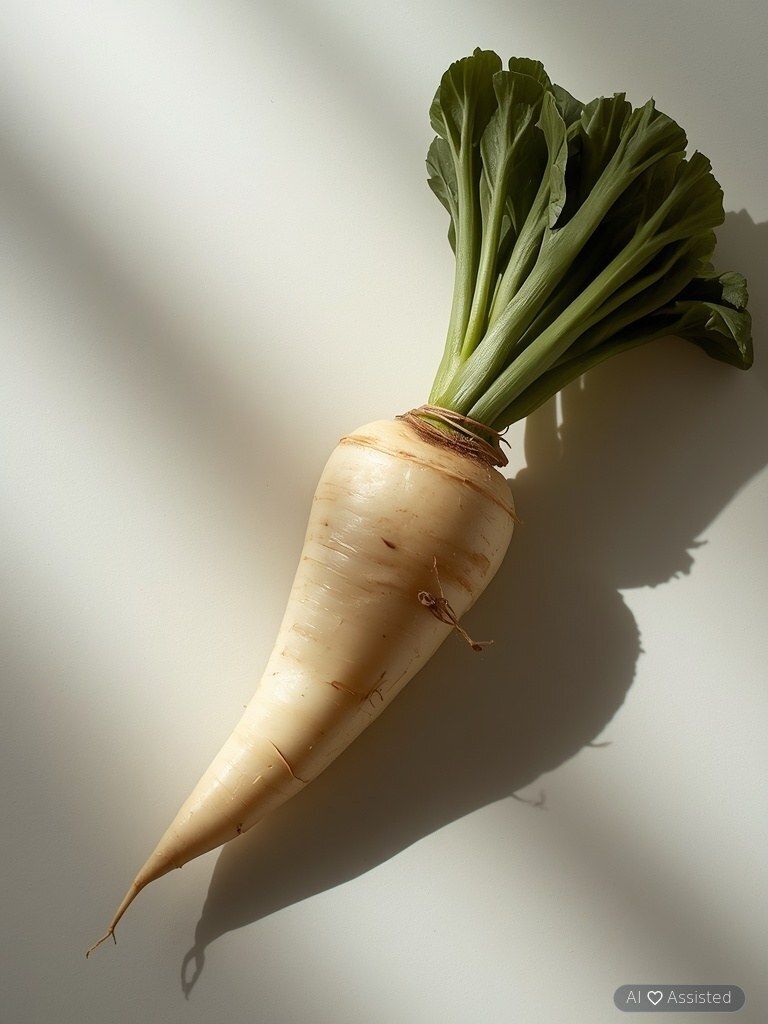
The common parsnip (Pastinaca sativa) bears a striking visual resemblance to parsley root, frequently leading to confusion at grocery stores and farmers' markets. Although both root vegetables belong to the Apiaceae family, the parsnip is distinguished by its broader crown with a recessed, dark-ringed leaf scar and its mild, sweet-nutty flavor profile reminiscent of cooked carrots with a subtle hint of anise. Thanks to its velvety texture after cooking and its rich supply of potassium, soluble dietary fiber, and bioactive essential oils, parsnip is a prized staple in clinical and culinary nutrition.

Meal Plan

Want to apply these guidelines in your daily diet?

Our smart diet generator creates a tailored meal plan in 3 minutes based on the recommendations in this article.

What Is Parsnip and How to Distinguish It from Parsley Root?

The common parsnip (Pastinaca sativa) is a biennial root vegetable in the Apiaceae family whose edible storage taproot features a pale cream to light beige skin. Before the widespread cultivation of potatoes and carrots across Central Europe and Poland, parsnips served as a primary dietary source of complex carbohydrates. Today, this heritage root vegetable is experiencing a well-deserved revival in clinical nutrition and modern gastronomy.

Because of its close visual similarity to root parsley, parsnip is occasionally mislabeled in markets during late autumn and winter. Consumers can reliably distinguish the two roots by examining three diagnostic features:

  • Crown morphology (leaf attachment site): the top of a parsnip root has a distinctly sunken, concave depression surrounded by a darker brownish ring, whereas parsley root exhibits a raised, convex crown.
  • Aroma and flavor profile: when scratched or sliced, parsnip releases a gentle, sweet scent reminiscent of carrots and fennel, whereas parsley root emits a sharp, herbaceous aroma.
  • Size and culinary texture: parsnip roots are generally broader at the shoulder, heavier, and cook down rapidly into a smooth, velvety purée rather than remaining fibrous.

Parsnip – Health Benefits and Nutritional Profile

Parsnip is a nutrient-dense root vegetable rich in complex carbohydrates, both soluble and insoluble dietary fiber, essential oils, and bioactive polyacetylenes such as falcarinol. Its caloric value is comparable to that of boiled potatoes: 100 g of fresh parsnip provides approximately 65–75 kcal, comprising 16–18 g of carbohydrates, an impressive 4.0–4.9 g of dietary fiber, 1.5–1.6 g of plant protein, and negligible fat (~0.3 g).

  • Digestive health and glycemic regulation: once cooked, parsnip is gentle on the gastrointestinal tract, stimulating healthy intestinal motility and preventing constipation. Its abundant pectin and insoluble fiber fractions slow postprandial glucose absorption, bind bile acids to reduce serum LDL cholesterol, and promote gastric distension to enhance satiety in weight-management protocols.
  • Vitamins and antioxidant defense: parsnips supply B-complex vitamins (particularly folate, thiamine, riboflavin, and pyridoxine) essential for methylation and neurological function, alongside vitamin K, vitamin E, and vitamin C (~17 mg/100 g in raw root), which supports collagen synthesis and immune defense against oxidative stress.
  • Cardiovascular and blood pressure support: providing roughly 375 mg of potassium per 100 g with virtually no sodium, accompanied by magnesium, phosphorus, zinc, copper, manganese, and iron, parsnip promotes vascular relaxation, mild physiological diuresis, and optimal blood pressure control in hypertensive patients.

Velvety Cream of Parsnip Soup – Step-by-Step Recipe

Cream of parsnip soup is a warming, deeply satisfying dish with a naturally buttery sweetness that pairs wonderfully with crunchy whole-grain sourdough croutons or toasted pumpkin seeds.

Ingredients:

  • 4 large parsnip roots, peeled and cubed,
  • 2 large potatoes, peeled and diced,
  • 1 piece of leek (white and light-green section) and a small piece of celeriac (celery root),
  • 1 medium onion and 2 cloves of garlic,
  • 1.5 liters of water or homemade vegetable broth,
  • 2 tablespoons of cold-pressed rapeseed oil or extra-virgin olive oil,
  • Seasonings: 2 bay leaves, 3–4 allspice berries, dried marjoram, freshly grated nutmeg, sea salt, and freshly ground black pepper to taste.

Preparation:

Pour the water or vegetable broth into a stockpot and add the diced potatoes, parsnips, celeriac, and the whole piece of leek along with the bay leaves and allspice berries. Simmer covered over medium heat for 20–25 minutes until the roots are fork-tender. Meanwhile, heat the oil in a skillet and gently sauté the finely chopped onion until golden; add the pressed garlic for the final 20–30 seconds until fragrant. Once the vegetables are tender, remove the bay leaves, allspice berries, and leek segment from the pot. Stir in the sautéed onion and garlic, season with marjoram, nutmeg, salt, and black pepper, and blend until silky and smooth.

Parsnip in the Kitchen – Baked Root Fries and Salad Recipes

Often overlooked or mistaken for parsley root, parsnip shines in both oven-roasted dishes and refreshing probiotic salads. Here are two simple, fiber-rich culinary preparations.

1. Oven-Baked Herbed Parsnip and Carrot Fries

  • Ingredients: 3 large parsnips, 3 large carrots, 2 tablespoons of rapeseed or olive oil, sea salt, freshly ground black pepper, and Herbes de Provence to taste.
  • Preparation: Peel, wash, and pat dry the roots, then slice them into batons resembling classic French fries. Toss the batons in a bowl with oil, Herbes de Provence, salt, and pepper until evenly coated. Spread in a single layer on a parchment-lined baking sheet and roast in a preheated oven at 180°C (350°F) for 25–30 minutes until tender inside and caramelized along the edges.

2. Parsnip, Crisp Apple, and Fermented Cucumber Salad

  • Ingredients: 1 large parsnip root, 1 crisp apple, 2 fermented (lacto-pickled) cucumbers, 1/2 bunch of fresh flat-leaf parsley, 4 tablespoons of thick plain Greek yogurt, freshly ground black pepper.
  • Preparation: Peel the parsnip, boil in lightly salted water until just tender, and allow it to cool completely. Dice the cooled parsnip, fermented cucumbers, and apple into uniform cubes. Fold together with the thick natural yogurt, finely chopped fresh parsley, and freshly ground black pepper.
Isabella Taylor

Isabella Taylor

✓

Diets Premium Expert

Diets Premium team expert. Specializes in nutrition plans, strength sports, and training plans.

View Profile →

Recommended articles in this category

Related Articles

Discover similar publications and expert insights.

Turmeric (Curcuma longa): nutritional profile, mechanisms of action, piperine synergy, and functional culinary applications
Food & Ingredients
Turmeric (Curcuma longa): nutritional profile, mechanisms of action, piperine synergy, and functional culinary applications
⏱ 4 min czytania 📚 Food & Ingredients
#Bioactive Compounds In Plants #Anti-inflammatory Compounds
Bromelain – Effects and Potential Side Effects
Raw
Bromelain – Effects and Potential Side Effects
⏱ 3 min czytania
#Raw #Pineapple
Tahini Paste Explained: Characteristics, Pricing, and Where to Buy. How to Make Sesame Paste and Its Culinary Uses
Food & Ingredients
Tahini Paste Explained: Characteristics, Pricing, and Where to Buy. How to Make Sesame Paste and Its Culinary Uses
⏱ 4 min czytania 📚 Food & Ingredients
#Culinary Traditions #Culinary Uses
Tomato: Nutritional profile, role in pregnancy, gout management, and healthy recipes
Pregnancy & Motherhood
Tomato: Nutritional profile, role in pregnancy, gout management, and healthy recipes
⏱ 6 min czytania 📚 Pregnancy & Motherhood
#Vegetable Cultivation #Nutritional Values
Spanish culinary heritage: defining characteristics, regional gastronomy, and authentic recipes
Seasonal Ingredients
Spanish culinary heritage: defining characteristics, regional gastronomy, and authentic recipes
⏱ 5 min czytania
#Seasonal Ingredients #Regional Specialties
Greek culinary arts: defining characteristics, cultural heritage, and timeless master recipes
Culinary Traditions
Greek culinary arts: defining characteristics, cultural heritage, and timeless master recipes
⏱ 7 min czytania
#Culinary Traditions #Greek Cuisine
Rice vinegar – characteristics, culinary uses, and homemade preparation. What are the viable alternatives to rice vinegar in cooking?
Culinary Uses
Rice vinegar – characteristics, culinary uses, and homemade preparation. What are the viable alternatives to rice vinegar in cooking?
⏱ 3 min czytania
#Culinary Uses #Preserved Vegetables
Carrots: a comprehensive guide to cultivar diversity, nutritional composition, and health-promoting attributes
Vegetables
Carrots: a comprehensive guide to cultivar diversity, nutritional composition, and health-promoting attributes
⏱ 5 min czytania 📚 Vegetables
#Nutritional Requirements #Nutritional Composition
Cooking in a Food Steamer – Buying Guide, Steaming Rules, Health Benefits, and Healthy Recipes
Food & Ingredients
Cooking in a Food Steamer – Buying Guide, Steaming Rules, Health Benefits, and Healthy Recipes
⏱ 5 min czytania 📚 Food & Ingredients
#Culinary Techniques #Nutritional Value
Pediatric enterobiasis – clinical manifestations and therapeutic approaches. Home-based remedies for eliminating pinworms in children
Food & Ingredients
Pediatric enterobiasis – clinical manifestations and therapeutic approaches. Home-based remedies for eliminating pinworms in children
⏱ 4 min czytania 📚 Food & Ingredients
#Vegetables #Homemade
Pattypan Squash (Patison) – Health Benefits, Nutritional Profile, and Culinary Applications
Food & Ingredients
Pattypan Squash (Patison) – Health Benefits, Nutritional Profile, and Culinary Applications
⏱ 3 min czytania 📚 Food & Ingredients
#Nutritional Composition #Nutritional Ingredients
Patulin – Mycotoxic Contamination in Fruit and Vegetable Produce and Health Risks
Food & Ingredients
Patulin – Mycotoxic Contamination in Fruit and Vegetable Produce and Health Risks
⏱ 3 min czytania 📚 Food & Ingredients
#Vegetables #Vegetable
Acetic Acid (Ethanoic Acid): Physicochemistry, Fermentation Kinetics, Metabolic Effects, and Market Pricing
Food & Ingredients
Acetic Acid (Ethanoic Acid): Physicochemistry, Fermentation Kinetics, Metabolic Effects, and Market Pricing
⏱ 3 min czytania 📚 Food & Ingredients
#Antimicrobial Properties #Food Preservation
Kumquat: flavor profile, market availability, and culinary uses – how to eat this miniature citrus fruit
Food & Ingredients
Kumquat: flavor profile, market availability, and culinary uses – how to eat this miniature citrus fruit
⏱ 3 min czytania 📚 Food & Ingredients
#Culinary Uses #Citrus Fruit
Wild chanterelle mushrooms (Cantharellus cibarius): nutritional profile, culinary roles, and preservation methods—drying, pickling, and freezing
Food & Ingredients
Wild chanterelle mushrooms (Cantharellus cibarius): nutritional profile, culinary roles, and preservation methods—drying, pickling, and freezing
⏱ 3 min czytania 📚 Food & Ingredients
#Botanical Applications #Culinary Uses
Common Walnut (Juglans regia): botanical characteristics, nutritional composition, and both time-honored and contemporary culinary applications
Food & Ingredients
Common Walnut (Juglans regia): botanical characteristics, nutritional composition, and both time-honored and contemporary culinary applications
⏱ 6 min czytania 📚 Food & Ingredients
#Nutritional Composition #Nutritional Ingredients
Surimi Crab Sticks – Technological Composition, Nutritional Value, Market Price, and Culinary Recipes
Food & Ingredients
Surimi Crab Sticks – Technological Composition, Nutritional Value, Market Price, and Culinary Recipes
⏱ 5 min czytania 📚 Food & Ingredients
#Nutritional Composition #Omega-3 Fatty Acids
Mango: Nutritional properties, its role in weight-loss diets, and practical methods for preparation and consumption in everyday cooking
Fruits
Mango: Nutritional properties, its role in weight-loss diets, and practical methods for preparation and consumption in everyday cooking
⏱ 6 min czytania 📚 Fruits
#Nutritional Properties #Bioactive Compounds
Kalettes – Origin, Characteristics, and Application of the New Vegetable Kind
Health
Kalettes – Origin, Characteristics, and Application of the New Vegetable Kind
⏱ 3 min czytania 📚 Health
#Nutritional Properties #Vegetable
Comparison of Açaí Berries with Goji Berries – Discover the Differences
Nutrition
Comparison of Açaí Berries with Goji Berries – Discover the Differences
⏱ 3 min czytania 📚 Nutrition
#Health Benefits #Cooking
How to Prepare Eggs: Soft- and Hard-Boiled
Soft-Boiled Egg
How to Prepare Eggs: Soft- and Hard-Boiled
⏱ 3 min czytania
#Soft-boiled Egg #Cooking
10 Uses of Coconut Oil – Useful Beyond the Kitchen
Coconut Oil
10 Uses of Coconut Oil – Useful Beyond the Kitchen
⏱ 3 min czytania
#Coconut Oil #Coconut
Broccoli: Features and Cooking Instructions
Cabbage
Broccoli: Features and Cooking Instructions
⏱ 6 min czytania
#Cabbage #Cooking
Extract from Ripe Tomatoes
Cooking
Extract from Ripe Tomatoes
⏱ 2 min czytania
#Cooking
Fenugreek (Trigonella foenum-graecum): Effects, Applications, and Dosage
Cooking
Fenugreek (Trigonella foenum-graecum): Effects, Applications, and Dosage
⏱ 3 min czytania
#Cooking #Coconut
Buckwheat (fresh or chilled)
Cooking
Buckwheat (fresh or chilled)
⏱ 2 min czytania
#Cooking #Chilled
Semolina – Types, Health Properties, and Culinary Uses
Soup
Semolina – Types, Health Properties, and Culinary Uses
⏱ 2 min czytania
#Soup #Cooking
Bay leaf extract – contraindications and adverse effects
Cooking
Bay leaf extract – contraindications and adverse effects
⏱ 3 min czytania
#Cooking
Culinary guidelines: how to cook chickpeas, cakes, lentils
Chickpeas
Culinary guidelines: how to cook chickpeas, cakes, lentils
⏱ 7 min czytania
#Chickpeas #Chickpea
7 Essential Principles for Shopping in the Interest of Health
Cooking
7 Essential Principles for Shopping in the Interest of Health
⏱ 4 min czytania
#Cooking

Share