Extraordinary Spice Varieties to Enrich Your Kitchen with Flavor Diversity and Health Benefits

| Diets Premium Expert David Janitzek | min read 6 min | Scientifically reviewed by a clinical dietitian 23.10.2026 |
Smart Voice
•Listen to the article content live
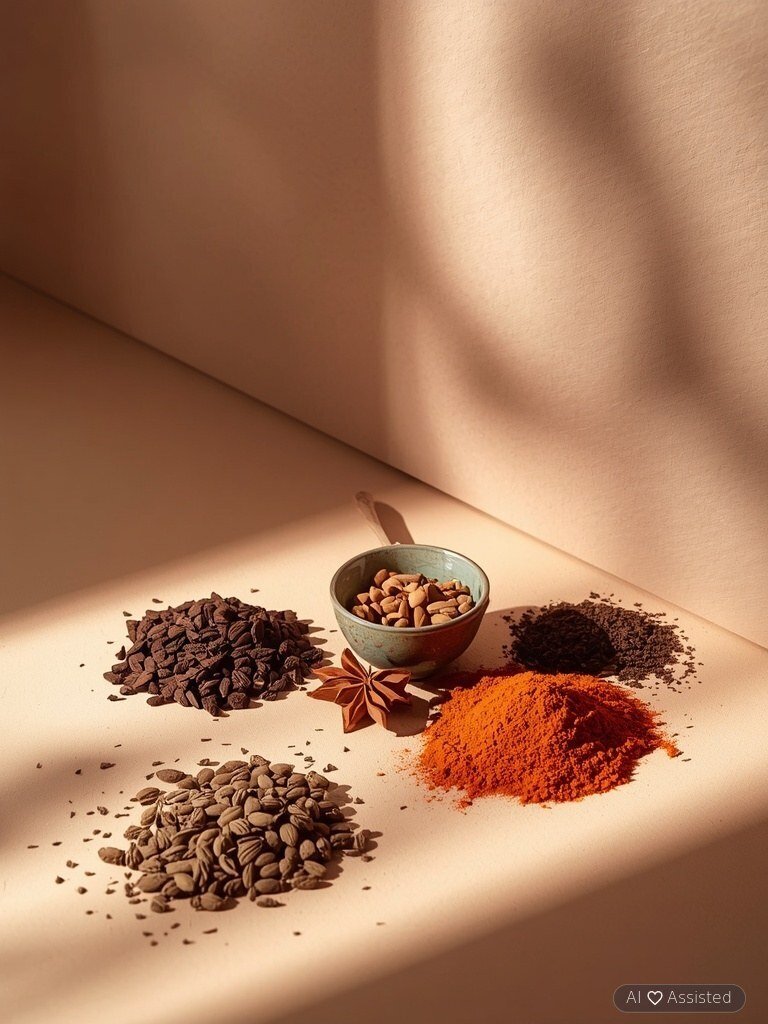
Most spices that are known to us and frequently utilized in culinary arts originate predominantly from Asia and America. However, there exist less common varieties that are not as popular in European cuisine but are increasingly appearing in our market. Incorporate these exotic, unconventional spices into your dishes to astound your guests with the originality of the flavor.
Want to apply these guidelines in your daily diet?
Our smart diet generator creates a tailored meal plan in 3 minutes based on the recommendations in this article.
This article is professional premium content (PRO) provided in its entirety.
Extraordinary Global Flavors: Uncovering Forgotten Treasures of Asian and Beyond Cuisines
This comprehensive guide introduces unique spices from across the globe whose flavors and aromas enrich traditional Asian, South American, and Middle Eastern cuisines. Discover the secrets of *Pandanus amaryllifolius*, whose leaves impart a delicate floral aroma to dishes, alongside the intense *Wasabia japonica*—a prized Japanese treasure with a sharp, refreshing character. Learn about the properties of *Murraya koenigii*, an indispensable component of curry blends, and tamarind, whose tangy profile pairs perfectly with meat and vegetable dishes. We also highlight lesser-known yet equally captivating spices such as ajwain, with its thyme-and-cumin-like flavor profile, and boldo—a Chilean herb with a forest-like aroma used in South American cooking. Each of these plants not only offers distinctive taste qualities but also boasts a rich history of culinary and medicinal applications, making them invaluable elements of global gastronomic heritage.
Treasures of the Middle East and Africa: Sumac, Black Seed, and Grains of Paradise in Cooking
Middle Eastern and North African cuisines are distinguished by botanical seasonings possessing extraordinary flavor complexity and outstanding antioxidant capacity. Foremost among them is sumac—a deep burgundy powder ground from dried berries of Rhus coriaria, renowned for its brisk, tart, lemony tang. Abundant in anthocyanins, hydrolyzable tannins, and gallic acid, sumac delivers pronounced anti-inflammatory and glycemic-stabilizing actions, serving as an exceptional natural substitute for excess sodium or vinegar in poultry marinades, grilled fish, and traditional salads like fattoush. Equally remarkable is black seed (Nigella sativa), whose dark seeds are rich in thymoquinone—a potent immunomodulatory and bronchodilatory phytochemical extensively documented for respiratory and gastrointestinal support. From West Africa come Grains of Paradise (Aframomum melegueta), offering a captivating aroma uniting black pepper, cardamom, and ginger; their active constituent, 6-paradol, has been shown to stimulate brown adipose tissue (BAT) thermogenesis.
Far Eastern Roots and Seeds: Galangal, Sichuan Pepper, and Asafoetida (Hing)
Asian culinary heritage showcases masterly utilization of botanical seasonings engineered by nature to stimulate digestion and metabolic vitality. Galangal (Alpinia galanga), an aromatic rhizome related to ginger exhibiting distinct pine and eucalyptus notes, forms the indispensable backbone of Southeast Asian tom yum soups and authentic curry pastes; it is rich in galangin and alpidin, which exert antimicrobial, antifungal, and carminative actions. Sichuan pepper (Zanthoxylum bungeanum), rather than a true peppercorn, consists of the dried pericarp of prickly ash berries. Its bioactive constituent hydroxy-alpha-sanshool produces a tingling, numbing sensation (the iconic málà sensation), powerfully stimulating salivary and gastric secretions to optimize macronutrient digestion. Another exceptional Indian spice is asafoetida (hing)—an oleo-gum-resin extracted from Ferula roots that, upon brief blooming in hot ghee or oil, emits a rich allium aroma, providing a low-FODMAP, gut-friendly alternative to garlic and onions that effectively eliminates flatulence associated with legumes.
Health Benefits and Pairing Art: How to Maximize Aroma and Bioactive Potency
Incorporating rare culinary spices into everyday cooking represents one of the simplest and most potent strategies for augmenting dietary polyphenol intake and combating systemic inflammation. To unleash the full gastronomic and pharmacological potential of whole seeds, traditional dry-toasting in an ungreased skillet over medium heat for 60 to 90 seconds prior to grinding is highly recommended. This gentle thermal exposure ruptures lipid storage vacuoles, volatizing aromatic essential oils. Fat-soluble spices and resins (such as sumac, turmeric, and asafoetida) should be bloomed in cold-pressed olive oil, coconut oil, or clarified butter early in the culinary process, exponentially enhancing the systemic bioavailability of their lipophilic phytochemicals. Embracing novel global spices drastically curtails reliance on refined sodium and synthetic flavor enhancers while actively fostering microbial diversity in the gut.

mgr David Janitzek
✓Diets Premium Expert
Diets Premium team expert. Specializes in nutrition plans, strength sports, and training plans.
View Profile →