PRO
7 min read
Soy sauce – light, dark, ingredients, price, calorie content, recipes... Does soy sauce contribute to health?

Felix Weber
✓
Diets Premium Expert • 24.09.2026
✓
Scientifically reviewed by a clinical dietitian:
This article has been peer-reviewed for adherence to IŻŻ, WHO, and PTGiP clinical nutritional standards.
| Diets Premium Expert Felix Weber | min read 7 min | Scientifically reviewed by a clinical dietitian 24.09.2026 |
Smart Voice
•Listen to the article content live
0:00
/
0:00
Key Takeaways
Soy sauce – an indispensable ingredient of sushi, a necessary component of traditional Asian dishes, and a contemporary addition to European cuisine... There are no doubts that this is a product of extraordinary popularity, whose admirers can be found all over the world... But do we know the difference between light and dark soy sauce? Can frequent consumption of this product have adverse effects on health?
Meal Plan
Want to apply these guidelines in your daily diet?
Our smart diet generator creates a tailored meal plan in 3 minutes based on the recommendations in this article.
PRO Content
PRO
This article is professional premium content (PRO) provided in its entirety.
Fermented soybean condiment – a traditional Asian seasoning with a rich aroma and distinctive flavor complexity
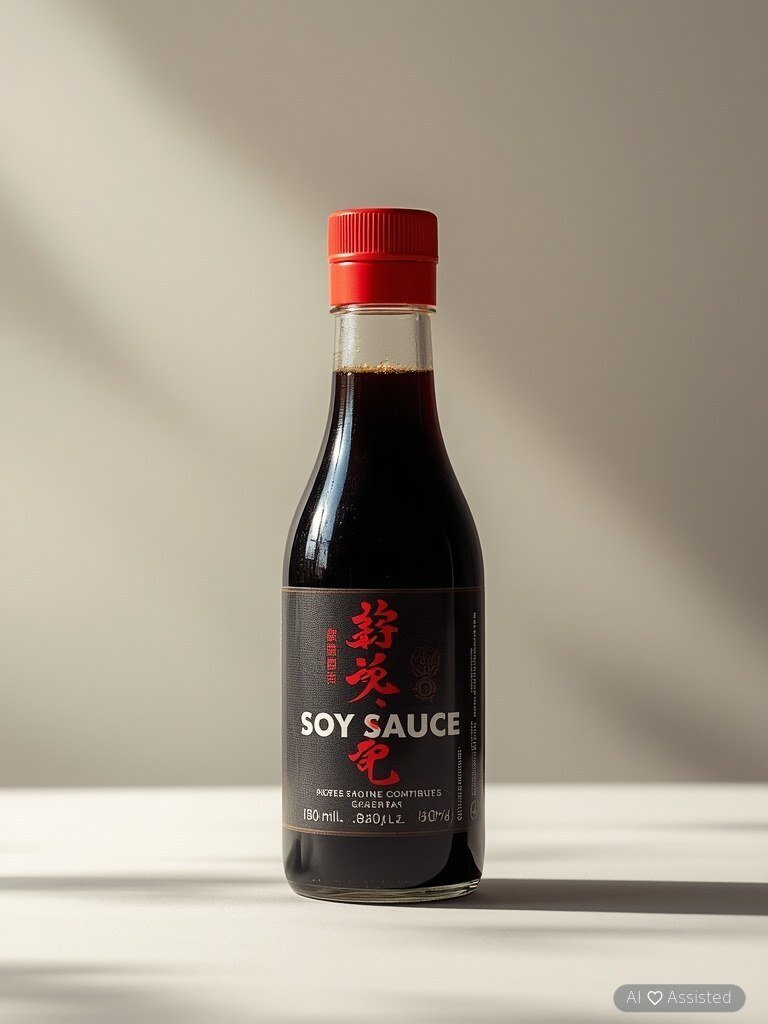
This deeply aromatic, dark-hued liquid—produced through the meticulous fermentation of soybean and wheat grains via the specialized fungus *Aspergillus oryzae*—stands as a cornerstone of East Asian culinary heritage. The centuries-old production method yields a multifaceted flavor profile that artfully balances sweet, salty, and occasionally subtly tangy undertones. Regional variations in recipes are substantial, with differences arising not only from the proportional blend of core ingredients but also from the potential inclusion of supplementary grains or flavor-modifying additives. Within Japan alone, six distinct classifications of this condiment exist, each defined by its viscosity, color spectrum (ranging from pale amber to deep ebony), and taste intensity—spanning delicate subtlety to robust boldness. Of particular note is the *tamari* variant, distinguished by its negligible or entirely absent wheat content, rendering it a gluten-free alternative suitable for individuals with celiac disease or gluten sensitivity. Chinese culinary tradition, by contrast, adopts a more streamlined taxonomy, recognizing three primary forms: a light, mildly flavored sauce; a darker, thicker iteration with enhanced depth; and a mushroom-infused variety celebrated for its pronounced umami—the so-called "fifth taste"—which has garnered growing appreciation among connoisseurs of Asian gastronomy.
Light versus dark soy sauce: functional and flavor-based distinctions
While the term "mushroom soy sauce" might misleadingly imply that fungi are its primary component, it actually refers to traditional soy sauce enhanced with a mushroom-infused aroma. Far more critical for culinary applications, however, is the distinction between light and dark varieties—differences that extend beyond mere color to encompass fermentation duration, viscosity, and flavor complexity, all of which directly influence their role in both Asian and global cuisine.
Traditional soy sauce – composition breakdown, manufacturing process, and market pricing trends
While soy sauce may initially appear to be a straightforward and unpretentious condiment, its composition and production reveal a surprising degree of complexity. A premium-quality variant should be distinguished by a concise ingredient declaration limited to four fundamental components: purified spring water, fully fermented soybean paste, whole-grain wheat flour, and unrefined sea salt. Certain traditional formulations may also incorporate a measured quantity of ethyl alcohol, which serves to expedite the microbial fermentation phase without compromising flavor development. The most reliable indicator of superior quality lies in the proportional representation of soybeans relative to other constituents: the higher their placement in the ingredient hierarchy, the greater the protein concentration in the final product. It is important to note, however, that such meticulously crafted sauces incur elevated production costs—primarily due to extended fermentation periods and rigorous quality controls—which inevitably translate into higher retail pricing. Consumers can expect to invest between 11 and 14 złoty for a standard 150-milliliter bottle of artisanal or certified organic soy sauce. In stark contrast, budget-oriented alternatives frequently substitute core ingredients with hydrolyzed soybean extracts, nutrient-depleted wheat byproducts, or even synthetic flavor enhancers. More concerning still is the prevalent use of artificial additives in economical formulations—ranging from monosodium glutamate to sodium benzoate preservatives—which have been clinically associated with allergic sensitivities in susceptible individuals. Consequently, discerning label scrutiny should precede any purchase decision, as apparent cost savings on inferior products may ultimately entail unseen health-related expenditures.
Caloric Content of Soy Sauce: A Nutritional Breakdown and Compositional Variations
While soy sauce is not inherently a high-calorie food product, its energy value exhibits substantial variability depending on the manufacturer and the specific composition of ingredients. Per 100 milliliters, the caloric content ranges from as low as 26 kcal to as high as 107 kcal, with the average-quality product typically containing between 70 and 80 kcal. Notably, a lower caloric count is not necessarily advantageous, as it frequently correlates with reduced soy protein content, suggesting that minimal quantities of soybeans were utilized during production. It is important to recognize that the cited values correspond to a volume equivalent to roughly two-thirds of a standard bottle—a quantity that is seldom consumed in a single serving. In culinary practice, soy sauce is generally used sparingly as a seasoning, meaning its contribution to overall dietary caloric intake remains comparatively modest.
A Comprehensive Health Assessment of Soy Sauce Consumption: Benefits and Potential Risks
Soy sauce is distinguished by its low caloric value, primarily derived from plant-based protein. However, does this mean it can be consumed without any health concerns? The answer is not entirely straightforward. While it contains no fat and has minimal calories, soy sauce is notably high in sodium—with concentrations ranging from 10 to 16 grams per 100 milliliters. It is important to note, though, that soy sauce is classified as a condiment, meaning its actual dietary intake remains relatively modest. Healthy individuals should simply avoid adding extra salt to dishes that have already been seasoned with it. Conversely, those with hypertension or kidney-related conditions must exercise greater caution, both in selecting products with lower sodium content and in moderating the amounts used in cooking. On the positive side, soy sauce provides certain essential minerals, including calcium (33 mg per 100 ml compared to 29 mg per 100 g in table salt), potassium (435 mg per 100 ml vs. none in salt), and iron (1.5 mg per 100 ml vs. 0.2 mg in salt). It also contains trace amounts of B vitamins. As a seasoning, it is used sparingly, which inherently limits its overall contribution to daily nutrient intake. A far more significant health risk arises from the excessive consumption of conventional table salt, as well as hidden salt in processed foods such as deli meats and bread. Although soy sauce is derived from soybeans—a plant renowned for its isoflavone content (antioxidants with documented benefits for menopausal symptoms)—the final product contains only negligible amounts of these compounds (less than 0.1 mg per 100 ml). For context, soy flour contains 130–170 mg of isoflavones per 100 grams, while tofu provides approximately 70 mg in the same quantity.
Soya sauce is the recipe
Soya sauce gives the food its characteristic aroma and colour. It's hard to imagine an Asian dish that doesn't have this distinctive spice. It is an integral part of sushi, so you can also make it into soups and fried dishes. And it's also a good choice as a salad dressing and an add-on to soya foods. Soya soup recipe with a large soy sauce. Ingredients: 2 liters of rice, 2 cans of chopped sausages, a spoonful of chocolates, 2 3 slices to make sushi.
Tags

mgr Felix Weber
✓Diets Premium Expert
Diets Premium team expert. Specializes in nutrition plans, strength sports, and training plans.
View Profile →