National leaf parsley: cultivation profile and culinary applications

| Diets Premium Expert Tim Klein | min read 2 min | Scientifically reviewed by a clinical dietitian 23.10.2026 |
Smart Voice
•Listen to the article content live
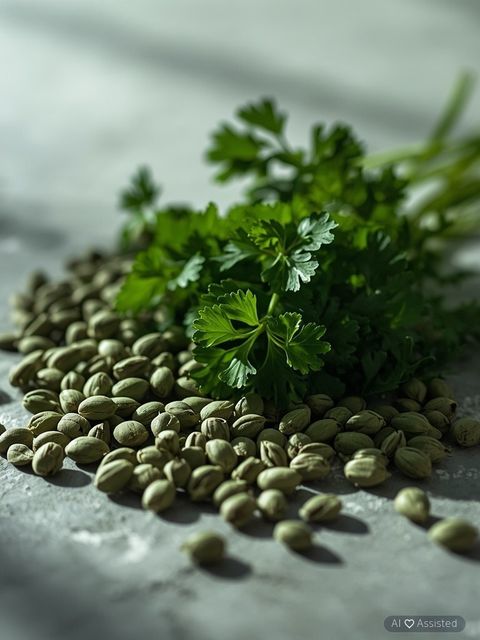
Fresh parsley greens (Petroselinum crispum fol.) represent one of the most nutrient-dense leafy herbs in European culinary culture and nutritional science. It features extraordinary concentrations of L-ascorbic acid, non-heme iron, dietary folates, chlorophyll, and apigenin. This comprehensive article explores its nutritional density, systemic detoxifying properties, and culinary preservation strategies.
Want to apply these guidelines in your daily diet?
Our smart diet generator creates a tailored meal plan in 3 minutes based on the recommendations in this article.
Nutritional Profile: Concentrated Vitamin C, Non-Heme Iron, and Chlorophyll
Fresh parsley greens are a recognized nutritional powerhouse: 100 grams of fresh leaves deliver upwards of 160–180 mg of L-ascorbic acid (vitamin C)—more than triple the concentration found in lemons or oranges. Furthermore, it provides approximately 5 mg of non-heme iron per 100 g. The concurrent presence of massive ascorbic acid titers chemically reduces ferric iron to ferrous iron (Fe2+), dramatically amplifying intestinal absorption. Parsley foliage is also rich in photosynthetic chlorophyll, lutein, and provitamin A carotenoids.
Energy Density, Protective Flavonoids, and Renal Diuretic Action
A 100-gram serving of parsley foliage supplies merely 36–41 kcal, accompanied by roughly 3 g of protein and over 4 g of dietary fiber. Its crowning phytochemical constituent is apigenin—a polyphenolic flavonoid with documented antineoplastic, anti-inflammatory, and neuroprotective properties. Essential oil terpenes (apiol and myristicin) gently enhance renal glomerular perfusion, conferring mild diuretic clearance of excess sodium while rapidly neutralizing volatile oral sulfur compounds to freshen breath.
Culinary Applications: Techniques for Preserving Fragile Vitamin C
Because L-ascorbic acid degrades rapidly upon thermal exposure and prolonged boiling, parsley greens should never be subjected to extended cooking in broths. Optimum culinary practice dictates finely chopping the herb immediately prior to serving and garnishing hot dishes directly on the plate. Fresh parsley shines as the primary ingredient in vibrant green smoothies blended with crisp green apple and lemon, or in authentic Levantine tabbouleh with bulgur wheat, virgin olive oil, and vine-ripened tomatoes.
Tags

mgr Tim Klein
✓Diets Premium Expert
Diets Premium team expert. Specializes in nutrition plans, strength sports, and training plans.
View Profile →