Cardioprotective Evidence for Routine Peanut Butter Intake: Lipid Dynamics and Clinical Recommendations

| Diets Premium Expert Wojciech Wiśniewski | min read 1 min | Scientifically reviewed by a clinical dietitian 23.10.2026 |
Smart Voice
•Listen to the article content live
Want to apply these guidelines in your daily diet?
Our smart diet generator creates a tailored meal plan in 3 minutes based on the recommendations in this article.
Fatty Acid Architecture of Peanut Butter and Vascular Health
Although botanically classified as subterranean legumes, peanuts (Arachis hypogaea) parallel tree nuts in their dense lipid architecture. Lipids constitute roughly 50% of their total mass, over 80% of which comprise heart-healthy unsaturated fatty acids—principally monounsaturated oleic acid (approx. 50%) and polyunsaturated omega-6 linoleic acid (approx. 30%).
This fatty acid distribution closely mimics the lipid signature of extra virgin olive oil. Oleic acid enhances vascular endothelial elasticity, shields LDL particles from atherogenic oxidation, and impedes foam cell accumulation. Pure natural peanut butter contains zero industrial trans-fatty acids, provided no partially hydrogenated oils are introduced.
Bioactive Protective Compounds: Phytosterols, Resveratrol, and L-Arginine
Beyond favorable fatty acids, peanut butter delivers concentrated bioactive micronutrients conferring pronounced cardioprotection. Chief among these are phytosterols (predominantly beta-sitosterol, 60–100 mg/100 g), which competitively impede dietary and biliary cholesterol absorption in the small intestine, lowering circulating systemic cholesterol levels.
Peanuts represent one of the few prominent dietary sources of resveratrol—a potent polyphenol safeguarding vascular endothelium against inflammatory stress. Moreover, peanuts furnish abundant L-arginine, the critical amino acid precursor for endothelial nitric oxide (NO) synthase, driving physiological vasodilation and blood pressure modulation.
Clinical Evidence and Modulation of Serum Lipid Profiles
Substantial prospective epidemiological cohorts (including the landmark Nurses' Health Study and Adventist Health Study) consistently reveal that routine nut and peanut butter intake (approx. 1 to 2 tablespoons daily) correlates with a 25% to 40% reduction in coronary heart disease risk and all-cause cardiovascular mortality.
Randomized clinical trials demonstrate that substituting saturated animal fats or refined sugars with peanut butter produces a 8% to 14% decline in atherogenic LDL-C and marked triglyceride lowering, all while preserving or marginally increasing protective high-density lipoprotein (HDL-C) concentrations.
Glycemic Control, Satiety, and Type 2 Diabetes Prevention
Cardiovascular integrity is inextricably bound to glycemic stability and insulin signaling. Pure peanut butter exhibits an exceptionally low Glycemic Index (GI approx. 14) and negligible Glycemic Load, effectively blunting postprandial glucose excursions and hyperinsulinemic spikes.
The dense synergy of vegetable protein (approx. 25 g/100 g), fermentable fiber (approx. 8 g/100 g), and lipids triggers the sustained release of satiety enterohormones (CCK, PYY, GLP-1). By dampening hunger signals and mitigating overeating, routine moderate intake supports weight management and dramatically reduces type 2 diabetes incidence.
Selecting Quality Peanut Butter: Scrutinizing the Label
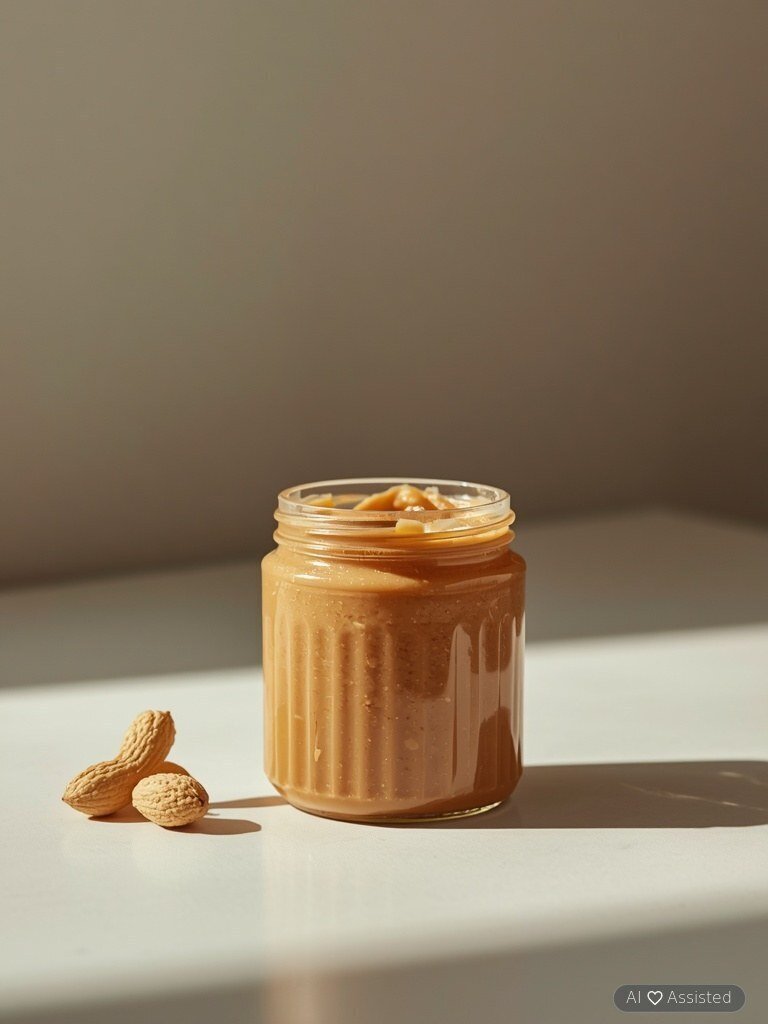
To secure genuine cardiovascular benefits, discerning ingredient evaluation is paramount. The ingredient label must state strictly one component: 100% roasted peanuts (with an optional minor trace of unrefined sea salt).
Consumers must strictly steer clear of commercial spreads formulated with fully or partially hydrogenated palm or cottonseed oils used as industrial stabilizers to prevent separation. These additives introduce atherogenic saturated or trans fatty acids. The separation of peanut oil at the top of the jar is a hallmark of natural purity; simply stir before enjoying.
Optimal Serving Sizes, Energy Balance, and Safety Considerations
Notwithstanding its profound therapeutic attributes, peanut butter remains an energy-dense commodity (approx. 590–600 kcal per 100 g; one generous tablespoon of 25 g delivers approx. 150 kcal). The scientifically validated cardioprotective intake comprises 1 to 2 tablespoons daily (20 to 30 g), seamlessly integrated into total daily caloric expenditure.
Absolute contraindications are restricted to IgE-mediated peanut allergies, where trace ingestion triggers severe anaphylaxis. Additionally, consumers should procure certified brands that strictly monitor for fungal mycotoxins (aflatoxins). When enjoyed with mindful moderation, pure peanut butter stands as an accessible, delectable staple for lifelong cardiovascular resilience.

Wojciech Wiśniewski
✓Diets Premium Expert
Diets Premium team expert. Specializes in nutrition plans, strength sports, and training plans.
View Profile →