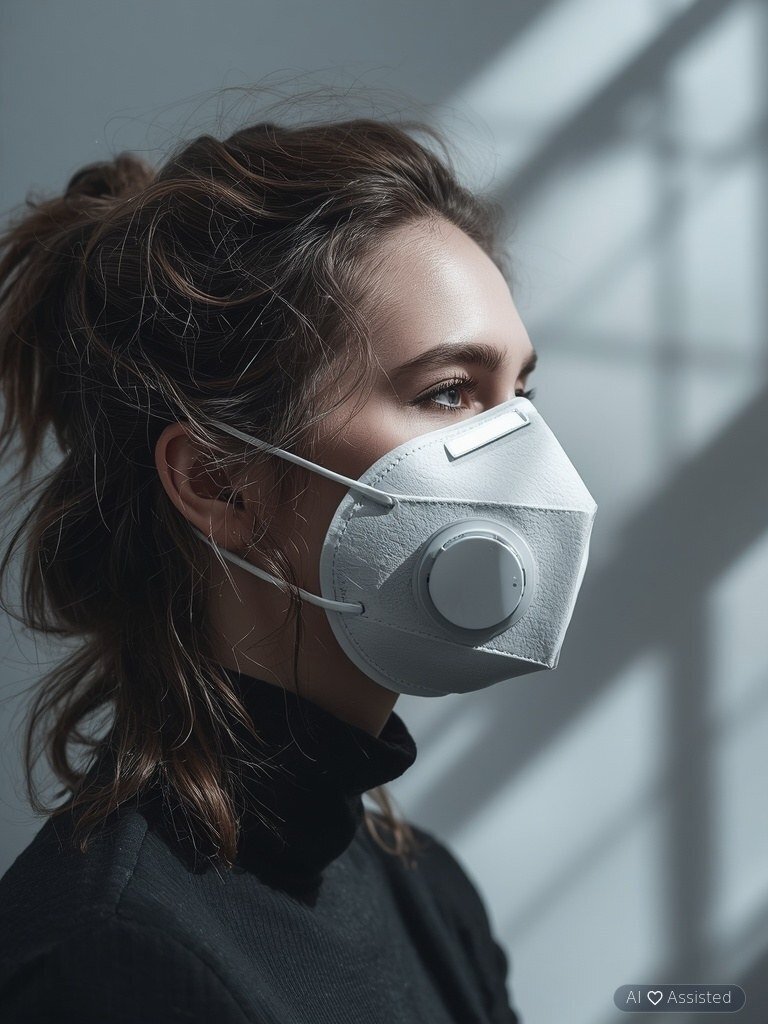
Protective anti-dust and anti-smog face masks: classification systems, filtration mechanisms, demonstrated efficacy, and recommended usage conditions in high-pollution environments

Mia Hoffmann
✓
Diets Premium Expert • 24.09.2026
✓
Scientifically reviewed by a clinical dietitian:
This article has been peer-reviewed for adherence to IŻŻ, WHO, and PTGiP clinical nutritional standards.
| Diets Premium Expert Mia Hoffmann | min read 6 min | Scientifically reviewed by a clinical dietitian 24.09.2026 |
Smart Voice
•Listen to the article content live
0:00
/
0:00
Key Takeaways
THIS DOCUMENT COVERS:
• a comprehensive review of available protective mask types designed to mitigate atmospheric pollution exposure, including structural designs and material compositions;
• an in-depth examination of filtration technologies (including FFP, N95, and KN95 standards) with emphasis on their capacity to capture particulate matter, aerosols, and microorganisms;
• a discussion of variables affecting real-world protective performance (facial fit, duration of use, environmental conditions);
• evidence-based recommendations for mask selection, proper donning, and maintenance across varying pollution exposure scenarios.
Meal Plan
Want to apply these guidelines in your daily diet?
Our smart diet generator creates a tailored meal plan in 3 minutes based on the recommendations in this article.
PRO Content
PRO
This article is professional premium content (PRO) provided in its entirety.
Anti-smoking masks of all kinds
There are a number of other options available to the manufacturers of anti-smoking masks, depending on the needs of the user. For bicyclists, however, a mask can be particularly beneficial. Given the physical activity, we can find: a running mask, preferably with a filler, which can better regulate the flow of air and thus the use of filters; a bicycle mask, as well as running, must take into account the increased breathing capacity. For me, bicycle masks can be especially beneficial, but a mask with a full-body filter, so called a full face mask. In addition, it can protect the eyes, which are more resistant to the effects of air pollution than they begin to exert, and can also exhibit only a fraction of the symptoms of an air-tightness effect, but only a few of the most common types of fillers can be used as filters, but they can be exchanged as a single filler. They can also be used for a very short period of time. In some types of air-filters, such as PM1 and PM2 filters.
Anti-smog masks and filters
The most common types of filters used in anti-smoke masks are: carbon/N99, which filters 99.9% of dust 0.1 micrometers and larger. It protects against, among other things, smog (PM10 and PM2.5 dust), grass dust and many infectious disease viruses.
Anti-smoking masks effectiveness
Unfortunately, the cheapest mask (e.g. surgical) will not protect us in any way from toxic smolist dust (PM2.5 and PM10). Deciding on this type of mask, let's buy an appropriate filter that deals with small dust particles (the best thing to do is look for one that protects a 0.3-micrometer-diameter dust) and also has a layer of active carbon, which protects us from other harmful gases.
Anti-smog masks when to use
There is no doubt that the substances present in smog are harmful to our bodies. However, this does not mean that every one of us absolutely should wear an anti-smog mask. Doctors say that even with poor air quality, children under 10 years of age and people with weak respiratory muscles (muscles of the forearm and hind limbs) should not wear one without consulting a physician. This also applies to people with breathing problems, as well as those who use our masks. Although the air mask filter and the mask itself is harmful for us, it is quite difficult to breathe in it.
Tags

Mia Hoffmann
✓Diets Premium Expert
Diets Premium team expert. Specializes in nutrition plans, strength sports, and training plans.
View Profile →