Key Takeaways
Buckwheat groats are a traditional staple of European culinary heritage and an extraordinary source of rutin, dietary fiber, magnesium, and zinc. Milled from common buckwheat grains, they combine natural gluten-free status with a low glycemic index and a well-balanced amino acid profile. Discover the nutritional distinctions between unroasted (white) and roasted groats, how buckwheat supports cardiovascular health and digestive motility, and how to prepare it optimally in everyday meals.
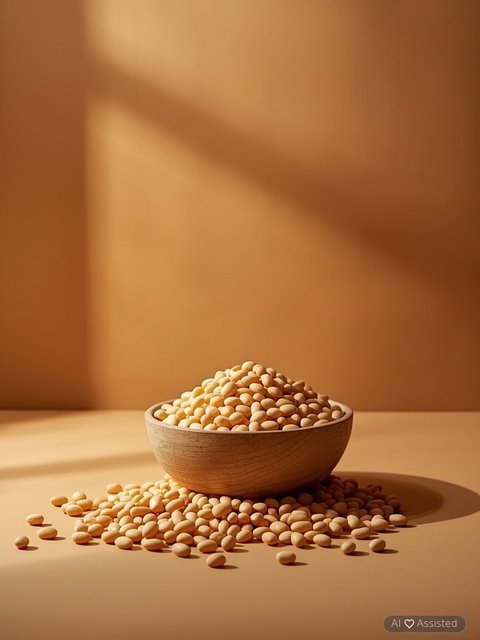
Buckwheat groats – a traditional product made from dehulled common buckwheat seeds
Buckwheat groats have been a staple of Polish cuisine for centuries, derived from the seeds of common buckwheat (*Fagopyrum esculentum*), a plant belonging to the knotweed family (*Polygonaceae*) that flowers during the summer months, particularly in July and August. Unlike most other groats, buckwheat is not a cereal grain but a pseudocereal, which distinguishes it from conventional grains. Its distinctive nutritional composition and numerous health benefits make it a valuable component of both traditional diets and contemporary nutritional trends that prioritize natural, nutrient-dense ingredients.
Buckwheat – distinctive nutritional properties and health benefits
Buckwheat stands out due to a range of unique properties that play a pivotal role in maintaining optimal health. One of its most notable attributes is its capacity to counteract excessive acidity within the body—a critical function given the persistent insufficient consumption of vegetables and other alkalizing foods. Additionally, buckwheat contains substantially higher levels of dietary fiber, with concentrations nearly double those found in rice or conventional pasta; specifically, 100 grams of buckwheat provides approximately 6 grams of fiber. This characteristic makes it an especially valuable dietary component for individuals experiencing intestinal motility disorders or adhering to weight-loss regimens, as it promotes prolonged satiety while the gradually released starch serves as a sustained energy source. Furthermore, owing to fiber’s cholesterol-lowering effects, buckwheat is highly recommended for individuals with elevated blood cholesterol levels. Research also demonstrates its beneficial impact on blood pressure regulation, rendering it a valuable inclusion in the diets of those with hypertension. Rich in vitamin E, folic acid, and iron, buckwheat additionally supports the management of anemia, making it particularly advantageous for individuals with heavy menstrual bleeding or those at risk of developing iron-deficiency anemia.
Nutritional Profile of Buckwheat Groats: Roasted vs. Unroasted Varieties
Buckwheat groats are available in two primary forms: unroasted (commonly referred to as "white buckwheat," sold as whole, cracked, or finely cracked—e.g., Cracow-style) and roasted (whole or cracked, distinguished by its rich, nutty flavor). As a cereal-based product, buckwheat serves as a primary source of complex carbohydrates while also providing a moderate protein content. Research confirms that the macronutrient profiles (protein, fat, carbohydrates) of roasted and unroasted varieties exhibit negligible differences. However, unroasted white buckwheat may contain up to four times higher levels of polyphenols—antioxidant compounds such as rutin and isoquercetin—compared to its roasted counterpart [1, 2].
Per 100 g of dry buckwheat groats, the average nutritional composition includes 344 kcal, comprising 12.6 g of protein, 3.1 g of fat (predominantly unsaturated fatty acids), and 69.3 g of carbohydrates (of which 5.9 g are dietary fiber, supporting digestive health). This product is also notable for its high micronutrient content, particularly magnesium (218 mg)—critical for neurological function—and zinc (3.5 mg), essential for immune defense. Additionally, buckwheat provides B vitamins: thiamine (B1), riboflavin (B2), niacin (PP), and folate, whereas vitamins A, D, B12, and C are absent from its profile.
Detailed nutritional breakdown per 100 g of dry product [3]:
- Energy: 344 kcal
- Protein: 12.6 g | Fat: 3.1 g | Carbohydrates: 69.3 g (including fiber: 5.9 g)
- Minerals: sodium (5 mg), potassium (443 mg), calcium (25 mg), magnesium (218 mg), iron (2.8 mg), zinc (3.5 mg)
- Vitamins: B1 (0.541 mg), B2 (0.127 mg), niacin (1.950 mg), B6 (0.670 mg), folate (32.0 µg)
Owing to this comprehensive micronutrient density, buckwheat groats—in both unroasted and roasted varieties—provide exceptional dietary support for hematopoietic integrity, immune function, and the prevention of magnesium and zinc deficiencies.
Metabolic properties of buckwheat: Glycemic index, gluten content, and health implications
Buckwheat stands out among other cereal products due to its favorable metabolic characteristics. Its **glycemic index (GI)**, which measures how rapidly blood glucose levels rise after consumption, is **45**, classifying it as a **low-GI food** (values up to 55). However, for effective glycemic control, the **glycemic load (GL)**—which accounts for both GI and the actual carbohydrate content per standard serving (150 g of cooked buckwheat)—is of greater significance. In this case, the GL is **13**, placing buckwheat in the **moderate category** in terms of its impact on blood sugar levels. It is crucial to note that both GI and GL can be altered by **thermal processing**; thus, overcooking should be avoided, as it may increase these values. For individuals requiring precise glycemic regulation, buckwheat represents a **compelling alternative** among cereal products, primarily due to its high **dietary fiber content**—which is **twice as high** as that found in fine-grained cereals (e.g., semolina, millet) or rice. This fiber not only aids in **stabilizing blood glucose levels** but also beneficially affects **lipid metabolism**, supports **digestive function**, and promotes a **prolonged sensation of fullness** [4].
Given the growing number of individuals avoiding gluten, buckwheat is a **naturally gluten-free** product. Additionally, it serves as a **rich source** of essential nutrients, including **magnesium, zinc, B vitamins**, and fiber—deficiencies of which are frequently observed in patients with **celiac disease** prior to adopting a gluten-free diet. However, despite the absence of gluten in buckwheat itself, there remains a risk of **cross-contamination** in processing facilities that also handle gluten-containing grains. Therefore, the **safest options** are products bearing the **crossed-grain certification logo** along with a verification number.
Buckwheat Culinary Guide: Nutrient-Preserving Recipes and Traditional Preparation Techniques
When preparing buckwheat, maintaining the correct liquid-to-grain ratio is essential: for each volume measure of dry buckwheat, two measures of water should be used to ensure optimal swelling conditions. The cooking process should take place over gentle heat for approximately twenty minutes, after which the buckwheat should be left covered to fully absorb the remaining liquid. Pre-rinsing is unnecessary, as discarding excess water post-cooking results in an avoidable loss of valuable minerals and vitamins. Unlike rice, buckwheat retains its natural loose texture and does not clump.
An alternative traditional method involves soaking the buckwheat in water for several hours to allow partial absorption before adding more water and simmering on low heat for six to eight minutes. To maximize volume expansion, the cooked buckwheat can be placed in a warm environment—such as on a turned-off stovetop or wrapped in a blanket. Incorporating a small amount of clarified butter or high-quality plant-based oil during cooking enhances flavor and increases satiety.
The featured recipes include gluten-free buckwheat bread, a chocolate pudding variation with fruit, delicate pancakes, a fragrant vegetable casserole, juicy buckwheat patties with tomato sauce, and classic dumplings filled with farmer’s cheese and buckwheat. Each recipe leverages buckwheat’s unique properties—its low glycemic index, high fiber content, and abundance of micronutrients such as magnesium, zinc, and B vitamins (thiamine, riboflavin, niacin). Beyond serving as a nutritious side dish, buckwheat is a versatile ingredient for desserts and baked goods, making it an indispensable component of a balanced diet.