A Practical Guide: How to Properly Prepare and Eat Exotic Fruits – Avocado, Mango, Figs, Passion Fruit, Lychee, Pomelo, and Persimmon

| Diets Premium Expert Anna Schmidt | min read 7 min | Scientifically reviewed by a clinical dietitian 23.10.2026 |
Smart Voice
•Listen to the article content live
Although preparing fruit may seem straightforward at first glance, properly handling and consuming exotic fruits from tropical and subtropical regions requires practical culinary and botanical know-how. First-time buyers of juicy mango, horned melon (kiwano), fragrant passion fruit, or sweet lychees frequently struggle to judge ripeness or separate the edible flesh from inedible rinds, membranes, or pits.
Without basic preparation guidance, it is easy to be put off by astringent membranes or inadvertently waste nutrient-dense produce. This comprehensive step-by-step guide explains how to select, peel, and incorporate 11 remarkable exotic fruits into a balanced everyday diet.
Want to apply these guidelines in your daily diet?
Our smart diet generator creates a tailored meal plan in 3 minutes based on the recommendations in this article.
This article is professional premium content (PRO) provided in its entirety.
How to Prepare and Eat an Avocado?
Avocado (Persea americana) is a unique fruit that, unlike most tropical produce, contains minimal simple sugars while providing abundant heart-healthy monounsaturated fatty acids (predominantly oleic acid), potassium, vitamin E, folate, and lutein. It is best enjoyed raw: slice a ripe fruit (which yields gently to firm pressure) lengthwise around the large central pit, twist the two halves apart, remove the pit, and scoop the creamy flesh out of the inedible peel with a spoon.
Thanks to its mild, buttery flavor, avocado shines in both savory and sweet recipes—ranging from authentic Mexican guacamole seasoned with cilantro, garlic, and lime to whole-grain toast toppings, salads, smoothies, and rich cocoa-avocado mousses. Because exposed avocado flesh oxidizes and browns rapidly due to polyphenol oxidase activity, drizzle it promptly with fresh lemon or lime juice after slicing.
How to Cut and Eat a Mango?
Mango (Mangifera indica) is a luscious, aromatic stone fruit packed with beta-carotene, vitamin C, bioactive polyphenols (including anti-inflammatory mangiferin), and soluble dietary fiber. A ripe mango emits a fragrant, fruity aroma near the stem end and gives slightly when gently squeezed. Because mango contains a large, flat central stone tightly bound to the flesh and an inedible peel, the cleanest way to cut it is to slice off the two wide 'cheeks' parallel to the flat pit, score the flesh in a crisscross grid without cutting through the skin, invert the peel outward ('hedgehog style'), and slice off the cubes.
Fresh mango is delicious raw in fruit salads, oatmeal bowls, no-bake cheesecakes, and yogurt smoothies such as mango lassi. When lightly cooked, it forms an excellent base for Indian chutneys, coconut curries, and sweet-savory glazes for poultry or fish. Frozen unsweetened mango chunks are a convenient year-round alternative preferable to high-sugar canned mangoes in syrup.
How to Eat Fresh Figs?
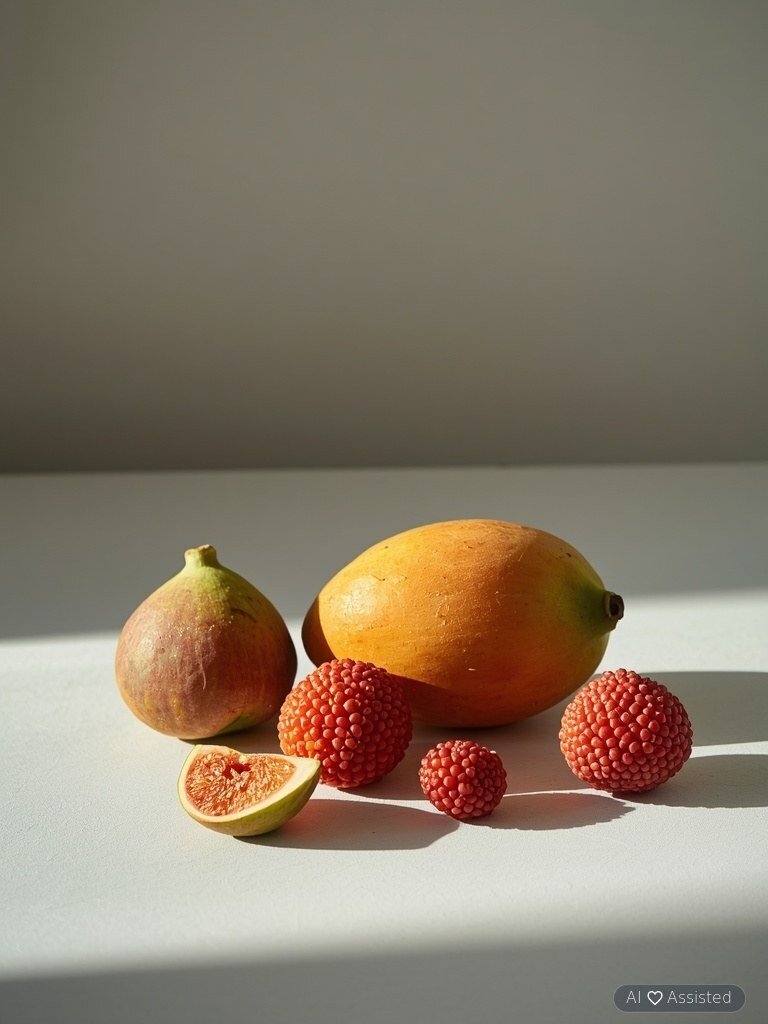
While dried figs are available year-round, fresh figs (Ficus carica) are a seasonal delicacy appearing primarily in late summer and autumn. Fresh figs have a substantially lower caloric density and glycemic load than dried figs while providing potassium, calcium, magnesium, antioxidant anthocyanins (concentrated in dark-purple skins), and soluble fiber. Preparation is effortless: simply rinse the ripe, soft fruit gently under cool water, trim off the firm stem tip, and eat the entire fig whole—including its thin, tender skin and sweet, seed-speckled interior.
Fresh figs make an elegant culinary centerpiece. Beyond topping porridge, Greek yogurt, and tarts, they excel in sweet-and-savory pairings: baked with goat cheese or ricotta, walnuts, and a drizzle of honey, or tossed into leafy green salads with feta cheese, balsamic glaze, and thin slices of prosciutto di Parma.
How to Eat Kiwano (Horned Melon)?
Kiwano (Cucumis metuliferus), commonly known as horned melon or African horned cucumber, is an exotic member of the gourd family featuring a bright orange, leathery rind covered in distinctive conical spines. Although the spiky rind is inedible, it serves as a natural bowl: rinse the fruit, slice it in half lengthwise or crosswise with a sharp knife, and use a spoon to scoop out the vibrant emerald-green, jelly-like pulp along with its tender, edible seeds.
The flavor of kiwano is a refreshing blend of cucumber, kiwifruit, melon, and lime with a hint of banana. Composed of nearly 90% water and providing only about 44 kcal per 100 g, horned melon is an ultra-hydrating source of potassium, magnesium, vitamin C, and iron. Its jewel-like green pulp adds a tropical accent to fruit salads, smoothies, sorbets, and seafood ceviche.
How to Eat Passion Fruit (Maracuja)?
Passion fruit (Passiflora edulis) is most commonly encountered in two main varieties: the smaller deep-purple passion fruit (prized for its intensely aromatic, sweet-tart flavor) and the larger yellow maracuja (Passiflora edulis f. flavicarpa) or sweet granadilla. When selecting purple passion fruit, look for fruits that feel heavy for their size with slightly wrinkled skin—wrinkling indicates full ripeness and peak sweetness rather than spoilage.
The tough outer rind is inedible. Simply wash the fruit, cut it in half, and scoop out the golden, gelatinous pulp along with its crunchy dark seeds, which are completely edible and rich in insoluble fiber and piceatannol (a resveratrol-like polyphenol shown to support insulin sensitivity and vascular health). Rich in vitamin C, provitamin A, and potassium, passion fruit elevates Greek yogurt, porridge, mango mousses, cheesecakes, and citrus vinaigrettes.
How to Eat Goji Berries?
Goji berries, the fruits of the wolfberry shrub (Lycium barbarum), are predominantly sold dried. These small, elongated coral-red berries have a tangy, mildly sweet-herbal taste and represent one of nature's richest sources of zeaxanthin dipalmitate (a macular-protective carotenoid), immunomodulatory Lycium barbarum polysaccharides (LBPs), vitamin C, and plant-based iron.
Dried goji berries can be eaten straight from the pack or used as a lower-sugar alternative to raisins and sweetened cranberries in oatmeal, millet porridge, homemade granola, trail mixes, baked goods, and herbal infusions. Clinically, a moderate daily serving of 15–30 g (1–2 tablespoons) is recommended; individuals taking coumarin anticoagulants (such as warfarin) should avoid goji berries or consult their physician due to potential cytochrome P450 interactions.
How to Peel and Eat Lychee?
Lychee (Litchi chinensis) is a small subtropical fruit encased in a bumpy, pinkish-red pericarp that conceals a translucent, pearly-white, juicy aril with a delicate floral, rose-like sweetness. Both the brittle outer shell and the smooth, dark-brown central seed are inedible: to eat a ripe lychee, gently pinch near the stem to crack the thin shell, peel it away with your fingers like a boiled egg, enjoy the fragrant white flesh, and discard the seed.
Lychees are an outstanding source of vitamin C (providing roughly 70 mg per 100 g) and oligomeric proanthocyanidins. They shine raw in fruit salads, sorbets, and Asian-inspired sweet-and-sour poultry or shrimp dishes. When shopping, select firm fruits with vibrant pink-red shells; if the inner flesh has turned yellowish-brown or smells fermented, the fruit is spoiled and should not be eaten.
How to Peel and Eat Pomelo?
Pomelo (Citrus maxima) is the largest of all citrus fruits, native to Southeast Asia and the non-hybrid botanical ancestor of the grapefruit (which originated as a natural cross between pomelo and sweet orange). Weighing up to 1.5–2 kg, pomelo features a thick, spongy yellowish-green rind. Compared to grapefruit, pomelo flesh is noticeably sweeter, firmer, and much less bitter, though less juicy than a standard orange.
The secret to enjoying pomelo is removing not only the thick outer peel and white pith (albedo), but also the tough, bitter membranes encasing each individual segment. Slice off the top cap, score the rind into quarters, peel away the pith, and slit open each segment membrane to extract the crisp citrus vesicles. Providing just 38 kcal per 100 g along with abundant vitamin C, potassium, and citrus bioflavonoids (naringenin), pomelo is delicious fresh or tossed into Thai-style salads with shrimp, mint, and cashews.
How to Prepare and Eat Papaya?
Papaya (Carica papaya) is prepared much like a cantaloupe melon. Rinse a ripe papaya (recognizable by its golden-orange skin and gentle give), slice it in half lengthwise, and use a spoon to scoop out the cluster of round, glossy black seeds from the central cavity (these seeds are actually edible in small amounts and have a pungent, peppery crunch similar to watercress). You can then scoop the buttery, salmon-orange flesh directly out of the skin with a spoon, or pare away the thin peel with a knife and dice the fruit.
Ripe papaya has a delicate, melon- and apricot-like sweetness that comes alive when drizzled with fresh lime juice. Nutritionally, papaya is celebrated for containing papain (a proteolytic enzyme that aids protein digestion), highly bioavailable lycopene, beta-cryptoxanthin, and vitamin C. It pairs wonderfully with yogurt, morning porridge, tropical smoothies, and savory avocado salads.
How to Eat Kumquat?
Kumquat (Citrus japonica) resembles a miniature oval orange measuring just 2–4 cm in length, yet it is eaten in the exact opposite way to standard citrus fruits: kumquats are eaten whole, peel and all! In fact, the thin peel is the sweetest part of the fruit and is packed with fragrant essential oils (limonene) and antioxidant flavonoids, whereas the juicy segments inside are briskly tart—biting into both together creates a vibrant sweet-and-sour balance.
Wash the fruits thoroughly in warm water before eating. A classic culinary tip is to gently roll each kumquat between your fingers before biting into it to release the sweet aromatic oils from the rind; if you prefer to avoid the small seeds inside, slice the fruit into thin rounds and flick them out. Fresh or candied kumquats make a striking garnish for salads, desserts, winter teas, marmalades, and roasted poultry.
How to Eat Persimmon (Kaki / Sharon Fruit)?
Persimmon—also known as kaki or seedless Sharon fruit (Diospyros kaki)—resembles a glossy orange tomato and is botanically classified as a berry. Fully ripe persimmons offer a luscious, honey-like sweetness with notes of apricot and melon alongside generous amounts of beta-carotene, vitamin C, potassium, and soluble pectin fiber. After washing the fruit and removing the woody calyx leaves, firm non-astringent varieties (such as Sharon or Fuyu) can be sliced and eaten with their thin skin like an apple, while ultra-soft, jelly-like ripe fruits can be halved and eaten with a spoon.
From a clinical nutrition standpoint, note that unripe astringent persimmon varieties contain high levels of soluble tannins (shibuol), which cause mouth-puckering astringency and can polymerize with dietary cellulose in gastric acid to form phytobezoars if consumed in excess (particularly in individuals with delayed gastric emptying or prior gastric surgery). Always choose fully ripened, sweet fruits or non-astringent Sharon cultivars for safe and delicious enjoyment.

Anna Schmidt
✓Diets Premium Expert
Diets Premium team expert. Specializes in nutrition plans, strength sports, and training plans.
View Profile →