4 min read

Acerola – Properties, Vitamin C, Juice

Emilia Szymańska
Emilia Szymańska ✓
Diets Premium Expert • 25.09.2026
✓
Scientifically reviewed by a clinical dietitian: This article has been peer-reviewed for adherence to IŻŻ, WHO, and PTGiP clinical nutritional standards.
Diets Premium Expert Emilia Szymańska min read 4 min Scientifically reviewed by a clinical dietitian 25.09.2026
Acerola – Properties, Vitamin C, Juice

Smart Voice

•

Listen to the article content live

0:00 / 0:00
Key Takeaways
Acerola berries are the richest natural source of vitamin C and contain other beneficial nutrients that positively impact health. Unfortunately, Malpighia emarginata is cultivated in remote and hard-to-reach areas around the world.
Meal Plan

Want to apply these guidelines in your daily diet?

Our smart diet generator creates a tailored meal plan in 3 minutes based on the recommendations in this article.

Barbados cherry (*Malpighia emarginata*) – cultivation, properties, and applications of acerola fruit

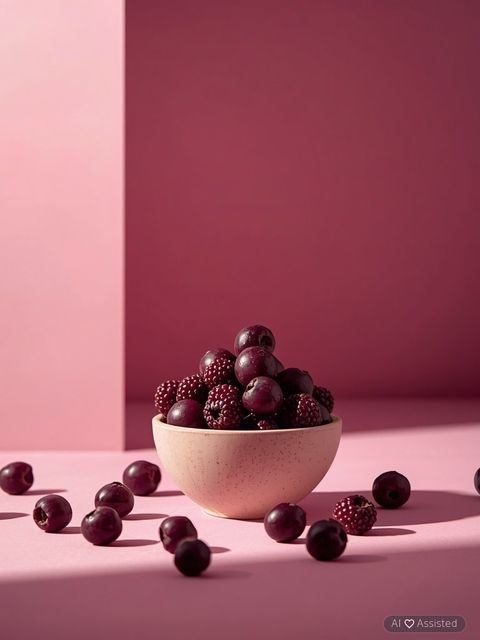
The Barbados cherry, scientifically designated as *Malpighia emarginata* (commonly referred to as acerola), is a tropical fruit-bearing shrub belonging to the *Malpighiaceae* family, indigenous to the Caribbean, Central America, and the Amazon Basin. Its cultivation thrives under stable thermal conditions, ideally within a range of 24–28°C, though it demonstrates moderate resilience to minor temperature fluctuations. Remarkably undemanding in terms of soil quality—adapting even to poor, sandy substrates—it lends itself well to domestic cultivation, whether propagated from seed or pre-rooted cuttings. Successful growth hinges on maintaining elevated humidity levels and a consistent irrigation regimen, while avoiding waterlogging. Patience is requisite, as fruiting commences only after a maturation period of three to four years; however, the reward is exceptionally nutrient-dense, vividly crimson berries renowned for their tart-sweet flavor profile.

Owing to their extreme susceptibility to mechanical damage and an exceedingly brief post-harvest shelf life (merely days when fresh), acerola fruits are rarely shipped to Europe in their whole form. Instead, they enter the market as processed derivatives: freeze-dried powders, concentrated juices, vitamin supplements, or extracts incorporated into functional foods and pharmaceutical formulations. The harvesting process itself presents a formidable logistical challenge, necessitating meticulous handling to mitigate losses from the fruit’s fragile epidermis. What, then, accounts for the surging demand for acerola among nutritionists, functional food manufacturers, and the pharmaceutical sector?

Biochemical composition and health-promoting attributes of acerola fruit (*Malpighia emarginata*) – a detailed examination of benefits and practical limitations

The exceptional nutritional profile of acerola fruit (*Malpighia emarginata*), a tropical species within the *Malpighiaceae* family, was first scientifically recognized in 1946 when groundbreaking research revealed its **unparalleled ascorbic acid concentration—averaging 1,500 milligrams per 100 grams of fresh pulp**. This extraordinary density positions acerola as one of the **richest natural sources of vitamin C**: merely **three fruits** (approximately 30–50 g) fulfill the **entire daily requirement** for an adult (reference intake: 100 mg/day). As an indispensable cofactor in myriad metabolic pathways, vitamin C plays a **pivotal role** in **collagen biosynthesis** (a structural protein critical for connective tissue), **neurotransmitter modulation**, and the **formation of bone, dental enamel, and epidermal layers**. Its **potent antioxidant capacity** scavenges reactive oxygen species, thereby **shielding genetic material from oxidative mutations** while contributing to **vascular homeostasis**—including **blood pressure regulation** and **endothelial elasticity enhancement**. Furthermore, ascorbic acid **amplifies non-heme iron absorption** (from plant-based foods) and **facilitates calcium metabolism**, which is instrumental in osteoporosis prevention. However, it is crucial to note that **single-dose ingestion exceeding 400 mg** exhibits **diminished bioavailability** due to the **saturable intestinal absorption mechanism** (SGLT1-dependent active transport) and **accelerated renal clearance**. Beyond its vitamin C content, acerola is abundant in **carotenoids** (~**100 mg/100 g**), with **75% comprising β-carotene**—a vitamin A precursor vital for **visual acuity**, **cellular immune defense**, and **mucosal membrane integrity**. β-carotene demonstrates a **biphasic effect**: while it **suppresses lipid peroxidation** as an antioxidant, **excessive intake** (particularly among smokers) may **paradoxically induce oxidative damage** via **carotenyl radical formation**. In temperate climates such as Poland, fresh acerola is **commercially unavailable** due to its **brief shelf life** (3–5 days) and **high susceptibility to mechanical injury**; viable alternatives include **processed derivatives** (freeze-dried juices, powders) or **hobbyist cultivation** in greenhouse environments.

Unpasteurized Barbados cherry (acerola) pulp-included juice: no added sugar, not from concentrate

Online retailers frequently offer Barbados cherry (acerola) juice marketed as a non-concentrate, no-added-sugar product containing natural pulp—an composition that appears optimal at first glance. A critical limitation, however, lies in its pasteurization. This thermal treatment involves heating the liquid to temperatures exceeding 72°C to either eliminate or substantially inhibit microbial proliferation. The unfortunate consequence is that ascorbic acid (vitamin C) exhibits pronounced thermolability, meaning its molecular structure degrades under high-temperature exposure, thereby reducing its concentration in the final product. For consumers seeking alternatives, dietary supplements containing acerola fruit extract are commercially available. These represent a potent vitamin C source, with a typical tablet providing approximately 125 milligrams of ascorbic acid. By comparison, widely used domestic vitamin C supplements generally contain around 100 milligrams per tablet. From a biochemical standpoint, no functional distinction exists between laboratory-synthesized ascorbic acid and its naturally occurring counterpart in acerola fruits. The price disparity between acerola-based supplements and conventional pharmacy-grade vitamin C, however, amounts to roughly 20 PLN. While the Barbados cherry is undeniably a remarkable plant, purchasing its derived supplements does not invariably constitute the most pragmatic choice. A significant drawback remains the impracticality of importing fresh fruits from their native growing regions. For horticulture enthusiasts, cultivating a personal acerola tree and harvesting its nutrient-rich yield may present a viable and rewarding solution.
mgr Emilia Szymańska

mgr Emilia Szymańska

✓

Diets Premium Expert

Diets Premium team expert. Specializes in nutrition plans, strength sports, and training plans.

View Profile →
Recommended articles in this category

Related Articles

Discover similar publications and expert insights.

Berry Beverage – Benefits.. Is it possible to prepare a berry beverage without having juice?
Strawberries
Berry Beverage – Benefits.. Is it possible to prepare a berry beverage without having juice?
⏱ 4 min czytania
#Strawberries #Antioxidant
Preparing Aronia Juice during Pregnancy... Properties of Aronia Juice
Pregnancy & Motherhood
Preparing Aronia Juice during Pregnancy... Properties of Aronia Juice
⏱ 4 min czytania 📚 Pregnancy & Motherhood
#Health Properties Of Fruits #Plant Cultivation
The beverage made from acai berries possesses distinctive characteristics... Its routine consumption exerts a favorable influence on health
Beverage Consumption
The beverage made from acai berries possesses distinctive characteristics... Its routine consumption exerts a favorable influence on health
⏱ 3 min czytania
#Beverage Consumption #Fruit Juice Beverage
Strawberries – Nutritional Value, Health-Promoting Properties, and Clinical Dietary Applications
Fruits
Strawberries – Nutritional Value, Health-Promoting Properties, and Clinical Dietary Applications
⏱ 2 min czytania 📚 Fruits
#Fruit-based Desserts #Seasonal Produce
Honeysuckle Berry – Varieties, Properties, Preserves… Honeysuckle Berry Liqueur
Nutrition
Honeysuckle Berry – Varieties, Properties, Preserves… Honeysuckle Berry Liqueur
⏱ 4 min czytania 📚 Nutrition
#Health Benefits #Polyphenols
Investigating the Properties and Uses of Goji Berries – These Exceptional Fruits
Nutrition
Investigating the Properties and Uses of Goji Berries – These Exceptional Fruits
⏱ 3 min czytania 📚 Nutrition
#Berries #Traditional
Açaí Berries. Unanimous Scientific Consensus
Healthy Lifestyle
Açaí Berries. Unanimous Scientific Consensus
⏱ 3 min czytania 📚 Healthy Lifestyle
#Polyphenols #Antioxidant
Comparison of Açaí Berries with Goji Berries – Discover the Differences
Nutrition
Comparison of Açaí Berries with Goji Berries – Discover the Differences
⏱ 3 min czytania 📚 Nutrition
#Health Benefits #Cooking
Blueberries and Red Wine for Erectile Dysfunction
Red Wine
Blueberries and Red Wine for Erectile Dysfunction
⏱ 1 min czytania
#Red Wine #Berries
Cranberries – Cultivation, Properties, Effects, Recipes.. Cranberries during pregnancy
Fruits
Cranberries – Cultivation, Properties, Effects, Recipes.. Cranberries during pregnancy
⏱ 4 min czytania 📚 Fruits
#Berries #Pregnancy
Black Beans and Berries for Ulcer Support: How Polyphenols Protect Gastric Health
Antioxidants
Black Beans and Berries for Ulcer Support: How Polyphenols Protect Gastric Health
⏱ 1 min czytania
#Antioxidants #Polyphenols
Blackcurrant: Health Benefits, Leaves, and Blackcurrant Seed Oil
Health Benefits
Blackcurrant: Health Benefits, Leaves, and Blackcurrant Seed Oil
⏱ 4 min czytania
#Health Benefits #Berries
Why it is beneficial to incorporate strawberries into your diet and in which dishes they excel
Fruits
Why it is beneficial to incorporate strawberries into your diet and in which dishes they excel
⏱ 6 min czytania 📚 Fruits
#Beverages #Strawberry
Evidence and Myths About Açaí Berries: Scientific Facts, Properties, and Dietary Use
Berries
Evidence and Myths About Açaí Berries: Scientific Facts, Properties, and Dietary Use
⏱ 1 min czytania
#Berries
Local Berries
High Fiber
Local Berries
⏱ 2 min czytania
#High Fiber #Dietary Fiber
Which form of acai berries should I opt for – powder, capsules, frozen, or freeze-dried?
Superfoods
Which form of acai berries should I opt for – powder, capsules, frozen, or freeze-dried?
⏱ 3 min czytania 📚 Superfoods
#Dried Fruit #Fresh Fruit
Bird Cherry (Prunus padus): Health Benefits, Herbal Uses, and Fruit Preserves
Health Benefits
Bird Cherry (Prunus padus): Health Benefits, Herbal Uses, and Fruit Preserves
⏱ 3 min czytania
#Health Benefits #Phytotherapy
Red Currant (Ribes rubrum): Cultivars, Health Benefits, and Processing Methods
Health Benefits
Red Currant (Ribes rubrum): Cultivars, Health Benefits, and Processing Methods
⏱ 3 min czytania
#Health Benefits #Strawberries
Strawberries for natural teeth brightening – facts, myths, and enamel safety
Fruits
Strawberries for natural teeth brightening – facts, myths, and enamel safety
⏱ 1 min czytania 📚 Fruits
#Strawberries #Carry
Aged vinegar: defining characteristics, culinary applications, and a homemade preparation method
Culinary Ingredient
Aged vinegar: defining characteristics, culinary applications, and a homemade preparation method
⏱ 5 min czytania
#Culinary Ingredient #Leafy Greens
Sea buckthorn oil – bioactive properties and practical applications in health and cosmetics
Culinary Traditions
Sea buckthorn oil – bioactive properties and practical applications in health and cosmetics
⏱ 3 min czytania
#Culinary Traditions #Dermatological
Wild berries and bilberries – health-promoting properties and comprehensive applications in diet and natural medicine
Food & Ingredients
Wild berries and bilberries – health-promoting properties and comprehensive applications in diet and natural medicine
⏱ 3 min czytania 📚 Food & Ingredients
#Bioactive Compounds #Natural Pigments
A Practical Guide: How to Properly Prepare and Eat Exotic Fruits – Avocado, Mango, Figs, Passion Fruit, Lychee, Pomelo, and Persimmon
Food & Ingredients
A Practical Guide: How to Properly Prepare and Eat Exotic Fruits – Avocado, Mango, Figs, Passion Fruit, Lychee, Pomelo, and Persimmon
⏱ 7 min czytania 📚 Food & Ingredients
#Exotic Fruits #Berries
Sea Buckthorn Preserves, Syrups, and Herbal Infusions: Sourcing, Nutritional Profile, and Culinary Applications
Nutritional Benefits
Sea Buckthorn Preserves, Syrups, and Herbal Infusions: Sourcing, Nutritional Profile, and Culinary Applications
⏱ 4 min czytania
#Nutritional Benefits #Bioactive Compounds
Culinary Compositions with Acai Berries: Nutritional Profile, Health Benefits, and Practical Recipes
Health Benefits
Culinary Compositions with Acai Berries: Nutritional Profile, Health Benefits, and Practical Recipes
⏱ 2 min czytania
#Health Benefits #Macronutrients
Homemade Blackcurrant Preserves: Artisanal Recipes for Jams, Syrups, Traditional Tinctures, and Fruit Wines
Nutritional Properties
Homemade Blackcurrant Preserves: Artisanal Recipes for Jams, Syrups, Traditional Tinctures, and Fruit Wines
⏱ 5 min czytania
#Nutritional Properties #Alcoholic Beverages
Aloe – Therapeutic Uses: For Hair, Acne, and Wounds
Juice
Aloe – Therapeutic Uses: For Hair, Acne, and Wounds
⏱ 4 min czytania
#Juice #Acne And Nutrition
Domestic Production of Wine, Vinegar, and Juice: Effectively Utilizing Black Elderberry
Nutrition
Domestic Production of Wine, Vinegar, and Juice: Effectively Utilizing Black Elderberry
⏱ 2 min czytania 📚 Nutrition
#Juice #Vinegar
Aloe – Juice, Beverage, Ointment, Syrup… Recipes for the Aloe Beverage
Beverage
Aloe – Juice, Beverage, Ointment, Syrup… Recipes for the Aloe Beverage
⏱ 4 min czytania
#Beverage #Drink
Graviola – Properties, Capsules, Graviola Juice, Price, Reviews
Tropical Fruits
Graviola – Properties, Capsules, Graviola Juice, Price, Reviews
⏱ 5 min czytania
#Tropical Fruits #Juice

Share