PRO
7 min read
Flexitarianism - One of the Healthiest Forms of Nourishment

Oliwia Kaczmarek
✓
Diets Premium Expert • 18.03.2026
✓
Scientifically reviewed by a clinical dietitian:
This article has been peer-reviewed for adherence to IŻŻ, WHO, and PTGiP clinical nutritional standards.
| Diets Premium Expert Oliwia Kaczmarek | min read 7 min | Scientifically reviewed by a clinical dietitian 18.03.2026 |

Smart Voice
•Listen to the article content live
0:00
/
0:00
Key Takeaways
Flexitarianism, alongside the Mediterranean diet and the DASH diet, is one of the healthiest forms of nourishment, and it is also environmentally friendly. It is not necessary to supply oneself with unusual, expensive ingredients, give up many product groups, or follow a strict regime, as is the case with many diets. But what is flexitarianism really about and what is its secret?
Meal Plan
Want to apply these guidelines in your daily diet?
Our smart diet generator creates a tailored meal plan in 3 minutes based on the recommendations in this article.
PRO Content
PRO
This article is professional premium content (PRO) provided in its entirety.
Flexitarianism - flexible dietary recommendations?
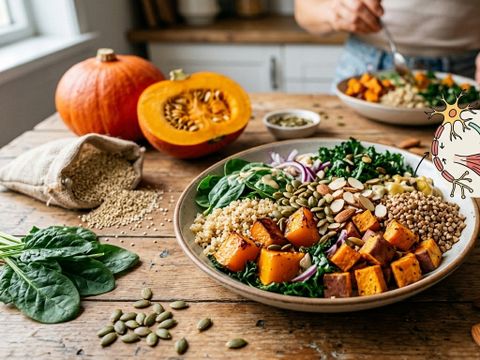
The term flexitarianism is derived from the English word 'flexible' and signifies a flexible vegetarianism. It is a dietary approach that assumes a restriction on the consumption of meat and sometimes other products of animal origin. The foundation of the diet consists of products of plant origin, and meat is consumed merely occasionally. There exist no clear-cut and rigid rules governing the quantity and type of animal products that can be consumed. Some describe flexitarianism as a diet in which 75% of animal products are replaced with plant-based food, while others believe that 2 out of 3 meals per day should be entirely vegan. These discrepancies highlight the flexibility of this dietary approach. Each individual can tailor the dietary guidelines according to their preferences.
The flexible meat consumption food pyramid
Flexitarianism is a beneficial solution for individuals who consume meat products but wish to limit them for various reasons. It is also an ideal method for those considering a vegetarian or vegan diet. An abrupt change from a standard diet to a fully plant-based diet can lead to digestive issues or nutritional deficiencies caused by inadequate absorption of meals. The flexitarian diet can be a solution - one can gradually incorporate more alternative meat products into the menu, learn to properly combine plant-based products, and discover the secrets of vegetarian cooking. The next steps are reducing meat consumption to 2 meatless days per week, followed by 3-4 meatless days per week, and ultimately 5 meatless days per week. Subsequently, meat consumption can be limited to occasions outside the home, and the kitchen at home can be based on plant-based products. Everyone can find their ideal way of nutrition.
Flexitarianism and its Effects on Health
Does limiting meat consumption bring real health benefits? In the ranking of the best diets on the U.S. News website, the Flexi Diet ranked second ex aequo with the DASH diet. Only the Mediterranean diet surpassed it. In the ranking of the best diets for diabetics, in which the effectiveness of the diet in preventing diabetes and its impact on people with diabetes was evaluated, it was ranked first. However, a recent study published in the journal PLOS Medicine in 2016 compared different types of plant-based diets and their impact on the risk of type 2 diabetes. The results showed that semi-vegetarian diets, including the Flexi Diet, reduced the risk of type 2 diabetes by 20%. Although a strict vegan diet reduced the risk by up to 34%, it is clear that limiting meat consumption has a significant impact on health. In a study conducted in Switzerland in 2019, the effects of different dietary models on human health and the environment were examined. The results were evaluated using the DALY indicator, which measures the number of years lost due to poor health, disability or premature death. The study found that a vegan diet could save 20,986 DALY, a vegetarian diet could reduce DALY by 8,049, and a pescetarian diet (which excludes meat but allows the consumption of fish) could reduce DALY by 10,679. The Flexi Diet reduced DALY by 5,259. However, it is worth noting that a diet based primarily on meat increased DALY by 24,788. The study also showed that fleksitarianism reduces the risk of heart disease, stroke, cancer, and type 2 diabetes.
Flexitarianism as a Method for Weight Reduction
The Flexitarian Diet is not only beneficial for health, but also an effective method for weight reduction. In the U.S. News ranking, the Flexitarian Diet was ranked as the best diet for weight reduction. The ranking took into account the long-term effects of weight reduction. The diet was also rated as easy to implement, which is important for people who want to not only lose weight quickly, but also make permanent changes to their dietary habits. A sufficient amount of fruits and vegetables ensures that the body receives enough fiber, which provides a feeling of satiety and prevents snacking. The diet does not require special ingredients, making it affordable and accessible to everyone. Diets that are restrictive and exclude certain foods can lead to eating disorders and nutritional deficiencies. In the case of the Flexitarian Diet, this is unlikely, as the goal is to encourage daily consumption of healthier foods.
Flexitarianism and its influence on the natural environment
The study conducted in Switzerland, which was previously mentioned, also examined the environmental impact of different nutritional models. The Flexi Diet encourages the reduction of greenhouse gas emissions, land use, and fresh water usage. It also decreases the amount of nitrogen and phosphorus fertilizers used. The Flexi Diet allows for a 63% reduction in greenhouse gas emissions compared to a diet that mainly consists of meat products. Eliminating meat from one meal a day can have a significant impact on the condition of our planet.
Flexitarianism is an exemplary dietary regimen
Below is an illustrative flexitarian dietary regimen, calculated for 1800 kcal. The dishes are composed of easily accessible ingredients and are uncomplicated to prepare.
Midday meal from the morning meal (420 kcal)
Sandwiches with a dried tomato bean paste Ingredients: 2 slices of rye bread, 100 grams of canned red beans, 3 dried tomatoes, 1 teaspoon of canned tomato oil, fresh parsley, lemon juice, salt, pepper. Drain the red beans. Add the dried tomatoes and the oil, mix thoroughly. Season with lemon juice, salt, and pepper. Spread the paste on the bread and sprinkle with chopped parsley.
Breakfast (250 kcal)
Beef breakfast with vegetables Ingredients: 2 carrots, 100 g of broccoli, 50 g of oatmeal, 1 egg, 2 tablespoons of milk, 2 teaspoons oil, salt, pepper. Carrots and broccoli put in boiling water and cook for 3 minutes. Oatmeal cut into pieces and fried in 1 teaspoon oil. Carrots and broccoli cut into pieces and mixed with oatmeal. Egg mixed with milk, salt and pepper, pour over vegetables and mix well. The mixture is placed in muffin molds smeared with the second spoon of oil. Bake in the oven preheated to 180°C for 20 minutes.
Meal (560 kcal)
A lunch comprising of grilled sea bass, potatoes, and tomato salad. The ingredients include: 1 sea bass, 4 potatoes, 2 tomatoes, 2 slices of onion, 1 tablespoon of olive oil, 1 teaspoon of lemon juice, 1 clove of garlic, half a teaspoon of oregano, salt, pepper. The fish should be thoroughly cleaned and rinsed. Potatoes should be washed and cut into slices (no need to peel them). The olive oil should be combined with lemon juice, crushed garlic, oregano, salt, and pepper. The fish should be coated with this mixture and tightly wrapped in baking paper. The wrapped fish should be placed on a baking sheet alongside the potatoes. The dish should be baked at 230°C for 50 minutes. The tomatoes should be rinsed, cut into eighths, sprinkled with chopped onion, and seasoned with salt and pepper. The dish should be served with the baked fish and potatoes.
Afternoon Repast (300 kcal)
Fruit coated with oatmeal crumb Ingredients: 100 grams of strawberries, 2 peaches, 30 grams of oat flakes, 1 tablespoon of honey, 10 grams of finely chopped nuts. Cut strawberries and peaches into small pieces and place them in a heat-resistant form. Combine oat flakes with nuts and honey. Cover the fruit mix with the created crumb. Bake at 200°C for 20 minutes.
Nighttime Meal (270 kcal)
Preparation: Tomato Lentil Soup Ingredients: 30 g of red lentils, 1 can of tomatoes, 1 cup of vegetable broth, 1 clove of garlic, 1/2 small onion, 1 tablespoon of olive oil, 2 tablespoons of coconut milk, a few leaves of coriander, salt, pepper, cumin. Finely chop the garlic clove and 1/2 small onion and fry in oil. Add lentils and cumin, stir well. Pour in the vegetable broth and canned tomatoes. Cook for about 30 minutes until the lentils are soft. Pour in the coconut milk, season with salt and pepper. Garnish with chopped coriander.

Oliwia Kaczmarek
✓Diets Premium Expert
Diets Premium team expert. Specializes in nutrition plans, strength sports, and training plans.
View Profile →