Portion Control and Sustainable Weight Management: Psychology, Physiology, and Volumetrics

| Diets Premium Expert Kacper Nowak | min read 2 min | Scientifically reviewed by a clinical dietitian 23.10.2026 |

Smart Voice
•Listen to the article content live
Sustaining optimal body weight in an environment of food abundance requires master-level control over portion architecture and caloric density rather than starvation diets. The amount consumed is dictated by neurohormonal satiety cascades coupled with subtle visual cues and social modeling. Discover evidence-based volumetrics and mindful eating strategies to achieve fullness while in a caloric deficit.
Want to apply these guidelines in your daily diet?
Our smart diet generator creates a tailored meal plan in 3 minutes based on the recommendations in this article.
Psychological Portion Traps: The Delboeuf Illusion and Social Modeling
Human eating behavior is driven predominantly by external visual anchors rather than internal interoceptive satiety cues. A classic demonstration is the Delboeuf optical illusion: identical quantities of food presented on a large dinner plate appear deceptively small, subconsciously triggering the compulsion to serve additional portions.
Furthermore, social facilitation of eating exerts a profound influence on portion sizing. Behavioral trials consistently demonstrate that individuals dining in groups or observing peers select larger servings consume 30% to 45% more calories without subjective awareness. Recognizing these cognitive vulnerabilities is the initial step toward reclaiming autonomy over the dinner plate.
Energy Density vs Nutrient Density: The Volumetrics Concept
The dietary volumetrics methodology, pioneered by Dr. Barbara Rolls, is grounded in the physiological reality that the human stomach senses the physical volume and mass of a meal rather than its caloric density. Energy density measures calories per gram (kcal/g); ultra-processed foods often reach 4.0 to 6.0 kcal/g, whereas fresh vegetables range between 0.2 and 0.5 kcal/g.
By prioritizing water-rich and fiber-dense whole foods—such as clear broths, vegetable purees, and leafy greens—one can consume a 600-gram meal delivering merely 350 kcal. This mechanism fully engages gastric mechanoreceptors, delivering profound physiological satiety within a targeted caloric deficit.
The Hormonal Satiety Axis: Gastric Mechanoreceptors, Leptin, Ghrelin, and GLP-1
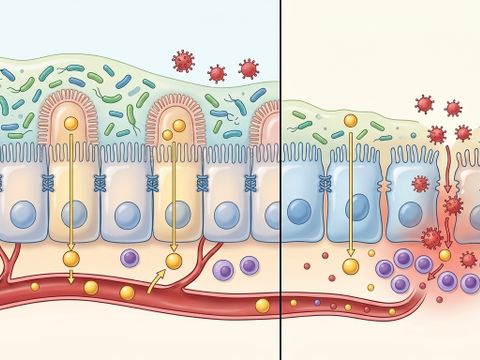
Appetite governance represents a continuous bidirectional dialogue between the digestive tract and the hypothalamic arcuate nucleus. As the gastric fundus expands, muscular stretch mechanoreceptors transmit afferent signals via the vagus nerve to the nucleus tractus solitarius, rapidly blunting orexigenic ghrelin secretion.
Concurrently, enteroendocrine L-cells in the ileum and colon respond to digested peptides and short-chain fatty acids by secreting glucagon-like peptide-1 (GLP-1) and peptide YY (PYY). These incretin-like peptides decelerate gastric motility (the 'ileal brake') and stimulate hypothalamic anorexigenic POMC neurons. Because this hormonal cascade requires 15 to 20 minutes to reach peak signaling, eating slowly is essential for portion control.
Practical Plate Architecture: The Hand Method and the 50% Vegetable Rule
To manage portions seamlessly without the psychological fatigue of weighing every morsel on a digital scale, the intuitive hand estimation method is highly effective. A serving of high-quality protein (poultry, fish, tofu, legumes) corresponds to the surface area of your open palm; complex carbohydrates (grains, tubers) fit into a cupped fist; and dense lipids (cold-pressed oils, nuts, seeds) match the volume of your thumb.
Complementing this architecture is the universal '50% plate rule': exactly half of the plate must be composed of diverse, non-starchy vegetables (cruciferous varieties, bell peppers, leafy greens). This structural framework ensures an abundance of essential micronutrients and viscous dietary fiber while effortlessly curbing total caloric density.

Kacper Nowak
✓Diets Premium Expert
Diets Premium team expert. Specializes in nutrition plans, strength sports, and training plans.
View Profile →