Kokosowe mleko - składnik przepisów na najsmakowitsze potrawy: wartości odżywcze, domowy przepis i kulinarne inspiracje

Wojciech Wiśniewski
✓
Ekspert Diets Premium • 23.10.2026
✓
Zweryfikowane merytorycznie przez dietetyka klinicznego:
Treść artykułu została zweryfikowana pod kątem zgodności z normami żywieniowymi IŻŻ, WHO oraz standardami klinicznymi PTGiP.
| Ekspert Diets Premium Wojciech Wiśniewski | min czytania 1 min | Zweryfikowane merytorycznie przez dietetyka klinicznego 23.10.2026 |
Odtwarzacz głosowy
•Odsłuchaj treść artykułu na żywo
0:00
/
0:00
Najważniejsze fakty w pigułce
Kokosowe mleko nie tylko przekazuje potrawom oryginalny, egzotyczny smak, ale także wzbogaca je o szereg cennych składników odżywczych, w tym średniołańcuchowe kwasy tłuszczowe (MCT), witaminy i minerały. Ponadto stanowi doskonałą alternatywę dla mleka krowiego dla osób z nietolerancją laktozy i na diecie roślinnej. W artykule przedstawiono profil odżywczy, przepis na domowe mleko kokosowe oraz inspirujące receptury kulinarne.
Plan Żywieniowy
Chcesz wdrożyć te zasady w codziennej diecie?
Nasz inteligentny generator ułoży dla Ciebie zbilansowany jadłospis w 3 minuty, uwzględniając zalecenia z tego artykułu.
Coconut milk in your kitchen – culinary characteristics and nutritional profile
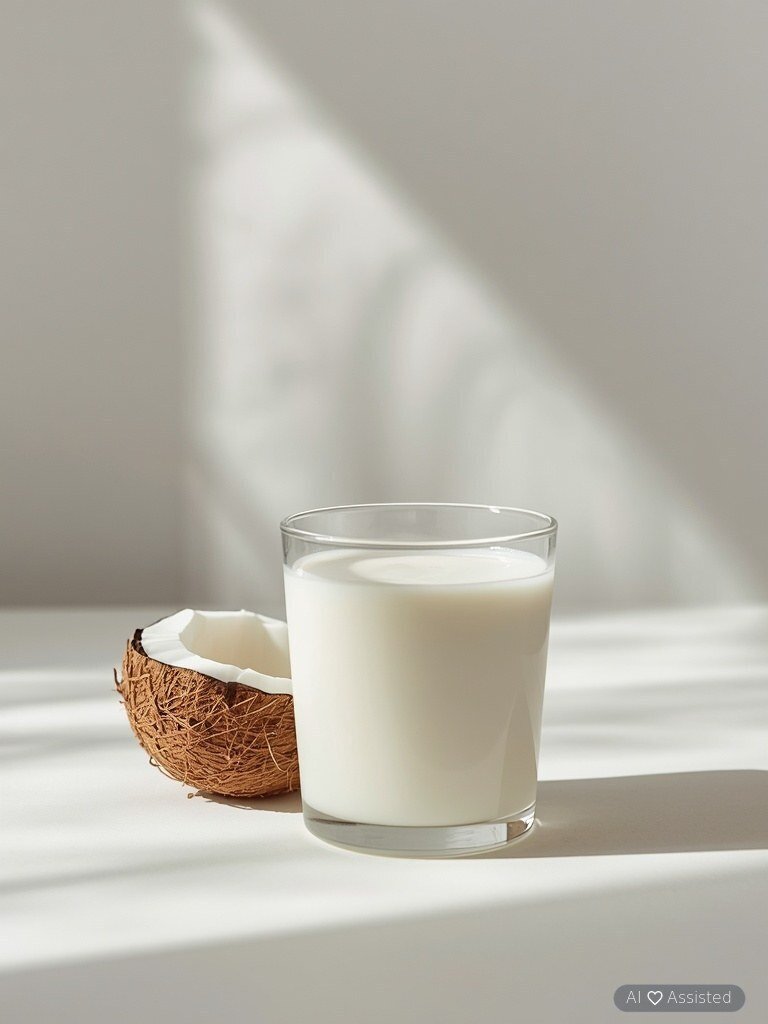
Coconut milk is a foundational cornerstone of Southeast Asian, Indian, and Caribbean culinary traditions. Created by pressing shredded, mature coconut kernel pulp with warm water, it delivers an unmistakably velvety, creamy texture that enriches both savory and sweet recipes. From a nutritional perspective, coconut milk is distinguished by its high content of medium-chain triglycerides (MCTs), primarily lauric acid. MCTs are rapidly absorbed via the portal vein and channeled directly into hepatic beta-oxidation, offering rapid physiological energy rather than conventional adipose deposition. Additionally, natural coconut milk is a rich source of potassium, magnesium, iron, phosphorus, and manganese, while naturally containing zero lactose, casein, or gluten.
Step-by-step guide: How to make fresh homemade coconut milk at home
Making your own coconut milk at home is remarkably economical, straightforward, and ensures a completely natural product free from synthetic thickeners, preservatives, or emulsifiers like guar gum. All that is required is 200 grams of unsweetened, non-sulfured dried coconut flakes and 800 to 1000 ml of hot water (around 70 degrees Celsius). Place the shredded coconut in a high-speed blender container, pour over the hot water, and let it soften for 10 to 15 minutes. Blend thoroughly on high speed for 2 to 3 minutes until smooth and frothy. Finally, pour the mixture through a nut milk bag or fine cheesecloth into a clean glass jar, pressing firmly to extract every drop of rich milk. Store refrigerated for up to 4 days.
Savory main courses: Authentic Indian curry and fragrant Thai coconut soup
Coconut milk serves as an extraordinary culinary harmonizer, balancing fierce spices like turmeric, ginger, cumin, and fiery chili. For a classic Indian chicken or chickpea curry, sauté finely diced onions, minced garlic, and grated ginger in virgin coconut oil, bloom aromatic spices until fragrant, and sear the protein or seasonal vegetables. Pour in 400 ml of full-fat coconut milk and simmer gently over low heat until the sauce thickens into a luxurious glaze. Another iconic application is Thai Tom Kha soup: tender strips of chicken breast or organic tofu are gently simmered in a coconut broth infused with crushed lemongrass stalks, galangal slices, kaffir lime leaves, and wild mushrooms, delivering a sublime balance of rich creaminess and citrus brightness.
Gourmet desserts, smoothies, and plant-based dairy substitutes
In plant-based and lactose-intolerant dietary planning, chilled full-fat coconut milk operates as a stellar substitute for heavy whipping cream. Chilling an unshaken can of coconut milk overnight allows the thick coconut solids to separate naturally from the transparent water. This firm cream can be whipped with pure vanilla extract and maple syrup into an exquisite vegan whipped cream. Furthermore, coconut milk forms the ideal base for nutrient-dense chia seed puddings topped with fresh mango purée, energizing post-workout berry smoothies, and dairy-free iced lattes, contributing wholesome dietary richness and satisfying satiety to everyday nutrition.
Tagi

Wojciech Wiśniewski
✓Ekspert Diets Premium
Ekspert zespołu Diets Premium. Specjalizuje się w planach żywieniowych, sportach siłowych oraz planach treningowych.
Zobacz profil →