Scientifically documented benefits of regular consumption of manuka honey – potential support in the treatment of eight conditions!

Tomasz Jankowski
✓
Diets Premium Expert • 23.10.2026
✓
Scientifically reviewed by a clinical dietitian:
This article has been peer-reviewed for adherence to IŻŻ, WHO, and PTGiP clinical nutritional standards.
| Diets Premium Expert Tomasz Jankowski | min read 1 min | Scientifically reviewed by a clinical dietitian 23.10.2026 |
Smart Voice
•Listen to the article content live
0:00
/
0:00
Key Takeaways
A comprehensive scientific evaluation of the unique phytochemical profile of Manuka honey and its evidence-based adjunctive role across eight specific clinical conditions: chronic wound healing, gastric ulcerations, sore throat, respiratory infections, dermatological disorders, periodontal diseases, cystic fibrosis, and oral mucositis.
Meal Plan
Want to apply these guidelines in your daily diet?
Our smart diet generator creates a tailored meal plan in 3 minutes based on the recommendations in this article.
Botanical origin and biochemical foundations of Manuka honey
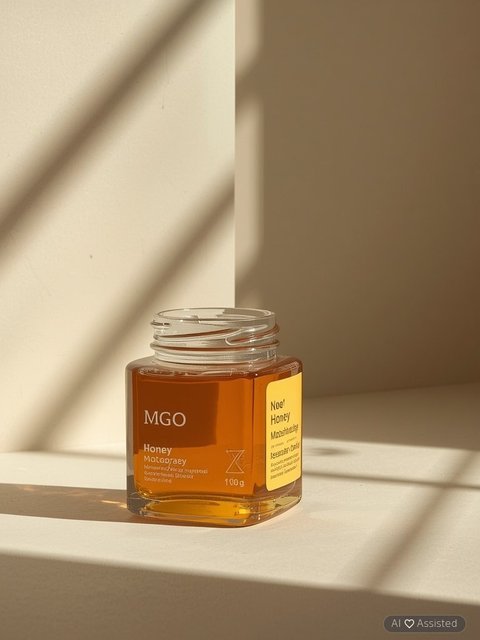
Manuka honey is produced by Apis mellifera bees foraging on the nectar of the manuka bush (Leptospermum scoparium), indigenous to New Zealand and southeastern Australia. Unlike typical floral honeys whose antimicrobial effects rely primarily on transient, light-sensitive hydrogen peroxide produced by glucose oxidase, Manuka’s potency is driven by high concentrations of methylglyoxal (MGO). Standard table honey generally contains under 5 mg/kg of MGO, whereas therapeutic-grade Manuka honey often exhibits concentrations ranging from 100 to over 800 mg/kg. Coupled with leptosperin, dihydroxyacetone, and specialized flavonoids, this unique matrix provides stable, non-peroxide antibacterial and immunomodulatory activity resistant to enzymatic degradation.
Chronic wounds, burn injury healing, and dermatological conditions (Conditions 1 & 2)
The first and most extensively validated clinical application of medical-grade Manuka honey is in modern wound care (Condition 1). Randomized trials demonstrate that sterile Manuka dressings eradicate antibiotic-resistant pathogens, including MRSA and Pseudomonas aeruginosa, eliminate wound malodor, and accelerate tissue granulation in diabetic foot ulcers and second-degree burns. The second documented therapeutic area encompasses inflammatory dermatological conditions, particularly acne vulgaris and rosacea (Condition 2). Topical application inhibits Cutibacterium acnes proliferation, reduces erythema through cytokine suppression, and promotes epithelial repair while preserving skin barrier hydration.
Gastrointestinal support: Helicobacter pylori and inflammatory bowel disorders (Conditions 3 & 4)
The third evidence-supported domain is gastrointestinal protection against Helicobacter pylori-induced peptic ulcers and gastritis (Condition 3). Manuka honey exerts direct bactericidal action in the acidic gastric environment while coating ulcerated areas to accelerate mucosal regeneration. The fourth indication involves inflammatory bowel disorders, including ulcerative colitis and irritable bowel syndrome (Condition 4). Experimental studies demonstrate that oral Manuka administration downregulates pro-inflammatory cytokines, attenuates colonic lipid peroxidation, and provides prebiotic oligosaccharides that nourish beneficial commensal gut microflora.
Upper respiratory infections, pharyngitis, and cystic fibrosis support (Conditions 5 & 6)
The fifth established therapeutic application is the treatment of sore throat, acute pharyngitis, and upper respiratory tract infections (Condition 5). Manuka honey coats irritated pharyngeal tissues, suppresses pathogenic Streptococcus species, and significantly alleviates nocturnal cough frequency in both adults and children over one year of age. The sixth promising therapeutic frontier involves cystic fibrosis-related respiratory infections (Condition 6). Recent microbiological research confirms that Manuka honey effectively destabilizes dense bacterial biofilms formed by Pseudomonas aeruginosa and Burkholderia cepacia complex, resensitizing multi-drug-resistant strains to conventional inhaled antibiotics.
Oral health, periodontal disease, and radiation-induced oral mucositis (Conditions 7 & 8)
The seventh beneficial domain is oral hygiene and the management of periodontal disease and gingivitis (Condition 7). Despite containing fermentable carbohydrates, Manuka honey reduces dental plaque accumulation and bleeding scores by eradicating periopathogenic bacteria such as Porphyromonas gingivalis without triggering enamel demineralization. The eighth vital clinical application is the mitigation of oral mucositis in cancer patients undergoing head and neck radiation therapy (Condition 8). Multiple clinical trials demonstrate that oral administration of Manuka honey significantly reduces the incidence and severity of painful radiation-induced mucosal ulcerations, enabling patients to maintain oral nutrition.
Grading standards (UMF vs. MGO), daily dosage, and safety guidelines
To guarantee genuine therapeutic efficacy across all eight conditions, consumers and clinicians must verify certified UMF or verified MGO potency marks on packaging. For general immune maintenance and dental hygiene, MGO 100+ (UMF 6+) is sufficient, whereas targeted gastrointestinal or wound care protocols demand MGO 400+ (UMF 13+) or MGO 550+ (UMF 16+). The recommended regimen involves 1 to 2 teaspoons daily taken undiluted. Individuals with impaired glucose tolerance should carefully calculate carbohydrate intake, and honey must never be administered to infants under one year old due to the hazard of infant botulism.
Tags

mgr Tomasz Jankowski
✓Diets Premium Expert
Diets Premium team expert. Specializes in nutrition plans, strength sports, and training plans.
View Profile →