4 min read
Preservation of Food Freshness and Quality: Freezing, Drying, Pasteurization, Tyndallization, Maceration

Felix Weber
✓
Diets Premium Expert • 25.09.2026
✓
Scientifically reviewed by a clinical dietitian:
This article has been peer-reviewed for adherence to IŻŻ, WHO, and PTGiP clinical nutritional standards.
| Diets Premium Expert Felix Weber | min read 4 min | Scientifically reviewed by a clinical dietitian 25.09.2026 |

Smart Voice
•Listen to the article content live
0:00
/
0:00
Key Takeaways
The objective of maintaining food freshness and quality is to keep the product in its optimal condition, maintain microbiological purity, and retain the appropriate nutritional value through the application of physical, chemical, and biological methods. Every product that is available on the market and has a long shelf life had to be preserved beforehand. Traditional methods of food preservation have been known for a long time and are highly popular.
Meal Plan
Want to apply these guidelines in your daily diet?
Our smart diet generator creates a tailored meal plan in 3 minutes based on the recommendations in this article.
The Food Freezing Process: Mechanisms, Consequences, and Optimal Storage Parameters
Freezing represents a sophisticated technological process whose primary objective is to lower the internal temperature of food products below the cryoscopic point—the threshold at which cellular fluids begin to crystallize—followed by the conversion of contained water into ice. During cooling, the first to freeze is the intercellular water, which possesses a lower concentration of salts and minerals, leading to the formation of ice crystals that envelop the cells and extract heat along with residual moisture. This results in damage to cellular membranes, loss of intracellular fluids upon thawing, and a reduction in turgor pressure. To mitigate these adverse effects, rapid freezing is employed, which abbreviates the cooling duration and promotes the simultaneous formation of fine ice crystals within both intercellular and intracellular spaces, thereby reducing the likelihood of cellular structural degradation during subsequent thawing. Optimal parameters involve freezing at temperatures ranging from –20 °C to –35 °C, followed by storage at –18 °C to –28 °C, ensuring prolonged preservation of product quality for items such as fruits (18–24 months), vegetables (8–24 months), meats (5–15 months depending on type), and fish (5–9 months).
Thermal dehydration of food via controlled drying processes
A time-honored food preservation technique that involves the systematic removal of moisture from edible products through regulated heat application, thereby inducing vigorous evaporation. The fundamental objective of this method is to reduce the water content to below 15 percent of the total mass. Achieving this threshold effectively suppresses enzymatic activity and non-enzymatic reactions (when water content falls below 5%) while decisively inhibiting microbial metabolic processes (at moisture levels under 15%). In household settings, this approach is most commonly utilized for processing fruits, vegetables, and edible fungi.
Controlled heat treatment for food preservation: the process of home pasteurisation
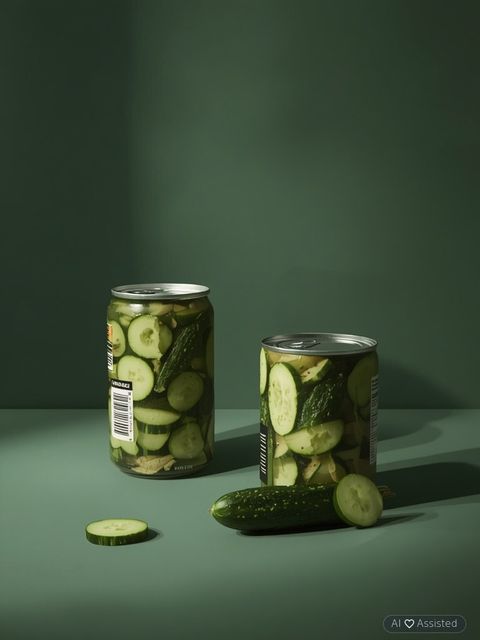
Pasteurisation represents a widely adopted technique for food preservation, employed across both industrial and domestic settings with the primary objective of extending product shelf life through the elimination of harmful microorganisms and the deactivation of enzymes responsible for decomposition. The process fundamentally involves subjecting food items to controlled heating within a temperature range of 60 to 100 degrees Celsius—without ever reaching the boiling point of water. Within household applications, two distinct methodologies are commonly practised: **wet pasteurisation**, which entails submerging jars in boiling water, and **dry pasteurisation**, executed by heating preserves in an oven. The efficacy of this treatment manifests in the destruction of pathogenic microbes and enzymes that, under favourable conditions, could induce food spoilage. The duration of pasteurisation is intrinsically linked to the specific characteristics of the product undergoing processing. For instance: **high-sugar preserves**, including jams and jellies, often obviate the need for additional pasteurisation—merely filling sterilised jars with the hot product and inverting them until cooled suffices to create a vacuum seal; **acidic products**, such as fermented vegetables or tomato-based preserves, typically require 15 to 30 minutes of heat exposure; **vegetable conserves**, including beets, green beans, or asparagus, undergo a two-stage pasteurisation process, each lasting approximately half an hour. It is noteworthy that pasteurisation ranks among the most ancient yet health-conscious food preservation methods, as it incurs minimal nutritional losses while effectively retaining the original sensory qualities—flavour, aroma, and texture—of the treated products.
Tyndallization: Intermittent fractional sterilization through triple-stage pasteurization
Tyndallization represents a sophisticated food preservation methodology characterized by subjecting a given product to three discrete pasteurization cycles, each separated by a mandatory 24-hour incubation interval. During these inter-cycle periods, the product must be maintained under strictly controlled environmental conditions that facilitate the germination of bacterial endospores into vegetative cells—a morphological state far more susceptible to thermal destruction in the subsequent pasteurization phase. The final, third cycle serves as a failsafe mechanism to eradicate any residual microorganisms that may persist after prior treatments. This multi-stage approach achieves exceptional microbial decontamination, thereby conferring prolonged shelf stability to the treated foodstuff. Notably, despite the cumulative thermal exposure, the product retains its original organoleptic integrity, including flavor and aromatic profiles, as substantiated by empirical research [4].
Phenolic and chromatic extraction process from grape must in vinification
This represents a fundamental technique employed in the vinification of deeply pigmented wines—including reds, rosés, and select fortified fruit liqueurs—wherein phenolic compounds such as tannins, anthocyanins, and aromatic precursors are systematically extracted from grape skins, seeds, and pulp. The resultant must adopts a vivid red hue in contrast to its naturally occurring pale-gray tint. Notably, this stage is entirely omitted in white wine production, as no color intensification is required. The maceration process unfolds through multiple meticulously controlled phases, commencing with the exposure of crushed grapes to elevated temperatures, which facilitates the liberation of polyphenols from the cellular matrices of the skins. Concurrently, alcoholic fermentation proceeds, with its rate—modulated by ambient temperature—dictating the overall pace and depth of phenolic extraction. Through this method, the wine acquires enhanced flavor complexity, a more robust structural profile, and heightened chromatic saturation, thereby elevating its organoleptic quality. Paradoxically, while contemporary food preservation relies heavily on advanced technological interventions, traditional practices like maceration endure in popularity due to their minimal alteration of the nutritional and sensory integrity of processed goods, rendering them particularly advantageous for artisanal home production and small-scale family vineyards.

mgr Felix Weber
✓Diets Premium Expert
Diets Premium team expert. Specializes in nutrition plans, strength sports, and training plans.
View Profile →