4 min read
Kohlrabi – Health Benefits, Nutritional Value, and Delicious Recipes

Mateusz Pawlak
✓
Diets Premium Expert • 23.10.2026
✓
Scientifically reviewed by a clinical dietitian:
This article has been peer-reviewed for adherence to IŻŻ, WHO, and PTGiP clinical nutritional standards.
| Diets Premium Expert Mateusz Pawlak | min read 4 min | Scientifically reviewed by a clinical dietitian 23.10.2026 |
Smart Voice
•Listen to the article content live
0:00
/
0:00
Key Takeaways
Kohlrabi (Brassica oleracea var. gongylodes) is a crisp brassica vegetable with a delicate, mildly sweet flavor packed with essential vitamins, minerals, and potent phytochemicals. Thanks to its low calorie count, exceptional vitamin C content, and dietary fiber, kohlrabi is a standout superfood for weight management and metabolic health. Explore its comprehensive nutritional profile, therapeutic benefits, and culinary recipes.
Meal Plan
Want to apply these guidelines in your daily diet?
Our smart diet generator creates a tailored meal plan in 3 minutes based on the recommendations in this article.
Kohlrabi – Botanical Overview and Nutritional Profile
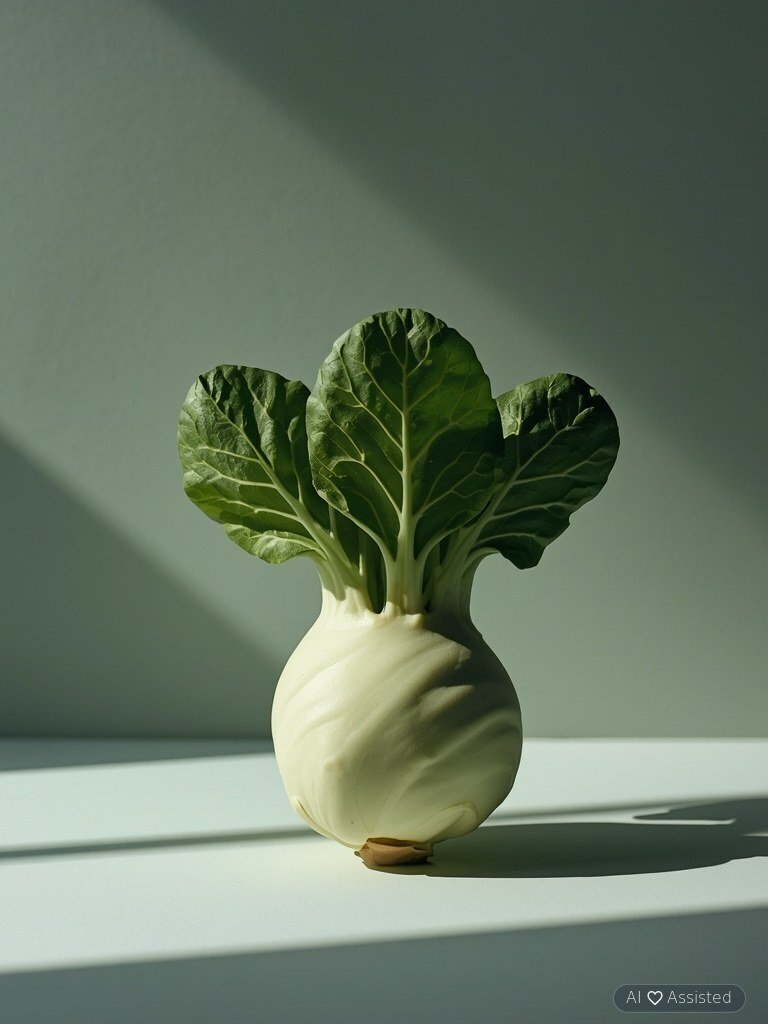
Kohlrabi (Brassica oleracea var. gongylodes) is a biennial cruciferous cultivar whose edible portion consists of a swollen, globular above-ground stem possessing a pale green or deep purple hue. Providing merely 27 kcal per 100 grams, it ranks among the most calorically efficient vegetables. Kohlrabi boasts an exceptional concentration of L-ascorbic acid (vitamin C)—approximately 62 mg per 100 g, satisfying 100% of the recommended daily allowance for adults. It is also an abundant source of B-complex vitamins (including folate, thiamine, and pyridoxine) alongside vital minerals such as potassium (approx. 350 mg), magnesium, calcium, copper, and non-heme iron. Crucially, tender young kohlrabi leaves contain up to threefold more iron and vitamin C than the bulb itself, representing a nutrient-packed botanical resource.
Health Benefits of Kohlrabi: Glucosinolates, Antioxidants, and Gastrointestinal Support
Belonging to the Brassicaceae family, kohlrabi delivers substantial amounts of glucosinolates, sulfur-rich compounds enzymatically converted during mastication into bioactive isothiocyanates and indole-3-carbinol. These substances demonstrate well-established chemopreventive properties, upregulating hepatic phase II detoxification enzymes and neutralizing reactive oxygen species. Purple kohlrabi varieties are exceptionally rich in anthocyanins—potent flavonoid pigments that safeguard vascular endothelium against oxidative degradation and LDL oxidation. The generous dietary fiber matrix (3.6 g per 100 g) promotes gastrointestinal motility, alleviates constipation, and serves as a prebiotic substrate for short-chain fatty acid (SCFA) synthesis by the gut microbiota. Additionally, high potassium levels actively support systemic blood pressure regulation by offsetting dietary sodium loads.
Kohlrabi in Weight Management, Glycemic Control, and Alkaline Balance
In clinical nutrition, kohlrabi serves as an exceptional tool for satiety management and metabolic control. Featuring a very low glycemic index (GI = 20) and negligible glycemic load, it elicits no abrupt postprandial insulin surges, rendering it remarkably safe for individuals with type 2 diabetes and insulin resistance. Its substantial volume, 90%+ water content, and dense, crunchy texture require extended mastication, which triggers physiological fullness cues via hypothalamic signaling. Furthermore, kohlrabi exerts an alkalinizing effect on the renal acid load, buffering metabolic byproducts from high-protein diets. Individuals with hypothyroidism should note that kohlrabi contains mild goitrogens; gentle steaming effectively denatures these enzymatic compounds, ensuring completely unhindered thyroid function.
Culinary Applications: Creative Recipes for Kohlrabi Slaw, Baked Fries, and Velvety Soup
Kohlrabi offers outstanding culinary versatility, delivering crisp sweetness raw and tender subtlety when cooked. Here are three nutrient-dense recipes:
1. Crisp Kohlrabi and Green Apple Slaw:
Ingredients: 1 medium kohlrabi, 1 crisp tart apple, 1 small carrot, handful of fresh dill. Dressing: 2 tablespoons plain Greek yogurt, 1 tsp lemon juice, 1 tsp extra virgin olive oil, sea salt, black pepper.
Directions: Peel and grate the kohlrabi, apple, and carrot on a coarse grater. Toss with chopped dill and the light yogurt dressing. A refreshing side rich in vitamin C.
2. Oven-Baked Low-Carb Kohlrabi Fries:
Ingredients: 2 kohlrabi peeled and sliced into batons, 1 tbsp olive oil, 1 tsp smoked paprika, 1/2 tsp dried oregano, sea salt.
Directions: Coat batons in oil and spices, spread evenly on a parchment-lined baking sheet, and roast at 200°C (400°F) for 20–25 minutes until golden and tender.
3. Velvety Kohlrabi and Leek Velouté:
Ingredients: 2 kohlrabi diced, 1 leek (white part sliced), 1 liter vegetable stock, 1 tbsp clarified butter, chopped young kohlrabi leaves for garnish.
Directions: Sauté leeks in butter, add diced kohlrabi and stock. Simmer for 15 minutes until fork-tender, purée until silky, and garnish with shredded kohlrabi greens.
Tags

mgr Mateusz Pawlak
✓Diets Premium Expert
Diets Premium team expert. Specializes in nutrition plans, strength sports, and training plans.
View Profile →