PRO
6 min read
Coconut Palm – Properties, Varieties and Opening Methods. How to Open a Coconut Quickly and Efficiently?

David Janitzek
✓
Diets Premium Expert • 25.09.2026
✓
Scientifically reviewed by a clinical dietitian:
This article has been peer-reviewed for adherence to IŻŻ, WHO, and PTGiP clinical nutritional standards.
| Diets Premium Expert David Janitzek | min read 6 min | Scientifically reviewed by a clinical dietitian 25.09.2026 |
Smart Voice
•Listen to the article content live
0:00
/
0:00
Key Takeaways
The coconut palm has been known since ancient times as a medicinal plant for many ailments, but many people are still unaware of the health benefits it can provide. However, to take advantage of these properties, one must first open the fruit, which can be a challenge. There are different ways to open a coconut, but which ones are the most efficient and quick?
Meal Plan
Want to apply these guidelines in your daily diet?
Our smart diet generator creates a tailored meal plan in 3 minutes based on the recommendations in this article.
PRO Content
PRO
This article is professional premium content (PRO) provided in its entirety.
Cocos nucifera: The Versatile Polynesian Native and Its Global Tropical Expansion
The coconut palm (*Cocos nucifera*), a species indigenous to the Polynesian islands, has through its remarkable adaptive strategies proliferated across the coastal regions of the global tropics. Archaeobotanical evidence confirms that cultivation of this palm in the southern Pacific dates back approximately four millennia. Its distinctive fruit—commonly, though inaccurately, referred to as a "coconut"—is botanically classified as a drupe rather than a true nut. Upon reaching maturity, the fruits detach spontaneously from the tree and are frequently carried by ocean currents, demonstrating an extraordinary capacity to remain viable in saline seawater for extended periods. This resilience enables them to traverse thousands of kilometers before being deposited on distant shores, where they germinate and establish new populations—a mechanism that has facilitated the palm’s expansive geographical distribution. In ancient, medieval, and early modern Indian literary traditions, the tree is revered as *kalpa vriksha*, or "the wish-fulfilling tree," a testament to its unparalleled utility. Every component of the plant—from its roots to its fronds—serves practical functions in the daily lives of communities inhabiting coconut-growing regions, providing fibrous materials for textiles, animal fodder, edible products, and high-quality oil. Moreover, the coconut palm represents a rich natural reservoir of bioactive compounds that have been historically employed in traditional medicine for the treatment of diverse ailments [1].
Nutritional and health-promoting attributes of coconut: a scientific examination of its bioactive constituents and systemic effects
The fruit of the coconut palm, encompassing both the flesh and coconut water, constitutes a valuable reservoir of bioactive compounds essential for optimal human physiological function. Coconut is distinguished by its elevated potassium content (355 mg per 100 g) and further supplies trace elements including calcium, iron, phosphorus, magnesium, zinc, and sodium. Additionally, it is abundant in B-complex vitamins, folic acid, vitamin C, and vitamin E—nutrients with well-documented antioxidant properties. Empirical research corroborates that coconut-derived products, particularly coconut water and coconut oil, exhibit potent antioxidative and anti-inflammatory attributes, attributable to their polyphenolic composition. Owing to its substantial potassium concentration, coconut may confer cardiovascular benefits by modulating blood pressure and demonstrating cardioprotective effects. The caprylic acid present in coconut favorably influences vascular elasticity. Moreover, coconut flesh serves as a source of medium-chain triglycerides (MCTs), which beneficially alter lipid profiles by elevating high-density lipoprotein (HDL) cholesterol while concomitantly reducing low-density lipoprotein (LDL) cholesterol levels.
Comprehensive Guide: How to Identify and Select a Perfectly Ripe, Fresh Coconut – Key Characteristics and Practical Recommendations
Selecting a high-quality coconut necessitates careful evaluation of several critical visual and sensory indicators. A fully mature fruit is distinguished by its uniform, deep brown husk coloration, as well as the presence of three symmetrically positioned, well-defined indentations at the apex. Prior to purchase, a thorough examination of the surface is essential to detect any mechanical damage—such as cracks or depressions—as well as biological contaminants, particularly mold accumulation around the natural eyelets. An equally important step involves assessing the internal contents by gently shaking the fruit: an audible sloshing of the liquid (commonly referred to as coconut water) confirms freshness and optimal ripeness. The absence of such a sound may suggest desiccation of the endosperm, which typically signals overripeness or spoilage of the product.
Proven Techniques for Cracking Open a Coconut: Safely Extracting Meat and Water
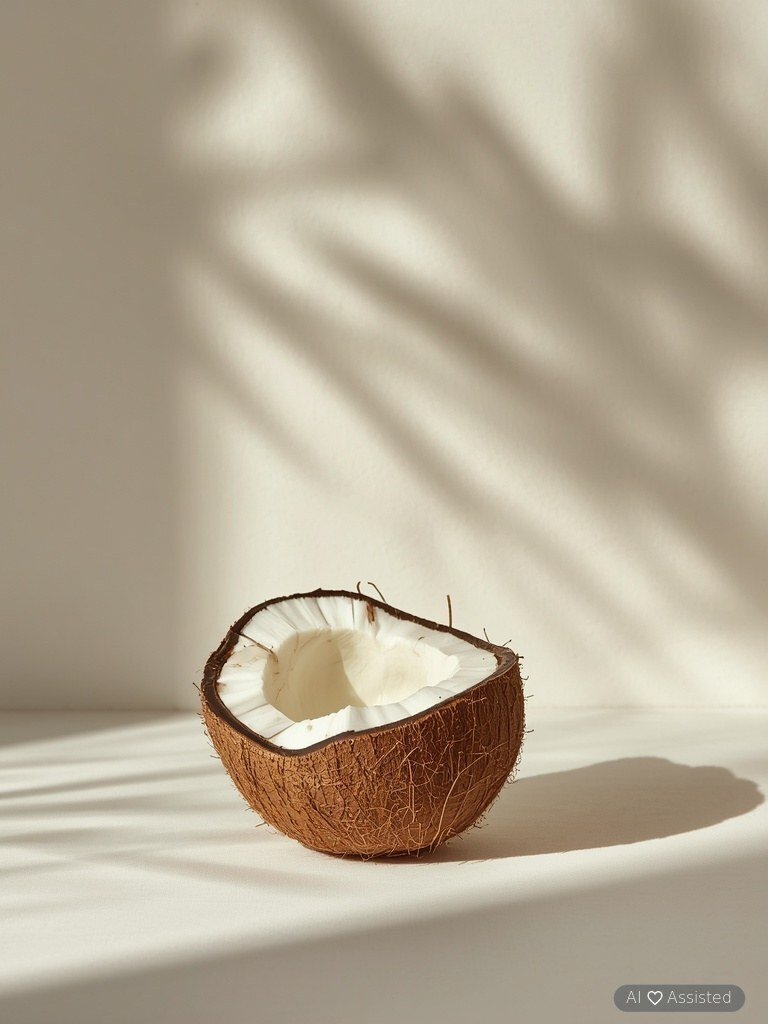
Attempting to access the interior of a coconut can pose a significant challenge, particularly for those unfamiliar with the process. The initial critical step involves creating a precise hole in the tough outer husk to drain the valuable coconut water—a mineral-rich liquid (containing calcium and magnesium) that is best consumed chilled to maximize its refreshing properties. Once the liquid has been removed, the next phase is cracking open the nut. To minimize the risk of sharp fragments scattering, it is advisable to wrap the coconut securely in a thick cloth, such as a kitchen towel, and place it on a stable, hard surface like the floor. A single, controlled strike with a hammer—firm yet not overly forceful—should split the coconut into several larger pieces rather than shattering it into countless tiny shards. After opening, the snow-white coconut meat (the endosperm) can be extracted, with brief heating of the pieces in an oven (around 150°C for a few minutes) facilitating its separation from the shell. The extracted meat can then be chopped, grated, or blended as needed. To preserve freshness, opened coconut should be stored in the refrigerator, either wrapped in cling film or placed in an airtight container, as freshly opened coconut is distinguished by its exceptional juiciness and aromatic intensity.
Dried coconut flakes and shreds: nutritional properties, culinary applications, and dietary benefits for everyday consumption
Dried segments of coconut flesh, available as fine shreds or larger flakes, represent a versatile culinary ingredient with exceptional nutritional attributes. Although characterized by substantial caloric density (approximately 700 kilocalories per 100 grams), their regular, moderate consumption may yield health benefits—primarily due to the elevated dietary fiber content (16. 3 grams per 100 g). Consistent intake of this component promotes optimal gastrointestinal function, stabilizes blood glucose levels, and facilitates weight management by suppressing appetite. Notably, the fats present in coconut flakes and shreds (around 67 g/100 g) consist predominantly of saturated fatty acids with a distinctive metabolic profile—unlike animal-derived fats, they accelerate metabolic processes and do not accumulate as adipose tissue but are efficiently converted into energy, rendering them particularly valuable as a fuel source for physically active individuals, especially those engaged in strength training. Furthermore, both products serve as a rich reservoir of micronutrients such as potassium, phosphorus, magnesium, and folic acid, further solidifying their role as a beneficial supplement to a balanced diet.

mgr David Janitzek
✓Diets Premium Expert
Diets Premium team expert. Specializes in nutrition plans, strength sports, and training plans.
View Profile →