Porównanie mleka sojowego i ryżowego: właściwości odżywcze oraz skład alternatywnych napojów roślinnych wobec tradycyjnego mleka krowiego

| Ekspert Diets Premium Wojciech Wiśniewski | min czytania 4 min | Zweryfikowane merytorycznie przez dietetyka klinicznego 23.10.2026 |
Odtwarzacz głosowy
•Odsłuchaj treść artykułu na żywo
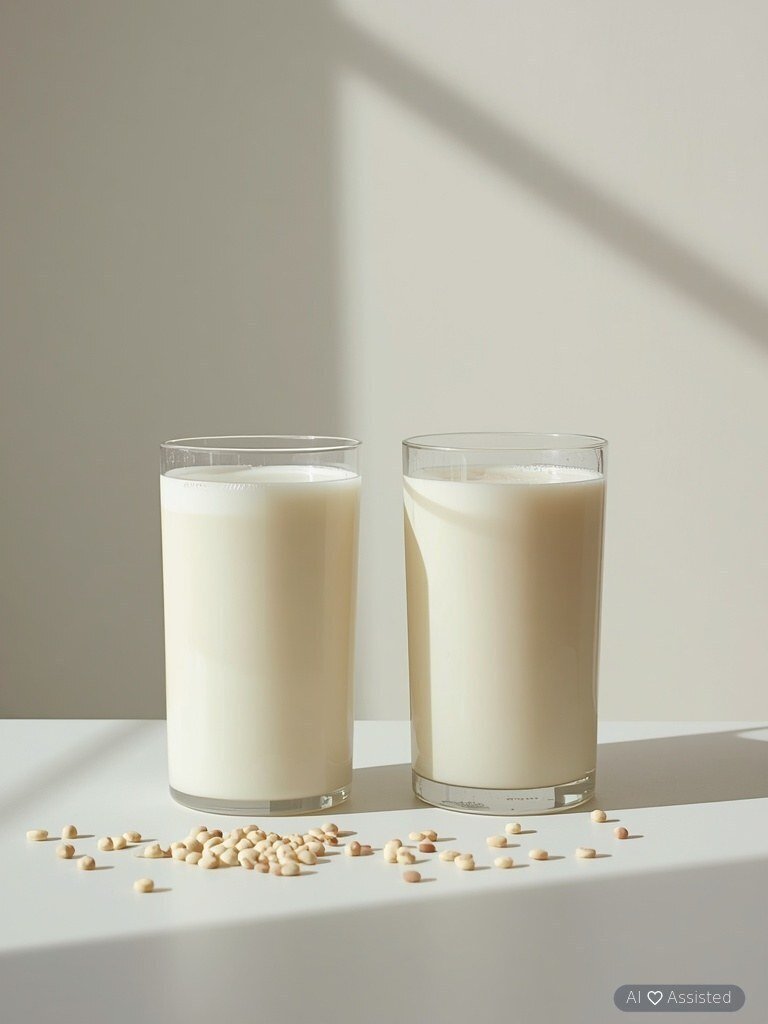
Dynamiczny rozwój rynku napojów roślinnych stawia konsumentów przed wyborem odpowiedniej alternatywy dla mleka krowiego. Wśród najpopularniejszych opcji znajdują się mleko sojowe oraz mleko ryżowe. Choć oba napoje są z natury bezlaktozowe i w 100% roślinne, różnią się diametralnie pod względem zawartości białka, węglowodanów, indeksu glikemicznego oraz potencjału hipoalergicznego. W niniejszej analizie zestawiamy oba produkty pod kątem składu i zastosowania w codziennej diecie.
Chcesz wdrożyć te zasady w codziennej diecie?
Nasz inteligentny generator ułoży dla Ciebie zbilansowany jadłospis w 3 minuty, uwzględniając zalecenia z tego artykułu.
Composition and Nutritional Profile of Soy Milk
Pure soy milk is manufactured by hydrating, grinding, boiling, and straining whole soybeans. An unadulterated unsweetened formulation lists merely water and non-GMO soybeans (typically 6–9% by weight).
Macronutrient metrics per 100 ml include:
- Protein: 3.0–3.5 g (complete amino acid spectrum);
- Fat: 1.8–2.0 g (predominantly polyunsaturated and monounsaturated lipids);
- Carbohydrates: Under 1.5 g (in unsweetened formulations);
- Energy: 35–45 kcal.
Quality commercial varieties are enriched with tricalcium phosphate or calcareous marine algae to deliver 120 mg of elemental calcium alongside cobalamin (B12) and ergocalciferol/cholecalciferol (vitamin D).
Composition and Nutritional Profile of Rice Milk
Rice milk is produced from milled brown or polished white rice subjected to enzymatic processing that hydrolyzes complex starches into maltose and glucose, imparting a pronounced inherent sweetness without added refined sugar.
Per 100 ml, rice milk typically contains:
- Protein: Only 0.1–0.3 g (insignificant for daily protein requirements);
- Fat: Approximately 1.0 g (chiefly derived from added cold-pressed sunflower or expeller-pressed rapeseed oil used for emulsion stability);
- Carbohydrates: 9.0–11.0 g (principally simple sugars and fast-digesting oligosaccharides);
- Energy: 48–55 kcal.
Notably, rice milk possesses a very high glycemic index (GI 85–90), triggering rapid postprandial glucose surges.
Health Comparative Analysis: Satiety, Glycemia, and Metabolic Impact
Contrasting physiological characteristics reveal distinctly different clinical indications:
| Parameter | Soy Milk | Rice Milk |
|---|---|---|
| Protein Content | High (3.3 g/100 ml), complete amino acids | Minimal (0.2 g/100 ml) |
| Glycemic Index | Low (GI approx. 30) | Very High (GI approx. 85–90) |
| Satiety Factor | Elevated (mediated by peptide satiety hormones) | Low (rapid gastric emptying of simple sugars) |
| Clinical Fit | Type 2 diabetes, insulin resistance, athletics, weight loss | Acute gastrointestinal recovery, quick pre-exercise glycogen fuel |
Culinary Applications, Hypoallergenic Profile, and Pediatric Safety
Allergenicity and Pediatric Safety Guidelines:
Rice milk stands as the most hypoallergenic plant milk available, lacking gluten, soy, tree nuts, and dairy proteins, making it an indispensable resource in complex elimination diets. However, health authorities (including the European Food Safety Authority - EFSA) advise that due to natural inorganic arsenic accumulation in rice crops, rice milk should not be utilized as a primary milk substitute for infants and young children under 5 years of age.
Culinary Performance:
- Soy Milk: Emulsifies and froths exquisitely for espresso beverages (microfoam), withstands culinary heat in savory sauces, and enhances elasticity in baking;
- Rice Milk: Due to its light, fluid consistency and inherent sweetness, it is ideal for puddings, morning cereals, and fruit smoothies.
Tagi

Wojciech Wiśniewski
✓Ekspert Diets Premium
Ekspert zespołu Diets Premium. Specjalizuje się w planach żywieniowych, sportach siłowych oraz planach treningowych.
Zobacz profil →