3 min read
White Cabbage – Distinctive Features and Uses of White Cabbage Juice

David Janitzek
✓
Diets Premium Expert • 25.09.2026
✓
Scientifically reviewed by a clinical dietitian:
This article has been peer-reviewed for adherence to IŻŻ, WHO, and PTGiP clinical nutritional standards.
| Diets Premium Expert David Janitzek | min read 3 min | Scientifically reviewed by a clinical dietitian 25.09.2026 |
Smart Voice
•Listen to the article content live
0:00
/
0:00
Key Takeaways
Cabbage, along with cauliflower, broccoli, or legume, belongs to the family of cruciferous plants... The vegetables of this plant are a crucial component of the diet of people worldwide - their production in 2013 was over 71 million tonnes... The main attribute for this category of vegetables is the presence of glucosinolates in their chemical composition - organic sulfur compounds being secondary products of plant metabolism... Does the principal representative of the cruciferous family possess any properties at all?
Meal Plan
Want to apply these guidelines in your daily diet?
Our smart diet generator creates a tailored meal plan in 3 minutes based on the recommendations in this article.
White cabbage (*Brassica oleracea* var. *capitata*): Defensive phytochemistry and structural distinctions within cruciferous vegetables
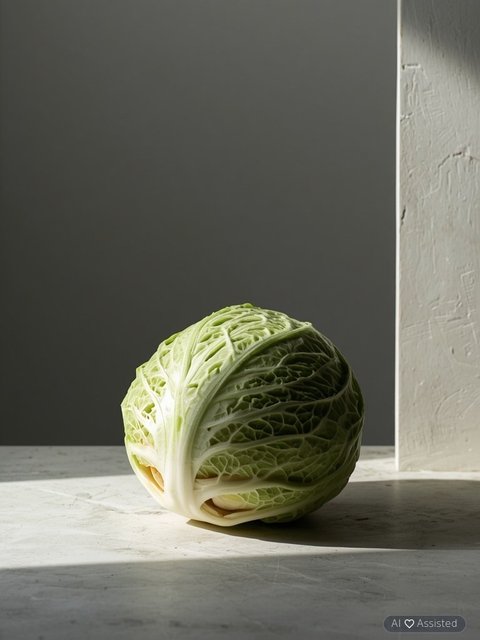
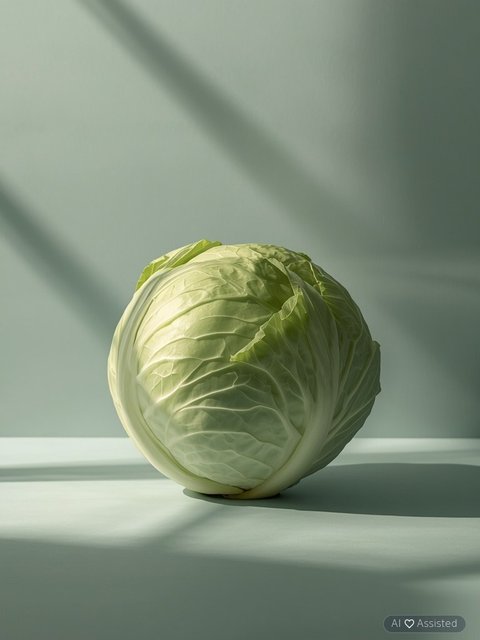
The complex aromatic compounds emitted by members of the *Brassicaceae* family serve a critical ecological purpose—functioning as an advanced defensive mechanism against herbivory and microbial pathogens. Upon mechanical injury, such as insect feeding or tissue disruption, glucosinolates—sulfur-containing glycosides stored in specialized parenchymatous idioblast cells—are released. White cabbage (*Brassica oleracea* var. *capitata* f. *alba*) distinguishes itself from relatives like broccoli or cauliflower not only through the potency of its odor but also via a distinct chemical fingerprint of these compounds [1]. Furthermore, its morphology deviates from the family’s characteristic "floret" structure; instead, it forms a dense, spherical head composed of overlapping leaves, an evolutionary adaptation that enhances long-term storage stability.
White cabbage – bioactive compound profile and its health implications
Phytochemical analysis of cruciferous vegetables, including white cabbage, reveals the presence of highly active compounds with well-documented antioxidant properties. Key secondary metabolites include glucosinolates (precursors to isothiocyanates), flavonoids, and organosulfur polyphenolic compounds, whose biological activity has been demonstrated in the modulation of inflammatory processes and the neutralization of reactive oxygen species. Epidemiological and experimental evidence suggests that regular consumption of these vegetables may correlate with a reduced risk of malignant tumor development and cardiovascular diseases, attributable to their capacity to inhibit lipid peroxidation and activate detoxification pathways [2]. Paradoxically, the organoleptic intensity (aromatic profile) of white cabbage does not proportionally reflect the concentration of bioactive compounds—darker varieties (e.g., red cabbage) and Napa cabbage exhibit superior antioxidant potential in this regard.
Raw white cabbage leaf extract: nutritional properties and applications in traditional and modern dietary practices
For centuries, both white cabbage itself and its freshly pressed juice have served as cornerstone adjuncts in therapies addressing gastrointestinal dysfunctions—ranging from ulcerative lesions of the gastric mucosa to inflammatory conditions (including catarrhal gastritis) and motility-related disorders classified as irritable bowel syndrome [3]. In contemporary practice, this extract has gained prominence not only within homeopathic traditions but also as a constituent of highly bioavailable nutritional blends—frequently paired with other vegetables in formulations designed for weight management, correction of hematologic deficiencies (such as anemia), and even oncological prevention owing to its rich profile of organosulfur bioactive compounds.
What unexpected culinary potential does white cabbage truly hold?
One of the most effective and widely recommended methods for processing white cabbage is lactic acid fermentation, commonly referred to as sauerkraut production. This traditional preservation technique not only extends the vegetable’s shelf life but also significantly enhances its nutritional profile, particularly its vitamin C content—which can even increase during fermentation. White cabbage, being one of the most frequently fermented vegetables, requires meticulous preparation: containers—whether wooden barrels, stoneware crocks, or glass jars—must be thoroughly cleaned and sterilized with hot steam or boiling water. After washing and removing the outer, potentially contaminated leaves, the cabbage heads are finely shredded or chopped and uniformly mixed with salt (typically around 2% of the cabbage’s weight, or 20 grams per kilogram) along with aromatic additives. Popular choices include caraway and dill seeds, grated carrots, or apple slices, which not only enrich the flavor but also support the fermentation process. The ingredients are layered into the container while being firmly pressed to eliminate air pockets and stimulate juice release—a critical medium for the growth of beneficial lactic acid bacteria. A sterilized plate or cloth is placed on top, weighted down (e.g., with a stone) to ensure even pressure. The initial 24–48 hours of fermentation should occur at room temperature (approximately 18°C) to activate microbial processes, after which the container is moved to a cooler environment (8–10°C) for several days to weeks, depending on the desired level of sourness. Throughout the process, it is essential to monitor the sauerkraut’s condition: removing any mold, checking and replenishing the liquid level if it falls below the cabbage layer, and maintaining hygiene. White cabbage, an affordable and widely accessible food, plays a significant role in global diets. Its regular consumption—whether raw in salads, cooked in dishes, or fermented—provides the body with not only water and vitamins (including K, B6, and folic acid) but also valuable antioxidant compounds such as polyphenols and glucosinolates, which exhibit anti-inflammatory and anticancer properties. Thus, experimenting with diverse preparation methods for this vegetable is highly beneficial to fully harness its health and culinary potential.

mgr David Janitzek
✓Diets Premium Expert
Diets Premium team expert. Specializes in nutrition plans, strength sports, and training plans.
View Profile →