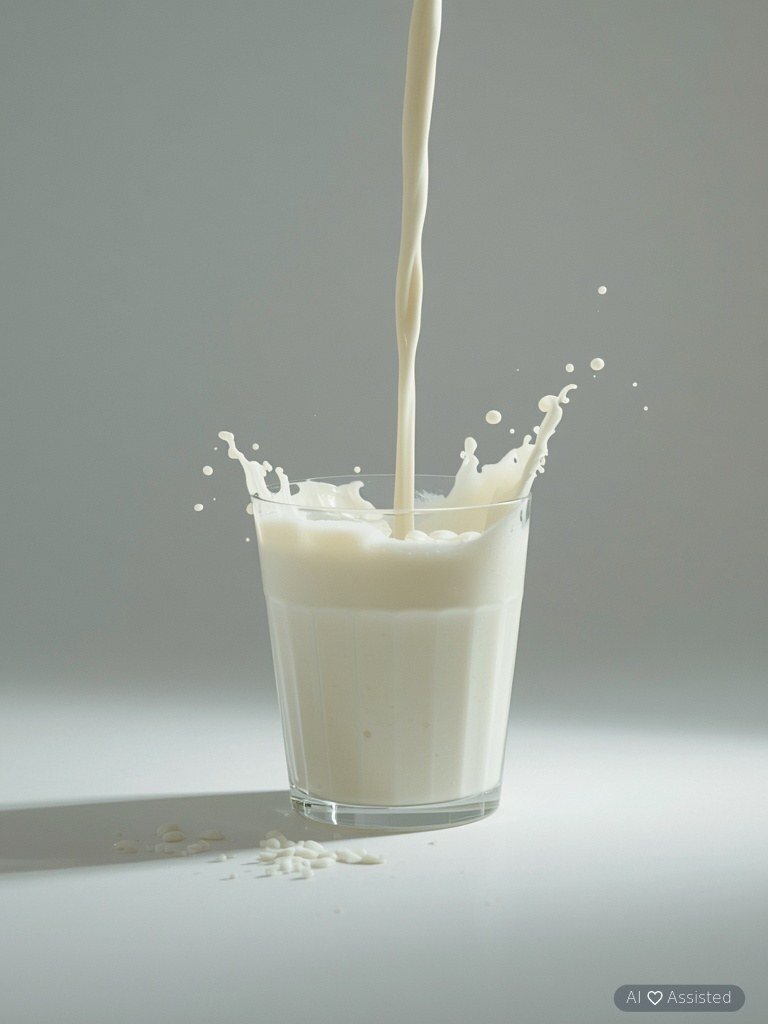
Scientific examination of bovine milk: A comprehensive breakdown of nutritional components and biochemical structure

Tomasz Jankowski
Tomasz Jankowski ✓
Diets Premium Expert • 24.09.2026
✓
Scientifically reviewed by a clinical dietitian: This article has been peer-reviewed for adherence to IŻŻ, WHO, and PTGiP clinical nutritional standards.
Diets Premium Expert Tomasz Jankowski min read 3 min Scientifically reviewed by a clinical dietitian 24.09.2026
Scientific examination of bovine milk: A comprehensive breakdown of nutritional components and biochemical structure

Smart Voice

•

Listen to the article content live

0:00 / 0:00
Key Takeaways
Milk derived from cattle has long sparked intense discussions among nutrition professionals and consumers alike, much like debates surrounding other dairy products. Given the spectrum of perspectives—ranging from enthusiastic endorsement to vehement criticism—it becomes imperative to conduct a thorough examination of its chemical composition and physicochemical properties in order to facilitate an objective assessment of its role in human nutrition.
Meal Plan

Want to apply these guidelines in your daily diet?

Our smart diet generator creates a tailored meal plan in 3 minutes based on the recommendations in this article.

Mleko krowie

Na temat picia mleka krowiego są różne zdania.. Zwolennicy mleka mówią o bardzo dobrym składzie, szczególnie o ilości zawartego w nim białka czy wapnia.. Natomiast przeciwnicy przytaczają takie argumenty jak alergia czy nietolerancja pokarmowa.. Obecnie picie mleka jest zalecane przez Instytut Żywności i Żywienia.. Na ten temat prowadzone były różne kampanie społeczne zachęcające do spożywania mleka przede wszystkim przez dzieci.. Każdy z nas chyba pamięta akcję „Pij mleko, będziesz wielki”.

Mleko krowie – właściwości

Mleko krowie jest dość częstym powodem alergii, zwłaszcza u małych dzieci.. Wywołuje ono zaburzenia ze strony układu pokarmowego, takie jak nudności, wymioty, a także zmiany skórne, świąd czy pokrzywkę.. Jednak dziecko najczęściej wyrasta z takiej alergii.. Drugim powodem, dla którego ludzie nie mogą spożywać mleka jest nietolerancja laktozy – cukru zawartego w mleku.. Organizm nie wytwarza enzymu laktazy, który trawi właśnie ten cukier.. Dochodzi wtedy do wzdęć, bólów brzucha oraz biegunek.. Niestety osoby z nietolerancją laktozy nie mogą spożywać dużych ilości mleka, dlatego składniki odżywcze w nim zawarte muszą pobierać z innych źródeł.. Najlepszym wyborem są produkty mleczne, takie jak, np.. Kefir, jogurt czy ser, ponieważ w nich laktoza została już rozłożona.. Ważne Jak wiemy produkty pochodzenia zwierzęcego dostarczają nasyconych kwasów tłuszczowych i cholesterolu, co również przemawia na niekorzyść mleka.. Jednak nie można zaprzeczyć, że jest ważnym źródłem wapnia.. Aby był on dobrze przyswajalny przez nasz organizm, muszą mu towarzyszyć takie związki jak laktoza, niektóre aminokwasy i oligosacharydy.. Istotna jest także obecność fosforu i magnezu.. W mleku te wszystkie składniki są w odpowiednich proporcjach.. Warunkiem, który musimy spełnić, aby mleko stało się naszym źródłem wapnia jest dostarczenie witaminy D.. To ona zapewnia odpowiednią przyswajalność tego pierwiastka przez organizm.. Ważne Mleko zawiera również białko o wysokiej wartości biologicznej, które obowiązkowo musi znaleźć się w naszej diecie dla odpowiedniego funkcjonowania i budowy naszego ciała.

Mleko krowie – skład

Mleko krowie 2% zawiera w jednej szklance: wartość energetyczna ok.. 130 kcal tłuszcz 5g białko ok.. 8, 5 g węglowodany 12g wapń 330mg Szacunkowo pokrywa to zapotrzebowanie osoby dorosłej na: wartość energetyczną w ok.. 7% tłuszcz ok.. 3-7% białko w 14% węglowodany w 1% wapń w 33% Jak widać, aby spożyć odpowiednią ilość wapnia trzeba codziennie spożywać po 3 szklanki mleka.. Większość z nas tego nie robi, ale na szczęście dostarczamy sobie także wapnia z innych źródeł, warzyw, roślin strączkowych czy pieczywa.. Najlepiej jest pić mleko 2%, ponieważ nie powinniśmy spożywać zbyt dużej ilości tłuszczów zwierzęcych, nasyconych, a co za tym idzie również cholesterolu.. Mleko 0% również nie jest najlepszym wyborem, bowiem zawarte w nim witaminy A, E, K potrzebują tłuszczu, aby rozłożyć się w naszym organizmie.. Mleko krowie pomimo wielu sprzeciwów, zawiera wiele cennych dla człowieka witamin i minerałów.. Jest bogatym źródłem wapnia i białka, tak ważnych dla prawidłowego rozwoju dzieci.. Jeśli tylko nie ma żadnych przeciwwskazań warto uzupełnić swoją dietę o codzienna szklankę mleka krowiego.
mgr Tomasz Jankowski

mgr Tomasz Jankowski

✓

Diets Premium Expert

Diets Premium team expert. Specializes in nutrition plans, strength sports, and training plans.

View Profile →

Recommended articles in this category

Related Articles

Discover similar publications and expert insights.

Mare’s milk: Nutritional properties, biochemical composition, and practical applications in dietetics and complementary medicine
Nutritional Science
Mare’s milk: Nutritional properties, biochemical composition, and practical applications in dietetics and complementary medicine
⏱ 7 min czytania 📚 Nutritional Science
#Antimicrobial Properties #Nutritional Properties
Calcium sources in dairy-free diets
Nutrition
Calcium sources in dairy-free diets
⏱ 4 min czytania 📚 Nutrition
#Calcium Sources #Dairy Products
Calcium – its function in the body, requirement, and sources
Minerals
Calcium – its function in the body, requirement, and sources
⏱ 4 min czytania 📚 Minerals
#Green Vegetables #Dairy
Dairy-free nutrition - strategies and culinary recipes
Health Conditions
Dairy-free nutrition - strategies and culinary recipes
⏱ 6 min czytania 📚 Health Conditions
#Lactose Intolerance #Dairy-free Diet
Lactose — chemical composition, dietary sources, and clinical indications for exclusion. Who may benefit from a lactose-free nutritional regimen?
Dietary Recommendations
Lactose — chemical composition, dietary sources, and clinical indications for exclusion. Who may benefit from a lactose-free nutritional regimen?
⏱ 7 min czytania
#Dietary Recommendations #Lactose-free Diet
Alternative Calcium Sources for a Dairy-Free Diet
Dairy-Free Diet
Alternative Calcium Sources for a Dairy-Free Diet
⏱ 3 min czytania
#Dairy-free Diet #Dairy Alternative
Rice-based beverages in the diets of expectant mothers, nursing women, infants, and young children – nutritional evaluation and safety considerations
Pregnancy & Motherhood
Rice-based beverages in the diets of expectant mothers, nursing women, infants, and young children – nutritional evaluation and safety considerations
⏱ 4 min czytania 📚 Pregnancy & Motherhood
#Essential Nutrients #Dietary Preferences
Association Between Low-Fat Dairy Consumption and Parkinson’s Disease Development
Nutrition
Association Between Low-Fat Dairy Consumption and Parkinson’s Disease Development
⏱ 2 min czytania 📚 Nutrition
#Dairy Products #Low-Fat Dairy
Harmful Effects of Trans Fats. List of Products Containing Trans Fats
Dairy Products
Harmful Effects of Trans Fats. List of Products Containing Trans Fats
⏱ 3 min czytania
#Dairy Products #Vegetable Fat
Creatine in Sports and Clinical Science: Mechanisms of Action, Formulations, and Dosing
Dietary Supplement
Creatine in Sports and Clinical Science: Mechanisms of Action, Formulations, and Dosing
⏱ 3 min czytania
#Dietary Supplement #Dairy Products
Animal fats and the enhanced risk of heart diseases - the latest discoveries
Full-Fat Dairy Products
Animal fats and the enhanced risk of heart diseases - the latest discoveries
⏱ 7 min czytania
#Full-Fat Dairy Products #Cardiovascular Disease
Sheep’s Milk Cheeses: Nutritional Architecture, Health Benefits, Bioactive Peptides, and Digestive Tolerance
Fat-Soluble Vitamins
Sheep’s Milk Cheeses: Nutritional Architecture, Health Benefits, Bioactive Peptides, and Digestive Tolerance
⏱ 3 min czytania
#Fat-soluble Vitamins #Bioactive Compounds
Dairy and Respiratory Infections – Fact or Myth
Dairy Products
Dairy and Respiratory Infections – Fact or Myth
⏱ 7 min czytania
#Dairy Products #Dairy
How living bacterial cultures function and their applications
Fermented Foods
How living bacterial cultures function and their applications
⏱ 5 min czytania
#Fermented Foods #Health Benefits
Unconventional Sustenance – Peanut Protein
Vegan Diet
Unconventional Sustenance – Peanut Protein
⏱ 4 min czytania
#Vegan Diet #Lactose Intolerance
Powdered Milk: Production Methods, Nutritional Composition, Infant Formula Standards, and Recipes
Dairy Products
Powdered Milk: Production Methods, Nutritional Composition, Infant Formula Standards, and Recipes
⏱ 6 min czytania
#Dairy Products #Pasteurized
Proper Food Storage – Refrigerator Temperature Zoning, Cross-Contamination Prevention, and Chilling-Sensitive Foods
Food Storage
Proper Food Storage – Refrigerator Temperature Zoning, Cross-Contamination Prevention, and Chilling-Sensitive Foods
⏱ 3 min czytania
#Food Storage #Food Quality
Sweetened Condensed Milk: Ingredient Breakdown, Economic Value, and Homemade Recipes
Peppermint
Sweetened Condensed Milk: Ingredient Breakdown, Economic Value, and Homemade Recipes
⏱ 5 min czytania
#Peppermint #Sweetened
Goat vs Cow Milk in Lactose Intolerance and Allergy: Casein Profiles, Digestibility, and Infantile Hazards
Pregnancy & Motherhood
Goat vs Cow Milk in Lactose Intolerance and Allergy: Casein Profiles, Digestibility, and Infantile Hazards
⏱ 3 min czytania 📚 Pregnancy & Motherhood
#Fermented Dairy Products #Lactose Intolerance
Dairy-free plant-derived beverage alternatives – Coconut, almond, rice, and spelt-based options
Food Allergies
Dairy-free plant-derived beverage alternatives – Coconut, almond, rice, and spelt-based options
⏱ 4 min czytania
#Food Allergies #Lactose Intolerance
Food yellow fever syndrome - symptoms and diet
Nutrition
Food yellow fever syndrome - symptoms and diet
⏱ 4 min czytania 📚 Nutrition
#Nutrition
Chinese soup - ingredients, calorie count, health effects and pregnancy
Nutrition
Chinese soup - ingredients, calorie count, health effects and pregnancy
⏱ 6 min czytania 📚 Nutrition
#Calorie Content #Caloric Content
Nutritional Aid for Non-Infectious Inflammatory Bowel Disease – Does the Low-Carbohydrate Diet Really Work?
Low-Carb
Nutritional Aid for Non-Infectious Inflammatory Bowel Disease – Does the Low-Carbohydrate Diet Really Work?
⏱ 7 min czytania 📚 Low-Carb
#Processed Foods #Low-carbohydrate Diet
The importance of calories in the diet. A calorie is not equal to a calorie
Weight Management
The importance of calories in the diet. A calorie is not equal to a calorie
⏱ 6 min czytania 📚 Weight Management
#Nutrition #Calories
Diet Supporting Urinary System Function
Nutrition
Diet Supporting Urinary System Function
⏱ 4 min czytania 📚 Nutrition
#Nutrition #Inflammation
Nutrition for pre-school children – Breakfast, lunch, dinner... Meal plan
Nutrition
Nutrition for pre-school children – Breakfast, lunch, dinner... Meal plan
⏱ 7 min czytania 📚 Nutrition
#Dietary Habits #Nutrition
Hashimoto – Causes, Symptoms, Diagnosis, Treatment, Nutrition
Nutrition
Hashimoto – Causes, Symptoms, Diagnosis, Treatment, Nutrition
⏱ 7 min czytania 📚 Nutrition
#Hashimoto's Disease #Nutrition
Carbohydrates - classification, significance in nutrition and effects on GI levels
Carbohydrate
Carbohydrates - classification, significance in nutrition and effects on GI levels
⏱ 4 min czytania 📚 Carbohydrate
#Starch #Nutrition
Carbohydrates – their significance, division into simple and complex... where is the most carbohydrate?
Carbohydrate
Carbohydrates – their significance, division into simple and complex... where is the most carbohydrate?
⏱ 4 min czytania 📚 Carbohydrate
#Nutrition #Calories
Peanut Butter and Paste: Comprehensive Nutritional Density, Health Profile, and Dietary Applications
Food Science
Peanut Butter and Paste: Comprehensive Nutritional Density, Health Profile, and Dietary Applications
⏱ 3 min czytania 📚 Food Science
#Metabolic Efficiency #Fetal Development

Share