Powdered Milk: Production Methods, Nutritional Composition, Infant Formula Standards, and Recipes

| Diets Premium Expert Alicja Kowalska | min read 6 min | Scientifically reviewed by a clinical dietitian 23.10.2026 |
Smart Voice
•Listen to the article content live
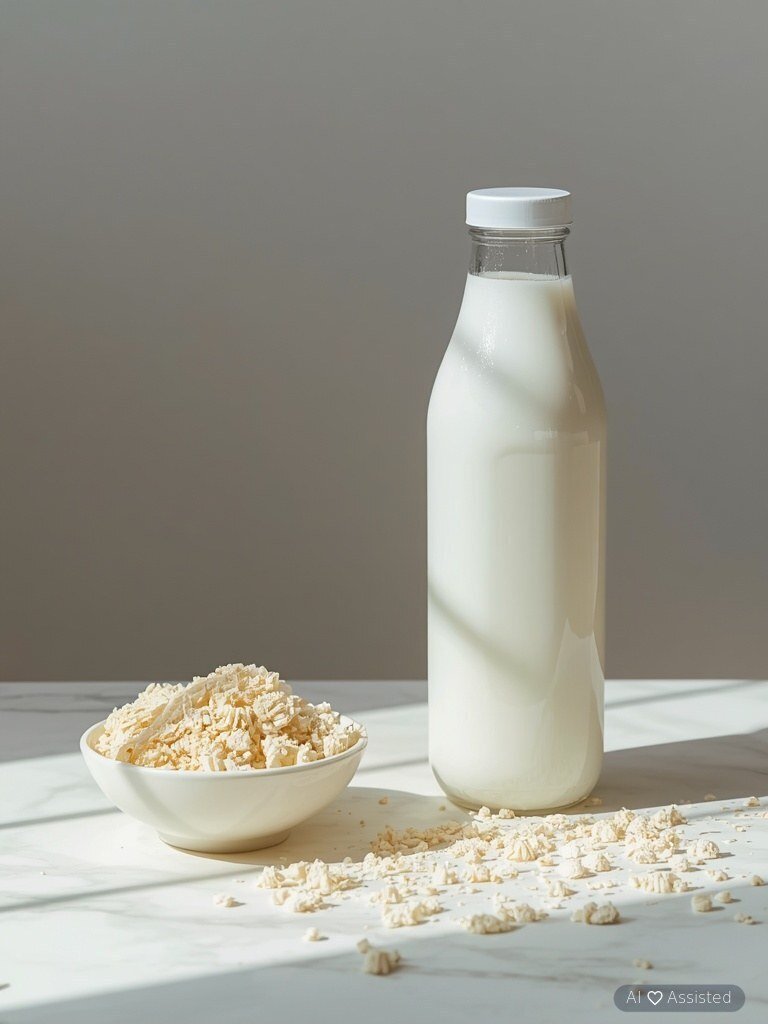
Powdered milk is a dehydrated dairy product obtained by evaporating practically all water content from fresh milk, ensuring extraordinary microbiological stability and prolonged shelf-life without chemical preservatives. Extensively utilized in culinary arts, baking, and functional food development, its varieties range from whole and skimmed powder to specialized infant formulas. This guide examines spray-drying technology, nutritional nuances, pediatric considerations, and culinary applications.
Want to apply these guidelines in your daily diet?
Our smart diet generator creates a tailored meal plan in 3 minutes based on the recommendations in this article.
This article is professional premium content (PRO) provided in its entirety.
Manufacturing Process: How Powdered Milk is Produced
Powdered milk manufacturing involves dehydrating pasteurized bovine milk until residual moisture drops below 3–5%. The modern two-stage industrial cycle comprises:
- Vacuum Concentration: Pasteurized fluid milk is pre-concentrated in falling-film vacuum evaporators at moderate temperatures, expelling roughly half its moisture while safeguarding heat-sensitive whey proteins;
- Spray Drying: The concentrated dairy slurry is atomized into microscopic droplets within a towering drying chamber. Swept by a turbulent stream of hot, filtered air (150–200°C), moisture flashes off in milliseconds, allowing dried dairy solids to settle gently as a fine, free-flowing powder.
Due to evaporative cooling, the core temperature of dairy solids remains modest, preserving essential amino acids and calcium bioavailability.
Nutritional Profile: Whole vs. Skimmed Milk Powder
Dry milk powder constitutes a concentrated reservoir of dairy macronutrients. The compositional differences per 100 g are marked:
- Whole Milk Powder (26% fat): Yields approximately 490–500 kcal, 26 g of high-quality protein, 26 g of lipids (17 g saturated), and 38–40 g of lactose. It retains essential fat-soluble vitamins (A, D, E, K);
- Skimmed Milk Powder (under 1.5% fat): Delivers roughly 350–360 kcal, an impressive 35–36 g of biological protein, and approximately 50 g of lactose, along with an outstanding calcium density of roughly 1200 mg per 100 g and abundant riboflavin (B2) and cobalamin (B12).
Clinically, skimmed milk powder serves as an efficient natural protein booster in athletic regimens and convalescent care for age-related muscle preservation.
Lactose-Free Formulations and Specialized Powders
To accommodate lactose-intolerant populations, manufacturers produce specialized lactose-free milk powders. Liquid milk is treated with microbial beta-galactosidase (lactase enzyme) prior to dehydration, cleaving the disaccharide lactose into readily absorbable monosaccharides: glucose and galactose.
Consequently, sensitive consumers can reap the complete protein and mineral benefits of dairy powder without triggering gastrointestinal distress such as flatulence, osmotic cramps, or diarrhea.
Infant Formula vs. Standard Household Milk Powder
Critical Pediatric Directive: Standard commercial milk powder (whole or skimmed) must never be fed to infants under 12 months of age as an alternative to breast milk or certified infant formula!
Unmodified cow's milk presents an excessive renal solute load due to high protein, sodium, and phosphorus concentrations, straining immature infantile kidneys and predisposing infants to occult intestinal micro-hemorrhages. Infant formulas represent heavily adapted, humanized formulations: casein levels are reduced in favor of alpha-lactalbumins, dairy lipids are replaced with specialized vegetable lipid matrices containing essential DHA/ARA, and micronutrients are strictly calibrated per WHO and ESPGHAN directives.
Healthy Baking: High-Protein Cottage Cheesecake with Milk Powder
Incorporating dry milk powder into wholesome baking lends an incomparable velvety texture and concentrated dairy aroma while naturally boosting protein content.
High-Protein Cheesecake Ingredients:
- 1 kg smooth curd cheese or farmer's quark (semi-fat)
- 5 heaping tablespoons dairy milk powder (whole or skimmed)
- 5 whole eggs (whites whipped to stiff peaks)
- 4–5 tablespoons powdered erythritol or raw cane sugar
- 2 tablespoons potato starch
- Seeds scraped from 1 vanilla bean
Wholesome Oat Crust: 150 g rolled oats pulsed with 2 tablespoons honey and 40 g melted grass-fed butter, pressed into a springform tin.
Method: Blend the curd cheese, egg yolks, sweetener, milk powder, starch, and vanilla until velvety. Gently fold in whipped whites with a spatula. Pour over the crust and bake at 160°C for 60 minutes in a water bath. Cool gradually in a cracked oven to prevent sinking.

Alicja Kowalska
✓Diets Premium Expert
Diets Premium team expert. Specializes in nutrition plans, strength sports, and training plans.
View Profile →