Moringa in Its Various Forms: Identifying Authentic Products and Optimal Usage (Tea, Oil, Capsules, Powder)

| Diets Premium Expert Tim Klein | min read 4 min | Scientifically reviewed by a clinical dietitian 23.10.2026 |
Smart Voice
•Listen to the article content live
Moringa (Moringa oleifera), frequently hailed as the 'miracle tree', represents one of the most chemically rich botanical species utilized in ethnopharmacology. Its leaves, seeds, and extracted oils harbor dense concentrations of essential amino acids, isothiocyanates, flavonoids, and unsaturated fatty acids. This clinical guide details authentication criteria, bioavailability across various delivery formats (infusions, cold-pressed oils, standardized capsules, whole powders), and evidence-based safety parameters.
Want to apply these guidelines in your daily diet?
Our smart diet generator creates a tailored meal plan in 3 minutes based on the recommendations in this article.
Moringa oleifera – Phytochemical Profile and Biological Value
The foliage of Moringa oleifera provides a dense spectrum of vital nutrients:
- Complete plant protein: Comprising 25–30% of dry weight, delivering all nine essential amino acids.
- Isothiocyanates (moringin): Potent organosulfur compounds regulating the Nrf2 antioxidant response pathway and downregulating pro-inflammatory cytokines.
- Quercetin and chlorogenic acid: Phenolics that modulate vascular tone and glucose absorption.
- Bioavailable minerals: Highly concentrated calcium, non-heme iron, and provitamin A carotenoids.
Moringa Leaf Tea – Infusion, Extraction, and Sensory Profile
Infusions brewed from dried moringa leaves possess a mellow, herbaceous flavor reminiscent of young nettle and green pea shoots. To safeguard heat-labile polyphenols and ascorbic acid, steep leaves in water at 80–85°C for 5–8 minutes in a covered vessel. The infusion exerts gentle diuretic and tonifying properties.
Moringa Seed Oil (Ben Oil) – Composition and Applications
Cold-pressed moringa seed oil, historically termed Ben oil, is distinguished by its high content of behenic acid (approx. 7%) and over 70% monounsaturated oleic acid (omega-9). Renowned for superior oxidative stability, it is prized in dermatology for lipid barrier restoration and in gourmet culinary applications.
Capsules vs. Powder – Quality Criteria and Standardization
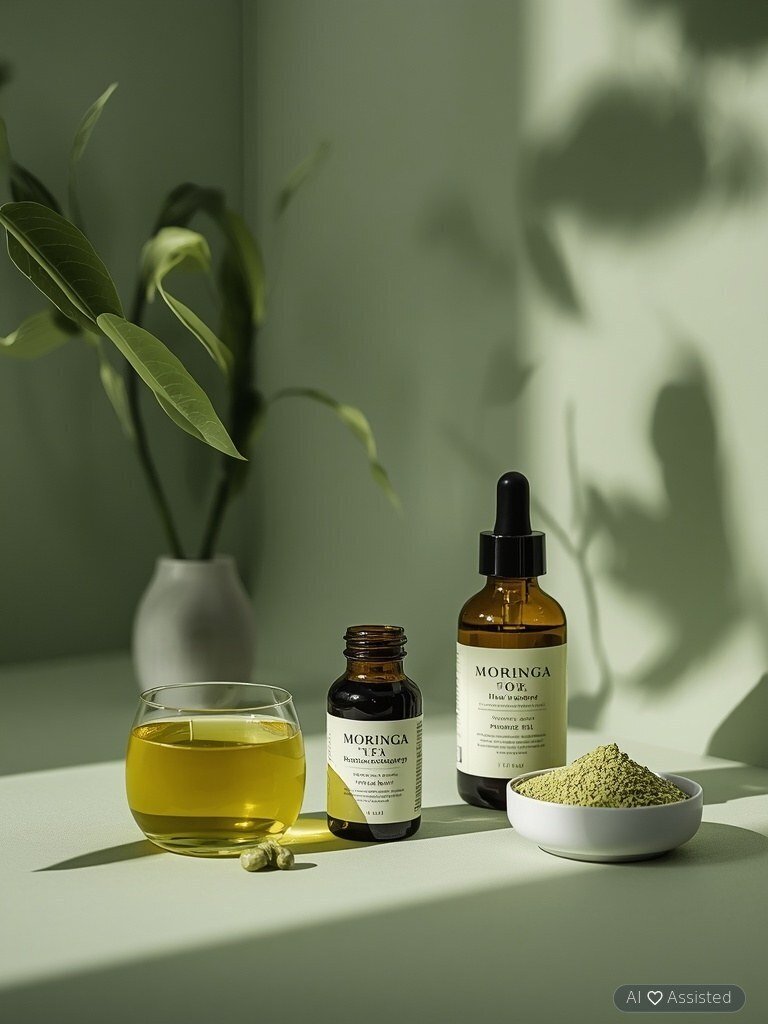
When selecting moringa powder or encapsulated formulas, visual appearance and certifications are paramount. Authentic, high-grade moringa leaf powder displays a vibrant, luminous emerald green hue (dull brown indicates oxidation or photodegradation) and a mildly pungent, horseradish-like aroma. Capsules should contain pure unadulterated botanical material.
Dosage Guidelines, Drug Interactions, and Safety Considerations
The standard dietary maintenance dosage is 3–5 g (1 level teaspoon) of leaf powder daily, consumed with meals. Clinical precautions are vital: moringa enhances insulin sensitivity and lowers blood pressure, necessitating monitoring when combined with antidiabetic or antihypertensive medications. It is strictly contraindicated during pregnancy due to potential uterotonic effects.

mgr Tim Klein
✓Diets Premium Expert
Diets Premium team expert. Specializes in nutrition plans, strength sports, and training plans.
View Profile →