5 min read

Derivatives of Coconut Meat and Water: Kernel, Milk, Oil, Butter, and Liquid Endosperm – Clinical Characteristics and Uses

Isabella Taylor
Isabella Taylor ✓
Diets Premium Expert • 23.10.2026
✓
Scientifically reviewed by a clinical dietitian: This article has been peer-reviewed for adherence to IŻŻ, WHO, and PTGiP clinical nutritional standards.
Diets Premium Expert Isabella Taylor min read 5 min Scientifically reviewed by a clinical dietitian 23.10.2026
Derivatives of Coconut Meat and Water: Kernel, Milk, Oil, Butter, and Liquid Endosperm – Clinical Characteristics and Uses

Smart Voice

•

Listen to the article content live

0:00 / 0:00
Key Takeaways

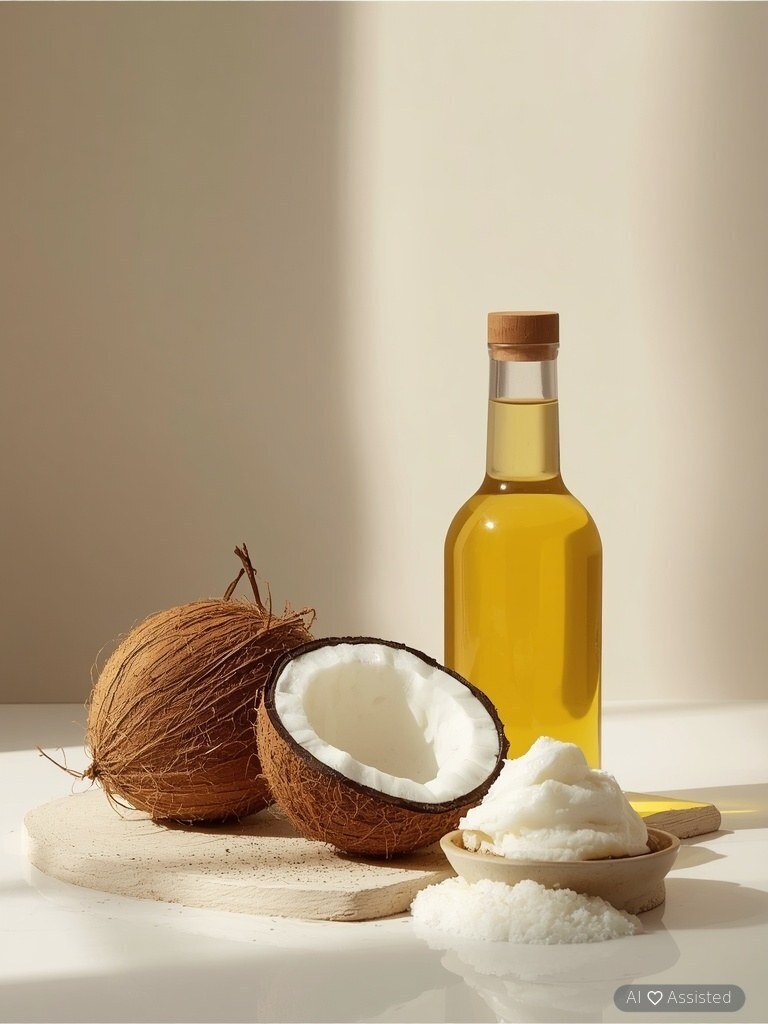
The coconut palm (Cocos nucifera), venerated across tropical cultures as the 'tree of life', provides an extensive spectrum of nutrient-dense culinary staples derived from its botanical drupe. Fresh coconut endosperm (meat), pressed milk, cold-pressed and refined oils, coconut butter, and isotonic coconut water exhibit diverse biochemical structures, distinct caloric densities, and varied culinary functionalities. In modern clinical nutrition, coconut-derived lipids have been the subject of extensive scientific debate. Demystifying their physiological effects requires drawing a rigorous biochemical distinction between true medium-chain triglycerides (MCTs) and long-chain saturated fatty acids (LCTs), alongside evaluating their net impact on cardiovascular lipid biomarkers.

Meal Plan

Want to apply these guidelines in your daily diet?

Our smart diet generator creates a tailored meal plan in 3 minutes based on the recommendations in this article.

Coconut Kernel and Fresh Meat: Botanical Structure, Nutrients, and Saturated Lipids

The fresh coconut fruit (botanically a fibrous drupe) consists of a smooth exocarp, fibrous mesocarp husk, a hardened woody endocarp shell, and the thick, nutrient-dense white solid endosperm known as coconut meat. A 100-gram portion of fresh kernel yields approximately 350 to 360 kcal, delivering 33 to 35 g of lipids, 3 to 4 g of protein, and roughly 15 g of total carbohydrates (including 9 g of insoluble dietary fiber). The fresh meat represents an exceptionally rich source of essential trace minerals, particularly manganese (vital for mitochondrial superoxide dismutase activity), copper, non-heme iron, selenium, and potassium.

Saturated fatty acids constitute 85% to 90% of the total lipid fraction in coconut meat. Contrary to popular assumptions, fresh kernel does not consist purely of light metabolic fats; it embodies a heterogeneous lipid matrix comprising both medium-chain and long-chain saturated fatty acids, notably myristic acid (C14:0) and palmitic acid (C16:0). While the substantial fiber and water-binding capacity impart sustained satiety, the pronounced caloric density and saturated fat fraction warrant mindful moderation in hyperlipidemic individuals.

Coconut Milk and Cream: Formulation, Culinary Versatility, and Nutrient Profile

Coconut milk is not the liquid natively enclosed within the nut, but an oil-in-water emulsion produced by finely grating fresh mature coconut meat, steeping it in hot water, and mechanically pressing the slurry. Depending on water extraction ratios, processors yield either rich coconut cream (20–24% lipids) or standard culinary coconut milk (12–18% lipids). It serves as an indispensable culinary pillar in Southeast Asian cooking, conferring velvety mouthfeel and mitigating pungent spices like capsaicin. Being strictly plant-derived, it contains zero lactose or cholesterol, serving as a functional dairy cream replacer for vegan and lactose-intolerant individuals.

When purchasing commercial canned or tetra-pak coconut milk, label scrutiny is paramount. Premium brands formulate with 75% to 85% pure coconut extract and water alone, avoiding added refined sugars, guar gum (E 412), carboxymethylcellulose, or carrageenan stabilizers. A 100 ml portion supplies roughly 180 to 210 kcal. Owing to its high saturated lipid fraction, it should be utilized strategically as a savory flavor enhancer or recipe component rather than a routine daily hydration beverage.

Coconut Oil: Clinical Differentiation Between True MCTs (C6–C10), Lauric Acid (C12), and LCTs

Coconut oil (whether virgin cold-pressed or refined) comprises over 90% saturated fatty acids. Popular wellness marketing frequently brands it as a 'metabolism-boosting MCT oil'. From an evidence-based clinical and biochemical standpoint, this representation is deeply flawed. True medium-chain triglycerides (MCTs) with distinct physiological kinetics comprise caproic acid (C6:0), caprylic acid (C8:0), and capric acid (C10:0). These specific carbons bypass lymphatic chylomicron packaging entirely, traveling via the portal vein directly to hepatocytes for rapid, carnitine-independent beta-oxidation and ketogenesis. However, these specific true MCT fractions constitute merely 10% to 14% of virgin coconut oil.

The predominant fatty acid in coconut oil (accounting for 48% to 52%) is lauric acid (C12:0). Although technically classified as a medium chain due to carbon length, human metabolic tracer studies reveal that 70% to 75% of ingested lauric acid behaves biologically as a long-chain fatty acid (LCT)—incorporating into chylomicrons and traversing the lymphatic system. Rigorous meta-analyses demonstrate that lauric acid raises high-density lipoprotein (HDL-C) alongside substantial increases in atherogenic low-density lipoprotein (LDL-C) and apolipoprotein B (ApoB). Additionally, coconut oil contains myristic (C14:0, 16–19%) and palmitic (C16:0, 8–10%) acids, both potent stimulators of hepatic LDL receptor downregulation. Consequently, preventive cardiology guidelines recommend restricting coconut oil in favor of unsaturated lipid sources such as extra virgin olive oil and rapeseed oil.

Coconut Water: Natural Isotonic Electrolytes and Athletic Hydration

Coconut water is the clear liquid endosperm found within immature green coconuts (harvested around months 5 to 7 of development). In stark contrast to high-fat meat and milk, coconut water is virtually lipid-free and low in calories—supplying merely 18 to 20 kcal and 3 to 4 g of simple carbohydrates (glucose and fructose) per 100 ml. It possesses an osmolarity profile closely mirroring human plasma fluids, functioning as a bio-available natural isotonic beverage.

Its chief nutritional asset lies in its dense potassium concentration (approx. 250 mg per 100 ml), supplemented by ionic magnesium, calcium, and trace sodium, facilitating rapid cellular rehydration post-exercise. It additionally provides non-protein amino acids and hydrosoluble B-complex vitamins. However, because natural coconut water exhibits a high potassium-to-sodium ratio, endurance athletes training in hot climates should supplement it with a pinch of dietary sodium chloride to effectively replace heavy sudorific electrolyte losses.

Isabella Taylor

Isabella Taylor

✓

Diets Premium Expert

Diets Premium team expert. Specializes in nutrition plans, strength sports, and training plans.

View Profile →
Recommended articles in this category

Related Articles

Discover similar publications and expert insights.

Red Palm Oil: Properties of Unrefined Virgin Oil, Carotenoids, Tocotrienols vs Industrial Hydrogenated Fat
Nutritional Ingredients
Red Palm Oil: Properties of Unrefined Virgin Oil, Carotenoids, Tocotrienols vs Industrial Hydrogenated Fat
⏱ 5 min czytania
#Nutritional Ingredients #Bioactive Compounds
Grapes – Nutritional Value, Calories, and Health-Promoting Benefits
Botany
Grapes – Nutritional Value, Calories, and Health-Promoting Benefits
⏱ 3 min czytania 📚 Botany
#Electrolyte
Magnesium - An Invaluable Mineral Component
Magnesium
Magnesium - An Invaluable Mineral Component
⏱ 4 min czytania
#Magnesium #Electrolyte
Excess Fluid in the Body
Electrolyte
Excess Fluid in the Body
⏱ 4 min czytania
#Electrolyte
Is there genuinely a viable salt alternative that preserves the full flavor of dishes?
Lifestyle
Is there genuinely a viable salt alternative that preserves the full flavor of dishes?
⏱ 2 min czytania 📚 Lifestyle
#Acid-base Balance #Electrolyte
Does Apple Cider Promote Health? Apple Cider and Fat Loss
Fluid Intake
Does Apple Cider Promote Health? Apple Cider and Fat Loss
⏱ 4 min czytania
#Fluid Intake #Electrolyte
Magnesium Deficiency: Early Warning Signs, Physiological Mechanisms, and Evidence-Based Selection Criteria for Supplements
Dietary Supplements
Magnesium Deficiency: Early Warning Signs, Physiological Mechanisms, and Evidence-Based Selection Criteria for Supplements
⏱ 3 min czytania 📚 Dietary Supplements
#Nutritional Supplements #Magnesium Deficiency
Hyponatremia – identifying and addressing sodium insufficiency in the body: symptoms, underlying causes, and evidence-based repletion methods
Sodium In Processed Meats
Hyponatremia – identifying and addressing sodium insufficiency in the body: symptoms, underlying causes, and evidence-based repletion methods
⏱ 3 min czytania
#Sodium In Processed Meats #Processed Foods
Sugarcane (Saccharum officinarum) – Properties, Fresh Cane Juice, Nutrition, and Health Impacts
Tropical
Sugarcane (Saccharum officinarum) – Properties, Fresh Cane Juice, Nutrition, and Health Impacts
⏱ 2 min czytania
#Tropical
GAC – Characteristics and Uses of the Gourd Family Fruit
Seeds
GAC – Characteristics and Uses of the Gourd Family Fruit
⏱ 3 min czytania
#Seeds #Tropical
Avocado Cultivated in the Warm Regions of Central and South America
Fatty Acids
Avocado Cultivated in the Warm Regions of Central and South America
⏱ 3 min czytania
#Fatty Acids #Avocado
Impact, application, and allergic reactions to the ordinary gourd
Health
Impact, application, and allergic reactions to the ordinary gourd
⏱ 3 min czytania 📚 Health
#Vegetables #Tropical
Dragon fruit (pitaya) - properties, application, flavor
Strawberry
Dragon fruit (pitaya) - properties, application, flavor
⏱ 3 min czytania
#Strawberry #Superfood
Moment for Sage!
Tropical
Moment for Sage!
⏱ 3 min czytania
#Tropical
Tropical diseases - Leishmaniasis, Rickettsioses and exotic worms
Tropical
Tropical diseases - Leishmaniasis, Rickettsioses and exotic worms
⏱ 4 min czytania
#Tropical
Lapacho (Pau d'Arco): Medicinal Properties of Bark, Bioactive Naphthoquinones, and Safe Clinical Use
Nutritional Science
Lapacho (Pau d'Arco): Medicinal Properties of Bark, Bioactive Naphthoquinones, and Safe Clinical Use
⏱ 3 min czytania 📚 Nutritional Science
#Medicinal Plant Applications #Botanical Applications
Mango – nutritional calorie value, vitamin composition, and weight-management benefits: A comprehensive guide to identifying ripe fruit and proper harvesting techniques
Fruits
Mango – nutritional calorie value, vitamin composition, and weight-management benefits: A comprehensive guide to identifying ripe fruit and proper harvesting techniques
⏱ 4 min czytania 📚 Fruits
#Nutritional Value #Caloric Content
Oranges: Nutritional Profile, Micronutrients, Caloric Density, Glycemic Index, and Culinary Applications
Pregnancy & Motherhood
Oranges: Nutritional Profile, Micronutrients, Caloric Density, Glycemic Index, and Culinary Applications
⏱ 3 min czytania 📚 Pregnancy & Motherhood
#Essential Oils #Asian
Homemade peanut butter – comprehensive ingredient breakdown and a step-by-step preparation guide
Food Science
Homemade peanut butter – comprehensive ingredient breakdown and a step-by-step preparation guide
⏱ 4 min czytania 📚 Food Science
#Nutrient-Rich #Peanut Butter
Homemade almond butter – health benefits, tested recipes, and a step-by-step guide to preparing it in your own kitchen
Food & Ingredients
Homemade almond butter – health benefits, tested recipes, and a step-by-step guide to preparing it in your own kitchen
⏱ 5 min czytania 📚 Food & Ingredients
#Essential Nutrients #Flavor Enhancement
Refined versus virgin oils: a comprehensive examination of distinctions and selection guidelines
Cold-Pressed Oils
Refined versus virgin oils: a comprehensive examination of distinctions and selection guidelines
⏱ 4 min czytania
#Cold-pressed Oils #Refined Oil
Sodium Deficiency in the Body – Causes, Symptoms, and Treatment
Electrolyte Balance
Sodium Deficiency in the Body – Causes, Symptoms, and Treatment
⏱ 4 min czytania
#Electrolyte Balance #Balance
Excess Water in the Body – The Role of Water and Consequences of Its Excess
Balance
Excess Water in the Body – The Role of Water and Consequences of Its Excess
⏱ 7 min czytania
#Balance #Electrolyte Balance
Is it genuinely beneficial to use isotonic beverages?
Electrolyte Balance
Is it genuinely beneficial to use isotonic beverages?
⏱ 4 min czytania
#Electrolyte Balance #Fluid Balance
5 health-promoting effects of consuming clarified butter
Butter
5 health-promoting effects of consuming clarified butter
⏱ 1 min czytania
#Butter #Clarified Butter
Clarified butter – characteristics, practical uses, and a step-by-step guide for home preparation
Dairy-Based
Clarified butter – characteristics, practical uses, and a step-by-step guide for home preparation
⏱ 2 min czytania 📚 Dairy-Based
#Clarified Butter #Metabolism
Clarified butter (ghee) – sourcing options, current pricing, and a step-by-step guide to homemade production of this versatile cooking fat
Dairy-Based
Clarified butter (ghee) – sourcing options, current pricing, and a step-by-step guide to homemade production of this versatile cooking fat
⏱ 3 min czytania 📚 Dairy-Based
#Versatile Cooking #Clarified Butter
Rowanberry. Has Numerous Healing Properties and Is a Rich Source of Vitamins.
Rich In Nutrients
Rowanberry. Has Numerous Healing Properties and Is a Rich Source of Vitamins.
⏱ 2 min czytania
#Rich In Nutrients #Rich In B Vitamins
10 Uses of Coconut Oil – Useful Beyond the Kitchen
Coconut Oil
10 Uses of Coconut Oil – Useful Beyond the Kitchen
⏱ 3 min czytania
#Coconut Oil #Coconut
How to Prepare Zucchini in a Dietary Way? Recipes for Dishes with Zucchini
Antioxidants
How to Prepare Zucchini in a Dietary Way? Recipes for Dishes with Zucchini
⏱ 3 min czytania
#Antioxidants #Low Glycemic Index

Share