Custard Apple (Cherimoya) – Extraordinary Health Properties and Exotic Flavor

| Diets Premium Expert Tim Klein | min read 1 min | Scientifically reviewed by a clinical dietitian 23.10.2026 |
Smart Voice
•Listen to the article content live
Cherimoya, commonly known as the custard apple, boasts a velvety, dessert-like flesh blending pineapple, strawberry, and banana flavors. Explore its dense nutritional profile, culinary uses, and vital safety considerations.
Want to apply these guidelines in your daily diet?
Our smart diet generator creates a tailored meal plan in 3 minutes based on the recommendations in this article.
A symphony of flavors in a single fruit: exploring the world’s most extraordinary exotic hybrids
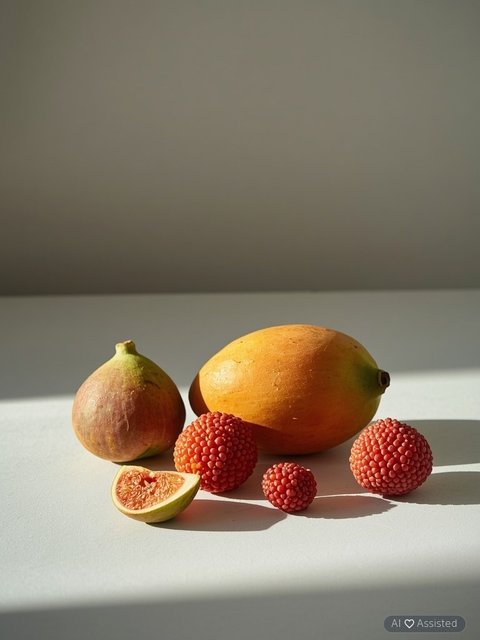
The realm of exotic fruits harbors genuine treasures of nature that astonish not only with their unusual appearances but, above all, with their unparalleled complexity of flavors. While some of these fruits have found their way onto the shelves of larger Polish supermarkets—particularly those offering an extensive selection of international produce—many varieties remain accessible solely within their native regions. During journeys to distant tropical or subtropical destinations, travelers may have the opportunity to encounter **cherimoya**, a fruit celebrated by connoisseurs as one of nature’s most delectable exotic offerings. What earns it the title of the "queen of exotic fruits"? Its creamy flesh harmoniously blends the tropical tang of **pineapple**, the delicate sweetness of **strawberries**, and the rich depth of **mango**, creating a sensory experience that some liken to **strawberries dipped in whipped cream**, while others describe it as a **fusion of ripe banana and juicy pineapple**. The primary cultivation hubs for this extraordinary fruit are located in **Ecuador** and **Bolivia**, home to the most expansive plantations, though smaller-scale farms can also be found in the **Mediterranean basin**—notably in **Spain** and **Israel**. Should your travels take you to these countries, be sure to sample the fruits of the **Peruvian cherimoya tree** (also known as *Annona cherimola*), but exercise caution: **the seeds contain highly toxic compounds**, and ingestion can pose serious health risks. Cherimoya, however, is far from the only exotic delicacy worth exploring. Equally compelling are **star fruits (carambola)**, with their refreshing, citrus-like flavor, and **yangmei berries**, which captivate with their sweet-tart profile. When traveling, do not hesitate to indulge in local culinary discoveries, but always research their properties beforehand. Certain plant components, though seemingly edible, may harbor **harmful substances** or trigger allergic reactions; thus, prudence and reliance on local expertise or reputable sources are strongly advised.
Nutritional Profile of Cherimoya: Vitamins, Minerals, and Soluble Dietary Fiber
Cherimoya (*Annona cherimola*) delivers an impressive array of micronutrients within a delightfully palatable matrix. A 100-gram serving of fresh pulp provides approximately 75 kilocalories, derived predominantly from unrefined simple sugars (fructose and glucose). It is characterized by notable concentrations of vitamin C, with a single medium fruit fulfilling 35–40% of the Recommended Daily Allowance (RDA) for L-ascorbic acid, thereby bolstering collagen cross-linking and immune cell phagocytosis.
Furthermore, cherimoya serves as a rich dietary source of B-complex vitamins, notably pyridoxine (vitamin B6). Pyridoxine acts as an obligatory coenzyme in the synthesis of neurotransmitters (serotonin and GABA) and aids in maintaining physiological homocysteine concentrations. Among minerals, potassium takes precedence (providing around 287 mg per 100 g), collaborating with magnesium to modulate vascular tone and blood pressure, while generous soluble dietary fiber content (3 g/100 g) nurtures colonic motility and gut microbiome eubiosis.
Antioxidant Capacity and Bioactive Phytochemicals in the Annonaceae Family
The creamy edible pulp of cherimoya contains significant concentrations of polyphenolic compounds, including catechins, epicatechins, and chlorogenic acid, all contributing to elevated Oxygen Radical Absorbance Capacity (ORAC). These phytochemicals shield vascular endothelial cells against free radical insult, thereby retarding low-density lipoprotein peroxidation and systemic vascular inflammation.
Botanicals belonging to the *Annonaceae* family synthesize unique bioactive metabolites designated as annonaceous acetogenins. These specialized polyketides have garnered widespread scientific attention due to potent in vitro cytotoxic activities against transformed cell lines via Complex I mitochondrial electron transport inhibition. Crucially, while high concentrations reside in roots, bark, and seeds, the fully ripe fruit pulp harbors only trace, biologically safe amounts that provide natural antioxidant support.
Seed and Peel Toxicity: The Neurotoxin Annonacin and Safe Consumption Guidelines
A critical toxicological distinction regarding cherimoya consumption involves the absolute prohibition against chewing or ingesting its black seeds and fibrous outer rind. The seeds contain concentrated amounts of the neurotoxic acetogenin known as annonacin, alongside specific isoquinoline alkaloids. Neuropathological studies have established that extensive dietary exposure to annonacin can induce mitochondrial dysfunction and tau pathology reminiscent of atypical parkinsonian syndromes.
Ensuring absolute culinary safety is straightforward: the fruit should simply be halved lengthwise, allowing the consumer to spoon out the luscious, off-white pulp while discarding every hard seed intact. Whole fruits must never be pulverized into smoothies with seeds intact. Swallowing an occasional intact seed accidentally poses minimal danger, as its resilient lignified coat resists gastric digestion, but mastication releases the neurotoxin directly into the alimentary tract.
How to Select, Ripen, and Serve Cherimoya in Culinary Applications
Selecting a prime cherimoya requires tactile appraisal of firmness. Firm, bright-green specimens with prominent scales are unripe and should be left to mature at ambient room temperature for 3–5 days. A properly ripened cherimoya yields gently to thumb pressure—analogous to a ripe Haas avocado—and its skin often develops subtle brownish mottling, which indicates peak sugar maturation rather than decay.
Culinary enjoyment is elevated by chilling the whole fruit in the refrigerator for 30 minutes prior to slicing; under chilled conditions, the interior texture mirrors velvety vanilla custard or gourmet gelato. It pairs exquisitely with a squeeze of fresh lime or calamansi juice, which provides vibrant acidity to cut through rich natural sugars, making it a splendid dessert center-piece or tropical fruit parfait ingredient.
Other Fascinating Relatives: Soursop (Graviola) and Sugar Apple
Cherimoya belongs to a captivating botanical lineage within the *Annonaceae* family. Prominent among its relatives is the soursop (*Annona muricata*, locally termed guanábana). Soursop produces much larger, prickly fruit weighing up to several kilograms, featuring a zestier, sweet-tart flavor profile widely prized across Latin America and the Caribbean for refreshing agua frescas and artisan sorbets.
Another celebrated relative is the sugar-apple (*Annona squamosa*), characterized by tuberculated, knobby segments that separate easily when ripe to reveal sugary-sweet flesh. Horticultural innovation has also yielded the atemoya—an interspecific hybrid of *A. cherimola* and *A. squamosa*—which unites the delicate aroma of the Peruvian highland cherimoya with tropical heat resilience, offering fruit enthusiasts an exquisite spectrum of exotic flavors.
Tags

mgr Tim Klein
✓Diets Premium Expert
Diets Premium team expert. Specializes in nutrition plans, strength sports, and training plans.
View Profile →