5 min read
Consumption of beverages and juices by young pre-school children

Olivia Davis
✓
Diets Premium Expert • 24.09.2026
✓
Scientifically reviewed by a clinical dietitian:
This article has been peer-reviewed for adherence to IŻŻ, WHO, and PTGiP clinical nutritional standards.
| Diets Premium Expert Olivia Davis | min read 5 min | Scientifically reviewed by a clinical dietitian 24.09.2026 |
Smart Voice
•Listen to the article content live
0:00
/
0:00
Key Takeaways
The nutritional patterns of young pre-school children are shaped based on the example diet applied at home by parents and caregivers. In order to maintain the health and development of young pre-school children, it is necessary to educate caregivers and parents about the selection of suitable types of beverages.
Meal Plan
Want to apply these guidelines in your daily diet?
Our smart diet generator creates a tailored meal plan in 3 minutes based on the recommendations in this article.
Selecting optimal juices and beverages for children: health and regulatory considerations
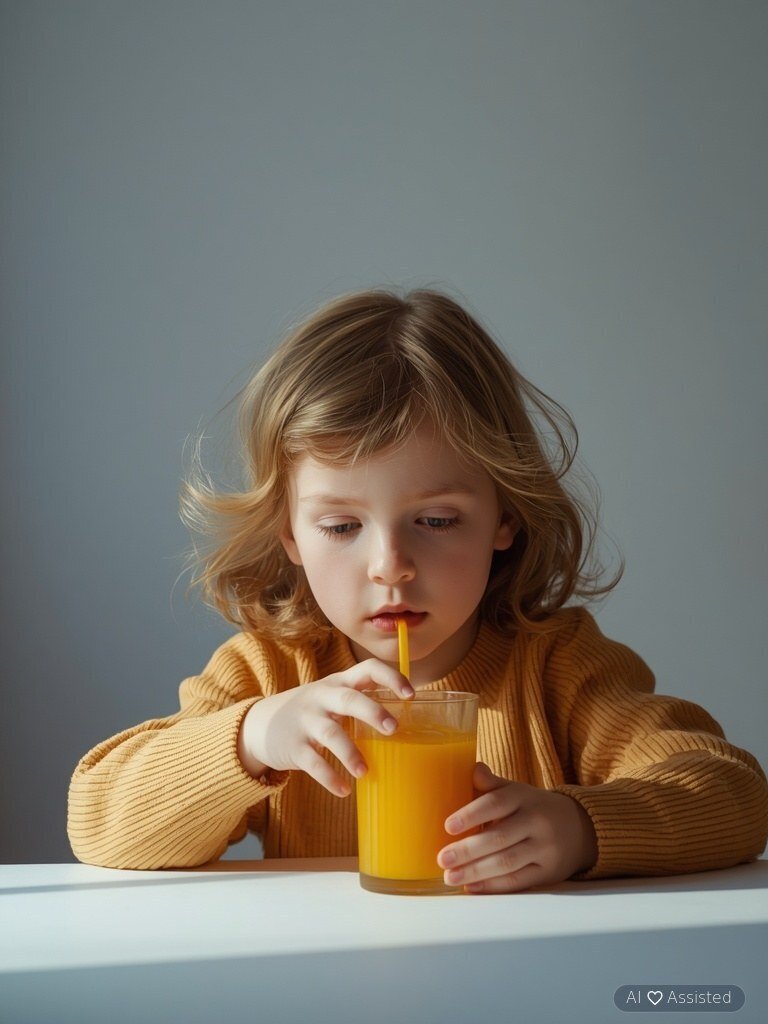
The foremost criterion in selecting juices or beverages for children must be a meticulous examination of manufacturer-provided label information, particularly regarding **sugar content**—both intrinsic and added. Legal frameworks impose strict labeling requirements: Under the **Regulation of the Minister of Agriculture and Rural Development dated November 20, 2004**, juices containing added sucrose must be explicitly marked as "sweetened" or "with added sugar." Meanwhile, **EU Regulation (EC) No 1924/2006** mandates that unsweetened products bear the declaration "contains naturally occurring sugars." In practice, however, many labels fail to clearly distinguish between intrinsic and added sugars. **Added sugars** encompass **glucose, high-fructose corn syrup, maple syrup, honey, molasses, and dextrose**, among others. Furthermore, manufacturers frequently employ deceptive claims such as "no sugar," substituting it with **artificial sweeteners like aspartame**—a compound metabolized in the small intestine into **neurotoxic methanol**, which exhibits **hepatoxic, nephrotoxic, cardiotoxic, and potentially teratogenic** effects. To mitigate health risks, opting for products with a **minimalist, transparent ingredient list** is advisable, such as the juice depicted, containing only **9.3 g of natural sugars (sucrose, fructose, glucose, sorbitol) per 100 ml**. Regulating sugar intake in children is critical due to its **high caloric density (405 kcal/100 g)** and association with **obesity, type 2 diabetes, and cardiovascular diseases** later in life. Dietary guidelines stipulate that daily sugar consumption should not exceed **10% of total energy intake**.
Guidelines and restrictions on the consumption of fruit and vegetable juices and beverages: health benefits and clinical contraindications
Liquid products derived from plant sources, such as fruit and vegetable juices and beverages, represent a valuable reservoir of bioactive compounds, including antioxidants—namely polyphenols (such as anthocyanins, flavonols, flavanols, and phenolic acids), vitamin C, and carotenoids. The highest concentration of ascorbic acid is found in acerola juice. The chemical composition of fruits and vegetables is influenced by genetic and environmental factors, including the variety of raw materials, climatic and agronomic conditions, degree of ripeness, and storage methods. The majority of phenolic compounds are localized in the peel and outer layers of the pulp rather than the core of the fruit. Antioxidants exhibit multifaceted effects: they mitigate inflammatory processes, demonstrate anticancer potential, and possess antiallergic properties. Additionally, juices and beverages provide substantial quantities of potassium and manganese, along with moderate amounts of folic acid and magnesium. Owing to the predominance of mineral components—such as sodium, potassium, calcium, magnesium, and iron—these products contribute to shifting the body’s acid-base balance toward alkalinity. They also serve as a significant source of biologically active substances, enabling their application in the prevention and treatment of various pathological conditions. For instance, raspberry juice exhibits diaphoretic properties, making it advisable for administration to children during febrile episodes or as a preventive measure to reduce infection risk. Nonetheless, despite the extensive health benefits, there are explicit contraindications to the uncontrolled consumption of juices and beverages by children, including: nutritional disorders (such as malnutrition, overweight, or obesity), gastrointestinal dysfunctions (chronic diarrhea, flatulence, abdominal pain), and dental caries. The volume of consumed liquids should always be determined in consultation with a physician or dietitian. It is crucial to emphasize that common practices, such as offering sweetened juices to hospitalized children as "rewards" or "gifts," may exacerbate existing diarrheal conditions—which are prevalent in this age group—and lack any health justification.
Non-pasteurized fruit and vegetable juices: health hazards and safer consumption guidelines for young children
Commercially produced unpasteurized juices—commonly marketed as "fresh-pressed" or "daily cold-pressed" beverages—pose a significant microbiological risk to preschool-aged children due to potential contamination with pathogenic bacteria, most notably *Escherichia coli*. Consumption of such contaminated products frequently results in severe foodborne illnesses, prompting pediatric nutritionists to strongly advocate for pasteurized alternatives, which undergo thermal processing to neutralize most harmful microorganisms. The sole exception comprises homemade juices prepared from thoroughly washed and peeled fruits and vegetables of verified origin, provided they are consumed immediately after preparation. However, even these should not replace whole fruits and vegetables in a child’s diet, as juicing removes dietary fiber while concentrating natural sugars. To encourage hesitant preschoolers to explore new flavors, parents and caregivers can organize interactive culinary activities where children participate in juicing various produce. When time constraints prevent fresh preparation, commercially available juices should be selected based on strict criteria: no added sugars, artificial preservatives, or synthetic colorants, and full compliance with pediatric food safety regulations.

Olivia Davis
✓Diets Premium Expert
Diets Premium team expert. Specializes in nutrition plans, strength sports, and training plans.
View Profile →