4 min read
Arnica – Properties and Uses. Arnica Ointment and Arnica Oil

Tomasz Jankowski
✓
Diets Premium Expert • 25.09.2026
✓
Scientifically reviewed by a clinical dietitian:
This article has been peer-reviewed for adherence to IŻŻ, WHO, and PTGiP clinical nutritional standards.
| Diets Premium Expert Tomasz Jankowski | min read 4 min | Scientifically reviewed by a clinical dietitian 25.09.2026 |
Smart Voice
•Listen to the article content live
0:00
/
0:00
Key Takeaways
Although arnica has been known for many years as a medicinal plant, we are still not fully cognizant of its entire range of effects. It is not found on a random meadow, unlike some other plants, but thanks to special cultivation areas, its cultivation and use in medicinal products is possible – arnica cream for sprains and contusions is widely known. Are there any other applications?
Meal Plan
Want to apply these guidelines in your daily diet?
Our smart diet generator creates a tailored meal plan in 3 minutes based on the recommendations in this article.
Mountain arnica (Arnica montana L.): A medicinal herb of substantial pharmacological value
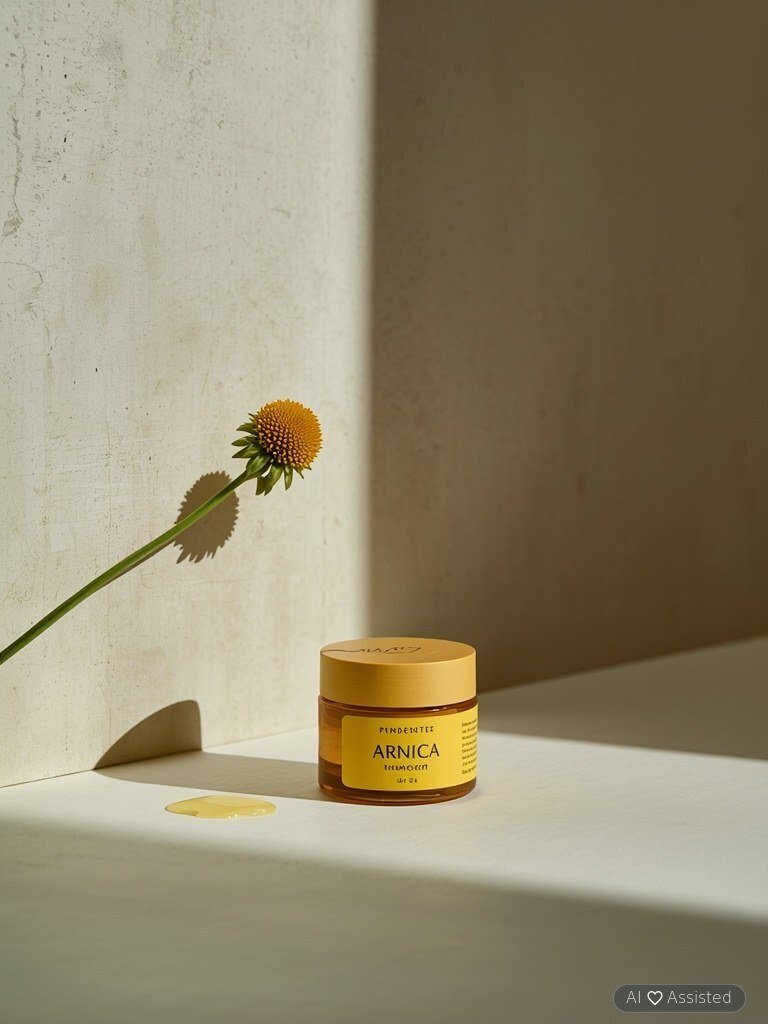
Mountain arnica (*Arnica montana L.*), commonly referred to by its colloquial names such as *leopard’s bane*, *wolf’s bane*, or *mountain tobacco*, is a perennial herbaceous plant belonging to the *Asteraceae* family (also known as the daisy or composite family). Though modest in appearance—typically reaching heights of only 20 to 60 centimeters—this unassuming species is distinguished by its vivid yellow-orange floral heads arranged in characteristic capitula. Despite its diminutive stature, mountain arnica harbors a remarkable array of pharmacologically active compounds that have captivated herbalists and researchers for centuries. Its native distribution spans western and central Europe, select regions of Asia, and parts of North America. Within Poland, the plant is primarily encountered in mountainous areas such as the Sudetes and the Eastern Carpathians, as well as in the Masurian Lake District and the ancient forests of Białowieża. The genus *Arnica* comprises 32 identified species, though only two—*Arnica montana L.* (mountain arnica) and *Arnica chamissonis* (meadow arnica)—hold significant medicinal value. Owing to excessive wild harvesting and habitat loss, mountain arnica has been classified as an endangered species, prompting comprehensive legal protection across Europe. Consequently, commercial supplies are now predominantly sourced from controlled cultivations to ensure ecological sustainability [1]. The plant’s therapeutic history traces back to the Middle Ages, with the earliest documented reference appearing in *"Physica"*, a seminal work by the Benedictine abbess Hildegard of Bingen. However, a formal botanical description was not published until the 16th century, and its widespread adoption in folk medicine did not occur until the 19th century [2]. The primary medicinal component of arnica is its flower head, though the root is occasionally utilized to a lesser extent. These plant parts serve as the basis for a variety of preparations, including topical creams, anti-inflammatory gels, ointments, and tinctures designed for both external and internal applications.
Distinctive attributes and therapeutic applications of mountain arnica (*Arnica montana*) in medicine and cosmetology
Mountain arnica (*Arnica montana*) constitutes a rich repository of bioactive compounds, prominently featuring sesquiterpene lactones (including helenalin), volatile oils, polyphenolic constituents (flavonoids and saponins), triterpenoids, amines, phytosterols, carotenoids, tannins, and inorganic mineral complexes [3]. The pharmacological mechanisms of these agents involve fortification of capillary and lymphatic vessel integrity via enhanced microcirculatory dynamics, thereby mitigating tissue edema. Sesquiterpene lactones exhibit potent anti-inflammatory and analgesic properties, whereas helenalin modulates hemodynamic parameters—specifically arterial pressure and cardiac rhythm. The plant is primarily employed for its anti-inflammatory and tissue-regenerative effects, additionally demonstrating antibacterial, antitumor, antiplatelet, and pain-alleviating activities [4]. Topical applications are indicated for mechanical trauma (contusions, sprains, hematomas), insect bites, and inflammatory myoskeletal disorders (e.g., arthritis), accelerating exudate resorption and attenuating nociceptive symptoms [5][6]. Within cosmetic formulations, arnica is valued for its astringent, antioxidant (carotenoids as provitamin A), and antiseptic (thymol, chlorogenic acid) properties, particularly in products targeting oily, acne-prone, and rosacea-affected skin. By reinforcing vascular walls, it diminishes the visibility of telangiectasias. The extract is incorporated into antidandruff shampoos, facial toners, creams, and masks. **Critical caution**: Internal consumption of arnica preparations (including homeopathic dilutions) is strictly contraindicated due to acute toxicity—even minimal doses may induce mucosal irritation, gastrointestinal distress (emesis, diarrhea), cardiac arrhythmias, and vertigo [7].
Topical arnica preparation: properties and therapeutic applications in injury management and rheumatic conditions
The bioactive compounds present in mountain arnica formulations exhibit high transdermal bioavailability, facilitating deep penetration through the stratum corneum into the dermis. This property promotes the reinforcement of capillary wall integrity and enhances their flexibility, thereby contributing to the reduction of inflammatory exudate and minimization of soft tissue edema. The preparation is particularly efficacious in post-traumatic therapy—effectively aiding the resolution of contusions, subcutaneous hematomas, ecchymoses, and extensive hemorrhagic infiltrations. Furthermore, owing to its well-documented anti-inflammatory and analgesic effects, arnica is frequently recommended as an adjunctive treatment for chronic musculoskeletal disorders, including rheumatic diseases, as well as for alleviating muscular tension of varying etiologies [8].
Mountain arnica-infused oil: composition, therapeutic properties, and clinical applications
Arnica oil is produced through the maceration of dried mountain arnica (*Arnica montana*) flowers in a carrier oil, typically sunflower oil, resulting in a semi-liquid extract with a pungent yet pleasantly spiced aroma reminiscent of cinnamon. Its texture is viscous, ranging in colour from deep orange to brownish hues [9]. Chemically, the oil comprises approximately 60% fatty acids, 0.4–0.6% flavonoids (including derivatives such as quercetin and kaempferol), and phenolic acids (e.g., caffeic and chlorogenic acids) [10]. Flavonoids exhibit diuretic properties and exert a cardioprotective effect, while the oil’s carotenoid pigments (e.g., zeaxanthin), chlorophyll, phytosterols, and choline collectively contribute to analgesic, circulation-enhancing, anti-inflammatory, antiseptic, and bacteriostatic activities [11]. Crucially, this preparation must not be applied to open wounds or ulcerated lesions. The therapeutic reputation of arnica stems from its rich concentration of bioactive compounds, including sesquiterpene lactones, essential oils, and flavonoids, which underpin its use in ointments, creams, gels, and oils. Clinically, it demonstrates anti-inflammatory, analgesic, anti-edematous, and ecchymosis-resolving properties, making it a well-documented natural remedy for contusions, bruises, and localized inflammatory conditions. Its efficacy in topical applications is supported by extensive clinical evidence, reinforcing its role in integrative medicine.
Tags

mgr Tomasz Jankowski
✓Diets Premium Expert
Diets Premium team expert. Specializes in nutrition plans, strength sports, and training plans.
View Profile →