PRO
CLINICAL KNOWLEDGE MAGAZINE
7 min read
Food Products Labeled as 'Light' - An Assessment of Their Healthiness

Laura Schneider
✓
Diets Premium Medical Expert • 24.03.2026
Smart Voice
Listen to the article content live
✓
Scientifically reviewed by a clinical dietitian:
This article has been peer-reviewed for adherence to IŻŻ, WHO, and PTGiP clinical nutritional standards.
| CLINICAL KNOWLEDGE MAGAZINE CLINICAL KNOWLEDGE MAGAZINE | min read 7 min |
| Diets Premium Medical Expert Laura Schneider | Scientifically reviewed by a clinical dietitian 24.03.2026 |

Key Takeaways
The term 'light' or 'lite' is a statement by the food manufacturer. These are voluntary disclosures on the label of the product, and their application is governed by the provisions of Regulation (EC) No 1924/2006 of the European Parliament and of the Council of 20 December 2006 on nutrition and health claims made on foods. The term 'light' and any other terms which may be interpreted by the consumer as similar, can be applied if the product is characterized by a reduced amount of a specific component, e.g. fat (energy), by at least 30% compared to the amount of the ingredient in a similar product. The manufacturer should also indicate which characteristics of the product make it a 'light' product.
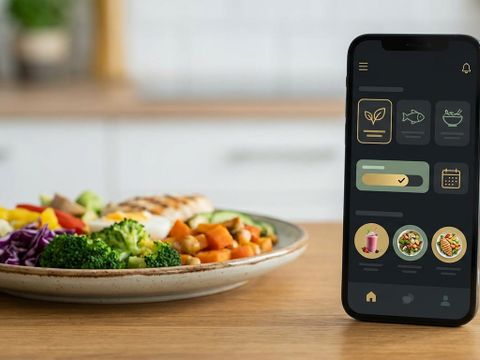
Meal Plan
Want to apply these guidelines in your daily diet?
Our smart diet generator creates a tailored meal plan in 3 minutes based on the recommendations in this article.
PRO Content
PRO
This article is professional premium content (PRO) provided in its entirety.
Investigate the labels
In some products, the content of a certain component is decreased while another is simultaneously increased. In order to determine how light products genuinely differ from traditional products, a thorough examination of the information about composition and nutritional value found on the label is necessary. For instance, we can consider fruit yogurts from a well-known brand. Let's compare the composition of the light version with the regular version. According to the manufacturer's information, the light yogurt contains 30% fewer calories than other products of the same brand.
Comparison of the nutritional content of low-calorie yogurt with the nutritional content of standard yogurt from the same manufacturer
Low-calorie yogurt contains significantly fewer calories and half the amount of fat compared to standard yogurt, resulting in a decrease in caloric content by 1/3. The main reason for this change is the modified composition, in which a portion of the sugar in low-calorie yogurt has been replaced by sweeteners such as aspartame and acesulfam potassium. In the case of another manufacturer, granulated cheese low-calorie contains 3% fat, while traditional cheese contains 5% fat. However, there is no difference between the compositions listed on the labels of both products.
The composition of rural hearts - slimmed down and traditional
The energy values and constituents of the remaining components are comparable.
Nutritional components in rural cheeses with diminished fat and standard varieties
They differ minimally in terms of caloric content (only 16 kcal). The primary contrast lies in the fat content. A product with less fat may contain more other nutritional components than its traditional counterpart, including for example sugars, as confirmed by the data above. This fact was also confirmed by Nguyen P. K., Lin S., Heidenreich P. in their analysis. The researchers compared the nutritional content of standard products, products with diminished fat content, and fat-free products. Various product groups were examined – dairy, meat, bakery, fatty products. Below are some examples in a table.
Variations in sugar content between items designated as 'light' and conventional items based on the investigation carried out by Nguyen P. K., Lin S., and Heidenreich P.
In every scenario, items categorized as 'light' contain fewer kilocalories than conventional items. As can be noticed, the sugar level may be slightly higher in 'light' items, however, their caloric value is lower. Researchers suggest that despite these minor differences, prolonged consumption of 'light' items can lead to a substantial increase in sugar intake, e.g. over the course of a year.
Milk and its products - lean, semi-fat, or fat
According to the 2017 Dietary Guidelines for the population of Poland, it is recommended to consume 2-3 servings of dairy products daily, such as skimmed milk, fermented milk products, low-fat cheeses with reduced fat content, which are lean or semi-fat. Full-fat cheese contains about 12 g of fat in 100 g. For comparison, semi-fat - about 4 g, lean - 0.5 g. Cheeses may even be completely devoid of this ingredient. Milk fat is also an important source of saturated fatty acids, whose excessive consumption increases the risk of cardiovascular diseases. However, studies do not provide a clear answer as to whether the consumption of full-fat dairy products has a negative impact on health. Some studies even contradict this thesis. According to a review of studies conducted by M. Kratz, T. Baars, and S. Guyenet in 2013, the consumption of full-fat dairy products can reduce the risk of obesity. It is recommended to limit the consumption of the most saturated fats and trans fats, such as red meat, sweets, fatty cream sauces, chips, fast food, cream, lard, and coconut oil. Light products do not only include dairy products.
Beverages with reduced calorie content
Can the inclusion of beverages with reduced calorie content in the diet facilitate maintaining a healthy body weight and have positive health effects? It appears not. In the Rebholz C. M. et al. study, over 15 thousand participants were surveyed. The questionnaire assessed the usual amount of beverages with reduced calorie content consumed. Surprisingly, long-term observation showed that individuals who consumed beverages with reduced calorie content had a higher risk of developing chronic kidney disease. However, the more cups of such beverages they consumed per day, the higher the risk of disease, regardless of the quality of their diet and overall dietary intake of phosphorus.
Calorie compensation
Consuming beverages with low calorie content or complete calorie-free can lead to a higher calorie intake throughout the day. In the production of these beverages, synthetic, low-calorie sweeteners (NSS) such as aspartame are used instead of sugar. In their study, De la Hunty A., Gibson S., and Ashwell M. showed that drinking beverages with NSS sweeteners can result in faster nutrient compensation in the diet. However, this usually does not exceed the energy value of the same sugary drink, which means that there is an excess of calories in the energy balance. It is important to note, however, that there is a lack of long-term studies in this regard. Replacing a portion of sugar in the diet with sweeteners can lead to a smaller increase in body weight over weeks. However, one should be aware of the controversy surrounding the impact of synthetic, low-calorie sweeteners on the body.
Is this item truly a low-calorie food product and is it worth using?
It is not possible to give a definitive answer to this question. Theoretically, it is possible to reduce the daily calorie requirement of the diet by a few hundred calories by choosing products with few calories. From a nutritional point of view, there is no need to use completely fat-free products (0%) and light fruit yogurts even with reduction (it is better to prepare them independently from fresh fruit). Sugar-free cola drinks will work in the transitional period during the reduction of their consumption. However, regular consumption is not recommended. The long-term effects of consuming food with a low calorie count on the body and weight are unknown. However, it is certain that balance in the diet (which does not require the use of low-calorie products) and physical activity bring only benefits.
Laura Schneider
Diets Premium Medical Expert
Member of the Diets Premium clinical editorial board. Specializes in medical diet therapy, metabolic health, and nutritional planning.
View Profile →