Nutrition
4 min read
Jaggery – Features of a Less Popular Alternative to White Sugar

Anna Schmidt
✓
Diets Premium Expert • 25.09.2026
✓
Scientifically reviewed by a clinical dietitian:
This article has been peer-reviewed for adherence to IŻŻ, WHO, and PTGiP clinical nutritional standards.
| Diets Premium Expert Anna Schmidt | min read 4 min | Scientifically reviewed by a clinical dietitian 25.09.2026 |
Smart Voice
•Listen to the article content live
0:00
/
0:00
Key Takeaways
There are so many alternatives to white sugar that the use of sucrose just sounds... boring... Especially if you can use sugar with better qualities and an unusual caramel flavor instead of the popular crystals. Such benefits are offered by jaggery, a palm sugar used in the cuisines of the Far East. How does its production process go, what is its composition, and how can it be applied?
Meal Plan
Want to apply these guidelines in your daily diet?
Our smart diet generator creates a tailored meal plan in 3 minutes based on the recommendations in this article.
The Traditional Production Process of Unrefined Palm Sugar: Jaggery (Gur/Piloncillo/Panela)
This unrefined, minimally processed sweetener—distinct for its robust molasses-like flavor and rich caramel hue—is known by various regional designations: in the Indian subcontinent, it is referred to as *jaggery* or *gur* (with alternative spellings such as *goor* or *gud*), whereas in Mexico it is labeled *piloncillo*, in Brazil as *rapadura*, and across much of Central and South America as *panela* or *chancaca*. Its manufacture relies on time-honored, artisanal techniques that involve the extraction of sweet juice either from crushed sugarcane stalks (*Saccharum officinarum*) or from the sap tapped from the inflorescences of date palms (*Phoenix dactylifera*), with coconut palms (*Cocos nucifera*) being a less common source. The production sequence encompasses multiple critical stages: the mechanical pressing of the raw material to yield juice, a settling period during which impurities precipitate, followed by controlled thermal evaporation to reduce the liquid into a thick, viscous syrup, and finally the molding and cooling phases to solidify the product into its marketable forms—whether as a pourable liquid, a solid block, or granulated crystals.
Jaggery: Composition, Sensory Profile, and Culinary Applications in Confectionery and Gastronomy
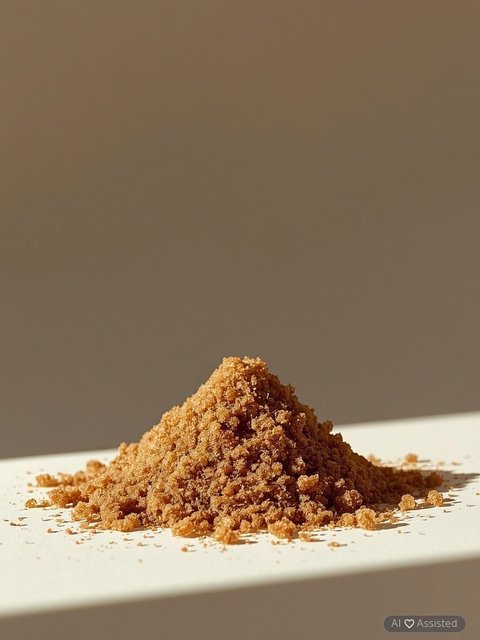
Commercially available palm sugar presents in two primary forms: a soft, viscous variety with a honey-like consistency and a harder, more brittle iteration that forms compact blocks. However, jaggery is most commonly encountered as uniform, light brown to golden-hued cakes, typically weighing between 50 and 55 grams, which can be effortlessly fractured into smaller pieces or pulverized using a grater, mortar and pestle, or spice mill. A defining feature of this product is its relatively low melting point, facilitating thermal processing, coupled with a high combustion temperature, rendering it particularly valuable for professional pastry chefs and caramelization specialists. Sensory analysis reveals a rich, caramelized sweetness in jaggery, underpinned by distinct honeyed undertones, subtle toffee accents, and a delicate floral nectar aroma. Unlike conventional brown sugar or molasses, it exhibits no bitterness; instead, a faint tartness emerges, artfully counterbalancing the pronounced sweetness and contributing to a nuanced, sophisticated flavor profile.
Jaggery: A Nutrient-Dense Alternative to Refined Sugar with Distinct Health Advantages
Jaggery, often referred to as palm sugar or gur, stands out not only for its distinctive flavor profile but also for its substantially higher nutritional content compared to refined white sugar. Comprising 65–85% sucrose, it also contains 10–15% fructose, trace amounts of protein (0.4 g) and fat (0.1 g), and a notable array of minerals, including iron (11 mg), magnesium (70–90 mg), and potassium (1050 mg) per 100-gram serving. Additionally, jaggery provides B vitamins, zinc, calcium, and copper. A key advantage is its lower glycemic index (GI=35) relative to white sugar (GI=70), making it a more suitable option for individuals managing blood glucose levels. However, like all sweeteners, its consumption should remain below 10% of total daily energy intake to mitigate risks associated with obesity, insulin resistance, and metabolic disorders.
The diverse culinary and practical applications of jaggery (palm sugar)
Unrefined palm sugar, commonly referred to as jaggery, has been an integral component of traditional South and Southeast Asian cuisines for centuries. In Thai culinary practices, it serves as a fundamental natural sweetener in single-pot curry preparations, imparting a rich, multidimensional flavor profile to these aromatic dishes. Throughout India, it constitutes a cornerstone ingredient in numerous confectionery specialties, frequently paired with thickened condensed milk, shredded coconut, and an assortment of nuts to create balanced, harmonious taste combinations. Its remarkable versatility extends to both dessert applications and as a healthier substitute for conventional sugar in beverages—particularly in tea, where it delicately enhances the drink’s inherent aroma. Furthermore, jaggery plays a significant role in fermentation processes, serving as a key component in traditional alcoholic beverage production. In its liquid form, resembling honey in consistency, it functions exceptionally well as a more nutritious alternative to molasses—perfect for spreading on bread or sweetening baked goods. When solidified into brittle blocks, it forms the foundation for crafting traditional candies, cookies, and cereal sweeteners. Derived from the sap of various palm species, jaggery distinguishes itself not only through its distinctive caramel-like taste but also through its superior nutritional profile compared to refined white sugar. Its gently melting texture and complex flavor spectrum are certain to satisfy even the most discerning palates. Owing to its adaptable nature, it can effectively replace sucrose across a wide array of culinary applications—from savory main courses to baked desserts. However, it is important to note that despite its nutritional advantages, it should be consumed in moderation as part of a balanced dietary regimen.
Tags

Anna Schmidt
✓Diets Premium Expert
Diets Premium team expert. Specializes in nutrition plans, strength sports, and training plans.
View Profile →