PRO
16 min read
Green, Red, and White Grapefruit – Contraindications. Is It True They Should Be Eaten in the Morning or Evening?

Anna Schmidt
✓
Diets Premium Expert • 25.09.2026
✓
Scientifically reviewed by a clinical dietitian:
This article has been peer-reviewed for adherence to IŻŻ, WHO, and PTGiP clinical nutritional standards.
| Diets Premium Expert Anna Schmidt | min read 16 min | Scientifically reviewed by a clinical dietitian 25.09.2026 |
Smart Voice
•Listen to the article content live
0:00
/
0:00
Key Takeaways
Grapefruits are a fascinating fruit as their taste is more sour and bitter than sweet... They are exceptionally juicy, refreshing and low in calories... Larger than oranges, but smaller than pomelo and come in several shades, each slightly different in taste and nutritional value from the others... Grapefruits are renowned for their high content of vitamin C and antioxidants, which have a positive impact on health.
Meal Plan
Want to apply these guidelines in your daily diet?
Our smart diet generator creates a tailored meal plan in 3 minutes based on the recommendations in this article.
PRO Content
PRO
This article is professional premium content (PRO) provided in its entirety.
Ruby red grapefruit: Nutritional profile and health benefits of this distinctive citrus hybrid
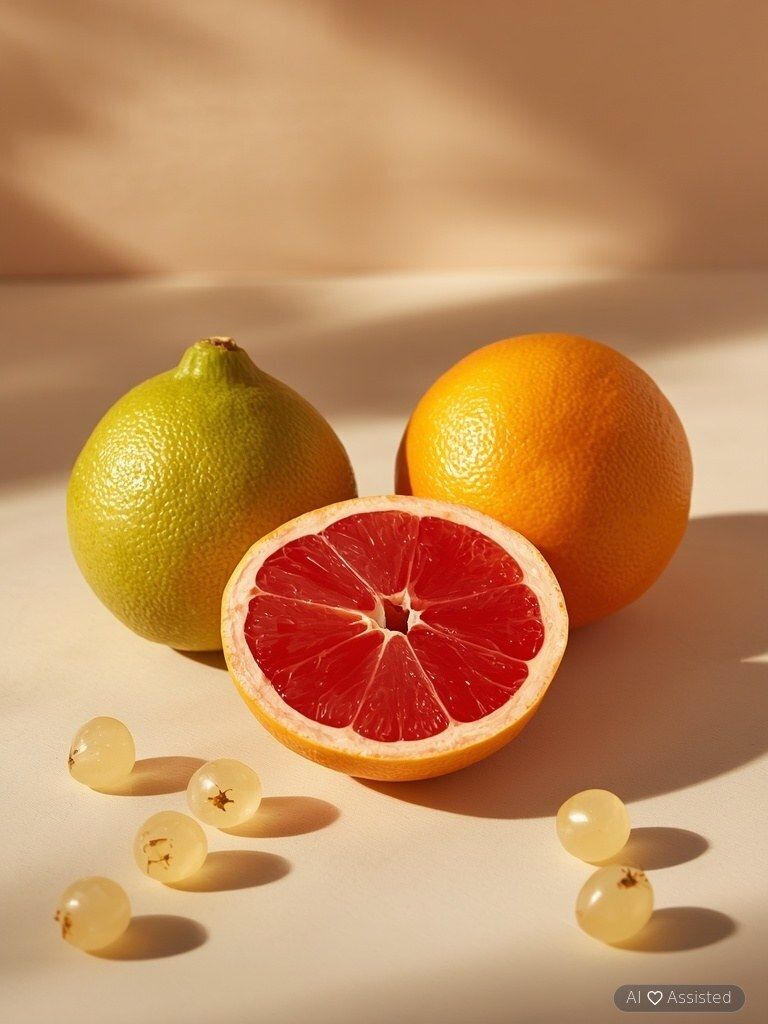
The red or pink grapefruit, frequently dubbed the "fruit of paradise," enjoys widespread acclaim owing to its distinctive nutritional and sensory qualities. From a botanical perspective, it shares close genetic ties with the common orange, as it originates from a hybridization of the Chinese orange (*Citrus sinensis*) and the pomelo (*Citrus maxima*), a crossbreeding that imparts its signature bittersweet, refreshing taste profile. Comprising approximately 90% water, this citrus fruit is remarkably low in calories while simultaneously packing a dense concentration of essential nutrients. It serves as an exceptional source of vitamin C, which decelerates cellular aging processes, enhances collagen synthesis in the skin, joints, and skeletal system, thereby fortifying their structural integrity and resilience. Additionally, it contains lycopene and carotenoids—potent antioxidative compounds that provide photoprotective benefits by shielding the skin from ultraviolet radiation exposure. Beyond its antioxidant properties, red grapefruit exhibits diuretic and detoxifying effects, promoting renal and hepatic function, and has earned recognition as a natural "fat-metabolism accelerator" due to its capacity to stimulate lipolysis.
Sweet green grapefruit – the "sweety" variety with an intense aroma and minimal bitterness
The green grapefruit, colloquially referred to as the "sweety" variety, is a close relative of the conventional red grapefruit but stands out due to its significantly milder and sweeter taste profile. Its outer rind exhibits a deep, vibrant green hue, while the juicy pulp inside adopts a delicate light green-yellow tint. Notably, despite its green color—which typically suggests immaturity and acidity—this particular cultivar is exceptionally sweet, making it an ideal choice for individuals who avoid traditional grapefruits because of their inherent bitterness or pronounced tartness. Much like its red counterpart, the green "sweety" grapefruit is low in calories yet rich in vitamin C and a diverse array of potent antioxidant compounds. Regular consumption of this fruit may aid the body’s natural detoxification processes, support renal function, and promote liver health. The peak season for this variety occurs during late autumn and winter, when it attains its optimal flavor maturity and nutritional density.
White (yellow-tinged) grapefruit: flavor profile and seasonal availability
The white grapefruit—frequently referred to as the yellow-hued variant—exhibits a pronounced yet more subdued flavor profile when compared to its more vividly pigmented counterparts. Its taste is characterized by a reduced concentration of simple sugars, resulting in a less sweet but more tangibly acidic palate, a direct consequence of elevated organic acid levels. Unlike red grapefruits, this variety contains minimal lycopene, the carotenoid pigment responsible for the fruit’s crimson hue and renowned for its potent antioxidant capacity. While citrus fruits remain commercially available year-round, the white grapefruit reaches its peak ripeness during winter months, coinciding with harvest seasons in Southern Europe—primarily Spain and Turkey—from where it is expedited to markets with minimal delay. Conversely, summer imports originate from the Southern Hemisphere, necessitating prolonged maritime transit of up to three weeks. To endure such journeys, the fruit is harvested prior to full maturity and treated with fungicidal preservatives, which may compromise both its allergenic potential and nutritional integrity. Nutrition specialists thus advocate consuming grapefruits predominantly during their natural growing season in the Northern Hemisphere—spanning October to May—to maximize their sensory and dietary benefits.
Grapefruit – comprehensive health benefits and nutritional composition
Grapefruit is a distinctive citrus fruit prized for both its refreshing, tangy flavor and its complex nutritional profile, which contributes significantly to overall well-being. Regular incorporation into one’s diet can yield a multitude of physiological benefits, establishing it as a valuable component of balanced nutrition. **Nutritional composition per 100 g of red grapefruit**: Energy – 176 kJ (42 kcal), Protein – 0.77 g, Total fat – 0.14 g, Total carbohydrates – 10.6 g (including dietary fiber – 1.6 g). Additionally, grapefruit is a rich source of essential vitamins and minerals: Potassium – 135 mg, Magnesium – 9 mg, Calcium – 22 mg, Iron – 0.08 mg, Zinc – 0.07 mg, Phosphorus – 18 mg, Vitamin C – 31.2 mg, Niacin – 0.204 mg, Thiamine (B1) – 0.043 mg, Riboflavin (B2) – 0.031 mg, Pyridoxine (B6) – 0.053 mg, Folate – 13 µg, Vitamin E – 0.13 mg, Beta-carotene (provitamin A) – 686 µg, Flavonoids (particularly in red varieties), Pectin, Lycopene (predominantly in red grapefruits). It is noteworthy that the individual concentrations of these nutrients in grapefruit are generally insufficient to meet daily requirements independently—vitamin C being a notable exception. However, when consumed alongside other nutrient-dense foods, grapefruit can substantively enhance health: flavonoids (especially in the white pith) exhibit antiproliferative, antibacterial, and antifungal properties; antioxidants mitigate oxidative stress, reducing the risk of carcinogenesis and atherosclerosis; vitamins (including vitamin C) bolster immune function; minerals are critical for cardiovascular, neurological, and muscular system integrity; pectins promote intestinal motility, preventing constipation.
Grapefruit consumption: Clinical scenarios where it should be avoided – a detailed compendium of contraindications and drug interactions
While grapefruit is renowned for its nutritional density, its consumption poses significant hazards for specific patient populations. Absolute contraindications include citrus allergies, gastrointestinal disorders (such as peptic ulcers, inflammatory bowel disease, gastroesophageal reflux, or dyspepsia), and certain renal impairments. Of paramount concern are its interactions with medications metabolized via the cytochrome P450 pathway—grapefruit’s flavonoid compounds can elevate active drug concentrations in plasma by up to tenfold, risking toxicity. These interactions encompass immunosuppressants, anticoagulants, antihypertensives, and dopaminergic antagonists, necessitating medical consultation prior to dietary inclusion.
Which pharmaceutical agents should not be combined with grapefruit or its juice due to potential interactions?
Beyond the previously cited examples, grapefruit—owing to its constituent compounds such as bergamottin, naringenin, and furanocoumarins—may substantially alter the pharmacokinetic profiles of a broad array of therapeutic agents. Among the affected drug classes are: **lipid-lowering statins**, including lovastatin and simvastatin (indicated for hypercholesterolemia management); **immunosuppressive medications**, such as cyclosporine (utilized in autoimmune disorders like Crohn’s disease, ulcerative colitis, or rheumatoid arthritis); **anticoagulants** containing warfarin (prescribed for deep vein thrombosis prophylaxis); **benzodiazepines** and their derivatives, e.g., midazolam and triazolam (exhibiting anxiolytic, sedative, and hypnotic properties); **calcium channel blockers** (commonly administered for hypertensive crises, arrhythmias, and ischemic heart disease); **antihistamines**; **antiviral agents**; **cisapride** (a prokinetic drug accelerating gastric emptying); and **calcineurin inhibitors** (employed post-renal transplantation). **Particularly hazardous is the practice of ingesting medications with grapefruit juice**, a risk that extends beyond the aforementioned categories. Consequently, **it is strongly advised to administer all pharmaceuticals exclusively with water** to mitigate potential metabolic interactions (grounded in clinical guidelines and pharmacological research, references: 4, 8–10).
Potential interactions between grapefruit and oral contraceptives: examining hormonal metabolism alterations, side effect risks, and clinical evidence
Ingestion of grapefruit or its juice may alter the pharmacokinetic profile of hormonal contraceptive pills by inhibiting the hepatic enzyme CYP3A4, which mediates the metabolic clearance of estrogens and progestins. While existing research—including a 1996 study published in *Clinical Pharmacology & Therapeutics*—has demonstrated elevated plasma concentrations of these hormones following grapefruit consumption, the sample sizes remain limited. This biochemical interaction could theoretically amplify adverse effects, such as an increased propensity for venous thromboembolism; however, the clinical significance requires further validation through large-scale, controlled trials. Pending definitive evidence, healthcare providers advise caution and individualized medical consultation for women who regularly consume grapefruit while using oral contraceptives, particularly those with a history of coagulation disorders or concurrent medications metabolized via the CYP3A4 pathway.
Consuming grapefruit during pregnancy: benefits and precautions for expectant mothers
Grapefruit represents a valuable dietary supplement for pregnant women, primarily due to its low glycemic index, which facilitates the maintenance of stable blood glucose levels—a critical consideration during pregnancy, particularly for those diagnosed with gestational diabetes. In the absence of medical contraindications and potential drug interactions, this citrus fruit may serve as a beneficial component of a glucose-regulating diet. Additionally, grapefruits provide a natural source of folic acid, an indispensable nutrient for the optimal development of the fetal nervous system. However, pregnancy may trigger novel food allergies or intolerances—even to previously well-tolerated products—thus warranting cautious introduction of grapefruit into the diet, beginning with a modest serving while monitoring for adverse reactions such as dermatological changes, gastrointestinal distress, or signs of intolerance. In all cases, particularly when pharmacotherapy is involved or in instances of high-risk pregnancy, individualized consultation with the attending physician is imperative. Guidance in constructing a balanced prenatal diet may also be obtained from a certified nutritionist, many of whom collaborate with prenatal education centers.
What are the safe daily intake limits for grapefruit, and why is moderation essential?
While no authoritative guidelines specify the exact maximum daily intake of grapefruit, nutrition specialists advise incorporating this fruit into a balanced diet—preferably in combination with other fruits, such as in mixed salads. A recommended daily portion is considered to be half a grapefruit, which allows individuals to benefit from its nutritional properties without exposing themselves to potential adverse effects. Caution is particularly advised regarding grapefruit-based diets that involve consuming more than one fruit per day; such dietary regimens should not be maintained for longer than two weeks. This precaution is especially critical for postmenopausal women, as excessive grapefruit consumption may disrupt hormonal balance, particularly estrogen levels, as evidenced by scientific research (source: *Analysis of Citrus Flavonoid Impact on Hormonal Regulation*, 2022).
Is it genuinely possible to effectively combat viral and bacterial pathogens using the compounds found in grapefruit?
Grapefruit is distinguished by its substantial antiviral and antibacterial activity, primarily attributable to its high flavonoid content—natural phytochemicals with well-documented immunomodulatory effects. Additionally, its rich array of vitamins (particularly vitamin C) and trace minerals further enhances the body’s defensive mechanisms. Of particular note is grapefruit seed extract, which exhibits a potent bioactive profile. Research confirms that compounds present in grapefruit demonstrate antibiotic efficacy against a broad spectrum of pathogenic microorganisms, including gastrointestinal bacteria (such as *Escherichia coli*) as well as strains responsible for respiratory infections, such as *Streptococcus pneumoniae* (pneumococci) and *Neisseria meningitidis* (meningococci).
Bioactive properties and health-supportive applications of citrus paradisi seed extract
The extract derived from *Citrus paradisi* seeds demonstrates promising adjunctive potential in combating fungal infections, including those caused by yeast species such as *Candida*. It is critical to emphasize, however, that for bacterial or viral infections, medical supervision remains indispensable, as standalone therapy with this extract in the majority of documented clinical scenarios fails to ensure complete pathogen eradication. Conversely, the extract may serve as a valuable immunomodulatory supplement for individuals prone to recurrent viral upper respiratory tract infections. The preparation is most commonly formulated as a liquid drop solution, with dosage regimens contingent upon active compound concentration—standard recommendations for healthy adults without contraindications suggest 10 drops of a 33% concentration twice daily, unless otherwise directed by a healthcare provider. Peer-reviewed research corroborates the extract’s broad-spectrum antimicrobial efficacy, particularly against foodborne pathogens and lactic acid bacteria contaminants. Notably, its bioactive properties remain stable across a wide pH range, positioning it as a viable natural food preservative capable of extending shelf life without synthetic additives. Grapefruits themselves represent a nutrient-dense source of vitamins and minerals, constituting a beneficial dietary component when consumed in moderation and in the absence of specific contraindications.
Grapefruit consumption timing: Should it be morning or evening? Evidence-based insights and critical drug interaction considerations
While conventional wisdom often discourages fruit consumption in the afternoon, grapefruit—whether green, red, or white—remains a nutritionally dense, low-calorie option that can be beneficially incorporated into meals at any time of day. The choice between varieties should align with individual taste preferences: the green variant appeals to those favoring sweeter profiles, whereas the red type, with its more astringent and complex flavor notes, may suit connoisseurs of tart citrus. However, its most critical consideration lies in its well-documented capacity to alter drug metabolism through inhibition of the CYP3A4 enzyme system in the gastrointestinal tract, thereby modifying the bioavailability and therapeutic effects of numerous pharmaceuticals. The requisite interval between medication intake and grapefruit consumption must be determined by the drug’s elimination half-life. For instance, acetaminophen (paracetamol), which permits redosing after approximately six hours, necessitates an equivalent waiting period before grapefruit can be safely ingested. Certain extended-release formulations with half-lives approaching twelve hours may render grapefruit consumption incompatible with the entire treatment regimen, potentially mandating complete avoidance. For further exploration, consider the intriguing historical link between Norwegian dietary practices and the grapefruit-based weight management protocols.
Grapefruit FAQs: Comprehensive Expert Answers and Dietary Recommendations Based on Scientific Evidence
1. **Is it safe to eat grapefruit daily?**
A balanced diet emphasizes variety, so it is advisable to incorporate other fruits alongside grapefruit. Daily consumption is not recommended for individuals with kidney disorders or hormonal imbalances, particularly women with irregular menstrual cycles. As with any food, moderation is key. Nutritionists suggest limiting intake to no more than one grapefruit per day to prevent potential adverse effects.
2. **Does grapefruit acidify the body?**
Despite its tangy flavor, grapefruit exhibits alkaline properties, contributing to the maintenance of the body’s acid-base balance. Regular consumption may help neutralize excess acidity, promoting metabolic health.
4. **Does grapefruit have diuretic effects?**
Given its high water content and natural diuretic compounds, grapefruit promotes urine production. For most individuals, this can be beneficial, aiding detoxification, lowering blood pressure, and reducing edema. However, those taking diuretic medications should consult a physician before adding grapefruit to their diet to avoid drug interactions.
5. **Can grapefruit juice be consumed on an empty stomach?**
If well-tolerated, drinking grapefruit juice in the morning before breakfast may stimulate digestion. A common remedy involves consuming a glass of warm water mixed with the juice of half a grapefruit to enhance gut motility. However, individuals with acid reflux or heartburn should avoid this practice, as the juice’s acidity may exacerbate symptoms.
**Scientific References:**
- USDA nutritional data (2019) for raw pink and red grapefruit, available at: [fdc.nal.usda.gov](https://fdc.nal.usda.gov/fdc-app.html#/food-details/174673/nutrients).
- Malik et al. (2015) examine bioactive compounds in southern fruits and juices within dietary trends (Polish Society of Food Technologists).
- Research on grapefruit-drug interactions (Kłoda et al., 2013; Zdrojewicz et al., 2014) and its impact on estrogen metabolism (Monroe et al., 2018).
Tags

Anna Schmidt
✓Diets Premium Expert
Diets Premium team expert. Specializes in nutrition plans, strength sports, and training plans.
View Profile →