5 min read
Couscous – Properties, Recipes, and Tips: How to Prepare Couscous

Tim Klein
✓
Diets Premium Expert • 25.09.2026
✓
Scientifically reviewed by a clinical dietitian:
This article has been peer-reviewed for adherence to IŻŻ, WHO, and PTGiP clinical nutritional standards.
| Diets Premium Expert Tim Klein | min read 5 min | Scientifically reviewed by a clinical dietitian 25.09.2026 |
Smart Voice
•Listen to the article content live
0:00
/
0:00
Key Takeaways
Couscous is particularly popular among younger, not older individuals who observe new products entering the food market and enjoy using modern solutions. Among the key advantages of couscous are its short preparation time, neutral taste, and versatility in the kitchen, allowing its use in various dishes, both savory and sweet. So, is it worth incorporating couscous into one's diet?
Meal Plan
Want to apply these guidelines in your daily diet?
Our smart diet generator creates a tailored meal plan in 3 minutes based on the recommendations in this article.
Golden Grains of the Maghreb: Traditional North African Couscous
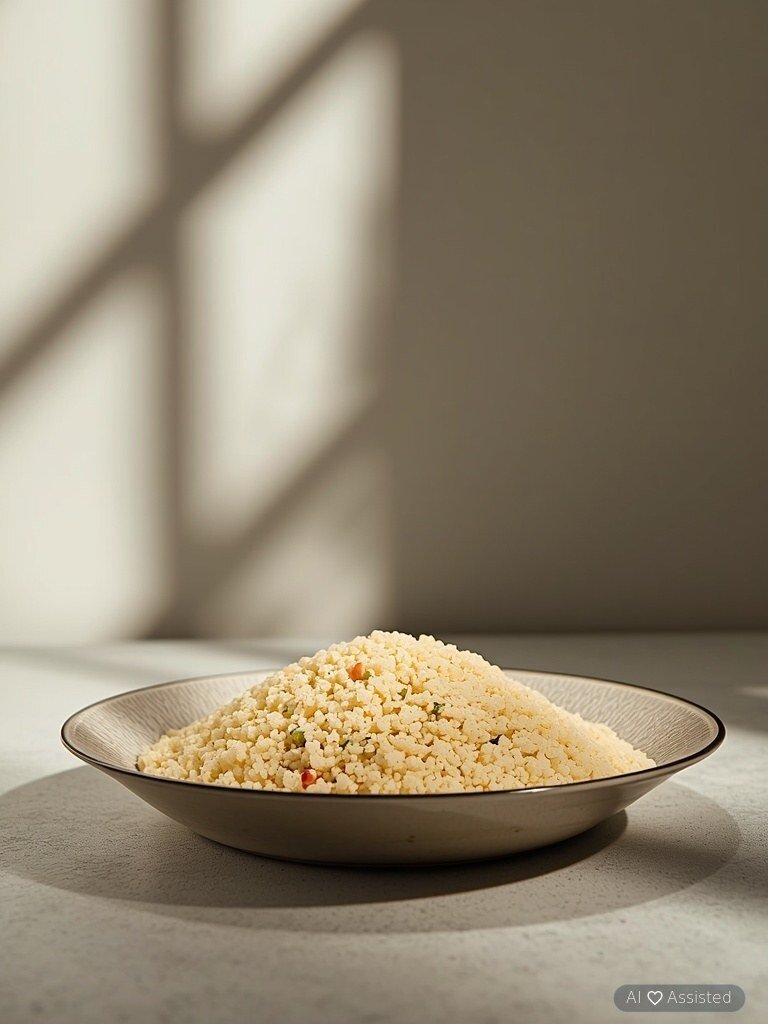
Couscous, with its origins deeply rooted in the Northwestern African region, represents a distinctive form of processed durum wheat while simultaneously serving as the name for the dish prepared from it. Within the culinary heritage of Morocco, Algeria, and Tunisia, it was traditionally presented alongside mutton or lamb, generously drenched in a flavorful sauce and accompanied by seasonal vegetables. Historically, couscous emerged as a byproduct of wheat grain milling—a fine, spherical granulate measuring roughly one millimeter in diameter. Its singularity lies in bridging the characteristics of both groats and pasta, a similarity derived from their shared foundational ingredients: semolina (durum wheat flour), water, and optional flavor-enhancing additives. The divergence between these two products, however, manifests in their final physical form: whereas couscous retains its appearance as tiny, golden-yellow pellets, pasta assumes a diverse array of shapes, ranging from small shells to elongated spaghetti strands. Contemporary production predominantly utilizes refined durum wheat for couscous, though whole-grain (brown) varieties are also available on the market. These latter versions are regarded as nutritionally superior due to their preserved content of dietary fiber, B-complex vitamins, and essential minerals, positioning them as a healthier alternative to the conventional refined couscous.
Couscous: Nutritional Profile, Dietary Applications, and Considerations for Specialized Diets
Couscous exhibits a caloric density comparable to that of other widely consumed grain-based foods, including oat flakes, pasta, and white rice. Per 100 grams of the dry product, it provides approximately 376 kilocalories, composed predominantly of 77 grams of complex carbohydrates, 13 grams of complete plant-based protein, and a negligible fat content. Owing to its substantial protein composition, couscous serves as a valuable dietary component for individuals adhering to vegan or vegetarian nutritional regimens. An additional advantage lies in its high digestibility, attributed to the low dietary fiber content, rendering it particularly suitable for those experiencing digestive disorders, such as gastroesophageal reflux disease. The product may be safely incorporated into the diets of school-aged children and elderly individuals. In the context of irritable bowel syndrome (IBS), a low-FODMAP diet—which excludes foods rich in fermentable oligo-, di-, and monosaccharides—is occasionally recommended. Regrettably, couscous contains significant quantities of oligosaccharides, thereby disqualifying it as a suitable option for individuals with sensitive digestive systems. With regard to micronutrients, the product contains trace amounts of calcium, iron, magnesium, phosphorus, potassium, zinc, and copper; however, the concentrations are insufficient to classify couscous as a meaningful source of these minerals. Research conducted on a rodent model in Tunisia demonstrated that consuming couscous-based meals accompanied by black or green tea substantially diminishes iron absorption, potentially contributing to the development of iron-deficiency anemia over time. Nutritionists therefore advise maintaining a clear temporal separation between the consumption of grain products, including couscous, and tannin-rich beverages such as coffee or tea.
Couscous: Gluten content and glycemic response compared to wheat pasta – a comparative nutritional analysis
Despite couscous sharing a nearly identical nutritional composition with refined wheat pasta—suggesting a comparable impact on blood glucose levels—scientific evidence contradicts this assumption. A study conducted by Jamel and colleagues on a limited participant cohort revealed that individuals consuming a meal of pasta with tomato sauce exhibited significantly lower blood glucose concentrations after 90 minutes compared to those who ate couscous with vegetables. Based on these findings, French researchers concluded that, despite the similar nutritional profiles of both products, couscous demonstrates a higher glycemic index than pasta. It is critical to note that both couscous and pasta are classified as high-glycemic-index (GI) foods, rendering them unsuitable for individuals with diabetes or insulin resistance. Additionally, as a wheat-derived product, couscous contains gluten—a protein hazardous to those with celiac disease or gluten intolerance, as its consumption may trigger characteristic clinical symptoms associated with these conditions.
What are the two straightforward methods for properly preparing couscous?
One of the most appreciated characteristics of couscous is its remarkably swift preparation time. Classified among steam-cooked grains, it does not require conventional boiling in water. There are two primary techniques for its preparation: steaming or pouring boiling water over it. The first method involves using a porous vessel, which—filled with dry couscous—is placed over a pot of simmering food, such as soup or potatoes. The steam rising from the cooking dish will cause the couscous grains to swell uniformly, rendering them ready for consumption. The alternative approach, far simpler and requiring no specialized equipment, entails placing the dry couscous in a bowl, covering it with boiling water (ensuring the water level exceeds the couscous by roughly one centimeter), and then sealing the bowl with a plate. After approximately five to ten minutes of waiting, the couscous will have fully absorbed the liquid. Prior to adding water, it is advisable to season the couscous with preferred herbs or salt to enhance its flavor profile. Incorporating plant-based fats, such as olive oil, or butter will not only elevate the taste but also reduce the glycemic index of the final dish.
Culinary compositions featuring couscous as the star: from salads to patties
A curated collection of time-tested recipes showcasing the versatility of couscous—from a refreshing salad with tangy feta, creamy avocado, and juicy tomatoes to fragrant Mediterranean-style patties. Each dish balances effortless preparation with sophisticated flavor, while couscous’s neutral profile invites creative experimentation in both sweet and savory applications. Learn how to pair ingredients strategically to lower the glycemic index of meals while delivering a nutrient-dense dish rich in protein and healthy fats.

mgr Tim Klein
✓Diets Premium Expert
Diets Premium team expert. Specializes in nutrition plans, strength sports, and training plans.
View Profile →