5 min read
Chinese Restaurant Syndrome - Causes, Symptoms, Treatment and Diet

Lena Bauer
✓
Diets Premium Expert • 24.09.2026
✓
Scientifically reviewed by a clinical dietitian:
This article has been peer-reviewed for adherence to IŻŻ, WHO, and PTGiP clinical nutritional standards.
| Diets Premium Expert Lena Bauer | min read 5 min | Scientifically reviewed by a clinical dietitian 24.09.2026 |

Smart Voice
•Listen to the article content live
0:00
/
0:00
Key Takeaways
It need not be merely guilt responsible for feelings of indigestion, headache, excessive sweating, and flushing after leaving an enjoyable Chinese restaurant. You might be experiencing a rare disorder known as Chinese Restaurant Syndrome that provokes symptoms after consuming Oriental dishes. So, what could be causing these ailments, and should you consider revising your taste preferences?
Meal Plan
Want to apply these guidelines in your daily diet?
Our smart diet generator creates a tailored meal plan in 3 minutes based on the recommendations in this article.
The postprandial symptom complex following Asian cuisine consumption: an examination of "Chinese restaurant syndrome"
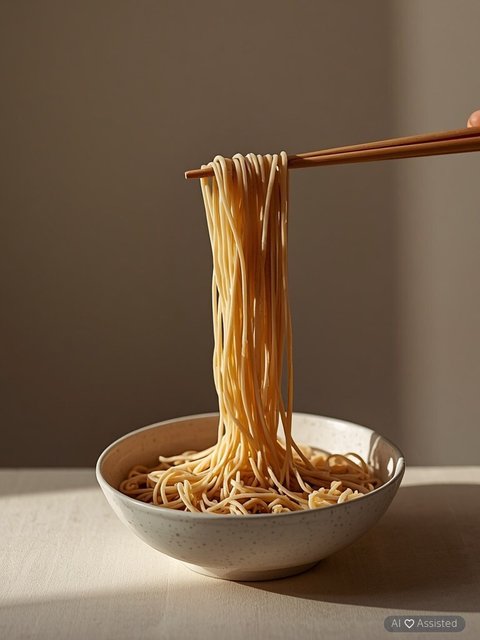
The condition colloquially termed "Chinese restaurant syndrome"—occasionally referred to in medical contexts as "Kwok’s disease"—represents a constellation of physiological symptoms emerging subsequent to the ingestion of East Asian culinary dishes, particularly those containing elevated concentrations of monosodium glutamate (MSG) and other potent flavor enhancers. Owing to its infrequent occurrence, this symptomatic complex remains underrepresented in clinical literature, thereby contributing to its peripheral status within differential diagnoses of food intolerances. It is frequently misattributed to conventional gastrointestinal distress following the consumption of rich, calorie-dense, or spicy meals—hallmarks of traditional Asian cuisine—rather than being recognized as a distinct nosological entity warranting systematic investigation.
Chinese restaurant syndrome: origins, prevalence, and physiological response mechanisms
The distinctive symptoms collectively referred to as "Chinese restaurant syndrome" are primarily attributed to monosodium glutamate (MSG) – a ubiquitous flavor enhancer that plays a pivotal role in Far Eastern cuisine. This chemical compound, naturally occurring in seaweeds such as Japanese *kombu* (notable for its high glutamic acid content), has been employed by Asian culinary traditions for centuries to amplify the savory depth of dishes. The 20th century marked a turning point when pure glutamic acid was successfully isolated from these algae, enabling the industrial production of purified monosodium glutamate, commercially branded in Eastern markets as *Aji-no-moto* (literally "the essence of taste"). This nomenclature reflects the profound cultural reverence for *umami* flavor in Asian regions, where MSG has become an indispensable culinary component. Its global dissemination has since incorporated the additive into countless food products and seasoning blends, typically labeled as MSG or by its E-number designation, E621. While major health authorities do not classify it as hazardous, a minority of individuals may experience adverse reactions following consumption, manifesting as symptoms of food intolerance linked to this widely used additive.
Chinese restaurant syndrome: Recognizable symptoms and underlying causative pathways
Clinical manifestations associated with sensitivity to monosodium glutamate typically emerge shortly after the ingestion of foods containing this additive. While the syndrome’s name may imply that symptoms occur exclusively following the consumption of meals served in Asian eateries, the reality is far more expansive. Monosodium glutamate, a ubiquitous flavor enhancer, is not confined to Oriental cuisine but is also present in a wide array of highly processed products—ranging from instant meals and pre-made sauces to seasoning blends. Notably, even individuals with an intolerance to this compound may not exhibit symptoms after consuming small quantities; however, the cumulative intake from diverse dietary sources frequently triggers a spectrum of characteristic reactions, including migraine-like headaches, profuse sweating, cutaneous flushing, facial heat sensations, oral and pharyngeal paresthesia or burning, nausea, abdominal discomfort, digestive disturbances, generalized fatigue, muscle cramps, and joint pain. In rare instances, potentially life-threatening symptoms resembling allergic reactions may develop—such as chest pain, palpitations, throat swelling, dyspnea, and cough (termed "Chinese restaurant asthma"). These symptoms, particularly those affecting the respiratory and cardiovascular systems, necessitate immediate medical evaluation, and patients should promptly inform healthcare providers of the association between the ingested product and the onset of symptoms.
Chinese restaurant syndrome is a treatment
Mild symptoms (headache, mild nausea) do not require hospitalization. There is also no strictly defined symptomatic treatment a bad mood after an oriental meal usually goes away on its own. The causal treatment, of course, is to avoid consuming the causative agent, sodium glutamine. So not only Asian food should be discontinued, but also processed, ready-made sauces and seasonings that contain MSG. This involves thoroughly checking the labels of purchased products that contain this ingredient.
Chinese Restaurant Syndrome: Dietary Strategies as a Therapeutic Approach
In the context of Chinese Restaurant Syndrome, a thoughtfully structured diet serves a dual purpose—acting as both a preventive measure and a therapeutic intervention, a paradoxical yet long-standing practice rooted in centuries of traditional Chinese medicine. The primary dietary directive for managing this condition involves the complete avoidance or substantial reduction of monosodium glutamate (MSG), particularly in its concentrated forms and within ultra-processed foods where it is frequently present in excessive quantities. A critical step is conducting a differential analysis of symptoms: Do adverse reactions occur solely after consuming MSG-containing dishes, or could they potentially stem from other, more prevalent food intolerances (such as those to nuts, shellfish, or gluten)? Although MSG-induced reactions tend to be mild, even subtle discomfort following meals like chicken in soy sauce or fermented tofu should prompt caution when dining out. It is worth emphasizing that avoiding highly processed foods and artificial additives represents a universal tenet of healthy eating, benefiting individuals regardless of specific sensitivities. Chinese Restaurant Syndrome, though relatively uncommon, involves an adverse reaction to monosodium glutamate—a ubiquitous flavor enhancer in Asian cuisine, renowned for its ability to impart the distinctive *umami* taste. Given the cultural significance of MSG in Asian culinary traditions (where it is often referred to as the "essence of flavor"), its complete elimination from one’s diet—particularly when eating outside the home—can pose a significant challenge. Consequently, awareness of food compositions and the ability to identify alternative sources of glutamate (such as those naturally occurring in tomatoes or cheese) become paramount for individuals affected by this condition.

Lena Bauer
✓Diets Premium Expert
Diets Premium team expert. Specializes in nutrition plans, strength sports, and training plans.
View Profile →