4 min read

Body Types and Strategy in Sculpting One's Physique

Emilia Szymańska
Emilia Szymańska ✓
Diets Premium Expert • 19.03.2026
✓
Scientifically reviewed by a clinical dietitian: This article has been peer-reviewed for adherence to IŻŻ, WHO, and PTGiP clinical nutritional standards.
Diets Premium Expert Emilia Szymańska min read 4 min Scientifically reviewed by a clinical dietitian 19.03.2026
Body Types and Strategy in Sculpting One's Physique

Smart Voice

•

Listen to the article content live

0:00 / 0:00
Key Takeaways
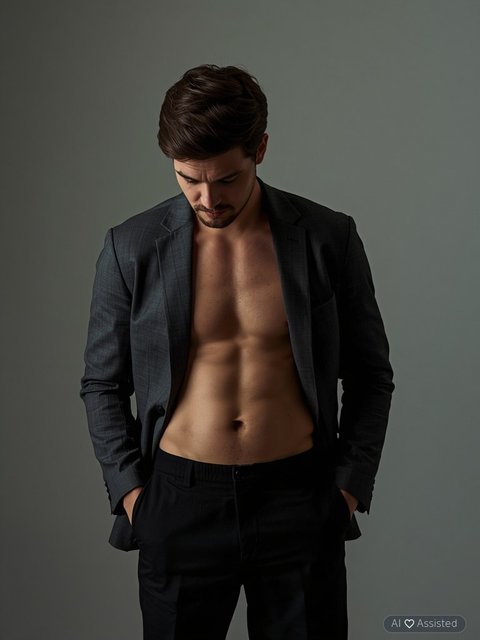
Virtually every person who exercises in the gym and aspires to modify their appearance or improve their power results has come across the term somatotype. What does this genuinely denote and is it advantageous to consider somatotypes while devising a strategy for sculpting one's physique?
Meal Plan

Want to apply these guidelines in your daily diet?

Our smart diet generator creates a tailored meal plan in 3 minutes based on the recommendations in this article.

Body structure in accordance with Sheldon's classification

In 1940, W. Sheldon, based on an analysis of images of 4,000 students, concluded that there are three types of body structure. His theory is founded on the existence of three layers of cells that form various systems: the endoderma, the ectoderma, and the mesoderm. The dominance of any of these layers would determine the appearance of the silhouette, personality, and even the health status. The three primary silhouette types are discussed.

Endomorphic Mesomorph

People with this somatotypus exhibit narrow shoulders and broader hips. It is generally believed that adipose tissue tends to accumulate more often in endomorphs. Additionally, the body stores more water, which can cause such individuals to appear more massive.

Ectomorphic Body Type

– prominent features of ectomorphic body type include narrow arms and waist, elongated limbs, and a smaller bone circumference. Individuals with this body structure may encounter challenges in gaining muscle mass.

Mesosomatic Type

Individuals embodying this body type display attributes of both ectomorph and endomorph. Their distinctive traits encompass a wide chest circumference, narrow hips, and extensive limbs. Mesosomatic types generally possess a low body fat percentage and can readily develop muscle mass.

The Heath-Carter method

The Heath-Carter method is currently used to estimate somatotypes. This method involves measuring the thickness of bones, the circumference of the pelvis and the arm, and skin-fat folds. Body weight and height also play an important role. Then the measurements obtained are placed into mathematical patterns. Most of these measures change over the course of a person's life, which can influence to which somatotype a person is assigned. However, such detailed calculations are not necessary for the average person who engages in amateur sports. For a simple assessment of body type, a look in the mirror can be helpful: a tall and slender person is an ectomorph, a muscular and athletic person is a mesomorph, and a person with round or massive forms is an endomorph.

Does the Somatotype truly impact the type of physical training?

Many physically active people believe that somatotypes have a significant impact on strength performance and body shape. In a 1994 study, this theory was confirmed. A group of men participated in a 12-week strength training program, during which a greater increase in muscle mass was observed in those with an endomorphic body type compared to those with an ectomorphic body type (L. M. Van Etten, F. T. Verstappen, K. R. Westerterp, 1994). In a subsequent experiment conducted on a group of 36 physically active men, the relationship between somatotype and anaerobic performance in exercises such as squats and bench presses was examined. It was found that people with a mesomorphic body structure achieved better strength performance than those with other somatotypes (H. Ryan-Stewart, J. Faulkner, S. Jobson, 2018). In a study of judo athletes, it was found that people with an ectomorphic body structure fared worse during training than mesomorphic athletes who had greater strength (J. Lewandowska et al., 2011). Another experiment showed that ectomorphic people performed better than mesomorphic people in Taekwondo training (J. -W. Noh, J. -H. Kim, J. Kim, 2013). Some people believe that classification by somatotypes should be a reference point when choosing a suitable sport, but in available studies, the focus was mainly on body composition and the amount of fat tissue, while genetic and psychological factors, which should be key in classification, were neglected.

Does physical structure influence caloric needs?

It is widely believed that ectomorphs struggle to build muscle mass, while mesomorphs can do so with ease. The misconception, of course, is that caloric needs are determined by a specific body type. Similarly, the distribution of macronutrients in one's diet does not depend on body type. Regardless of one's body type, a caloric deficit is essential for the fat loss process, while a positive energy balance is required for muscle building. Unquestionably, there are differences in caloric needs among individuals, but these variations arise from factors such as genetic predisposition, type of training involving progressive overload, and non-exercise activity thermogenesis (NEAT).

Summary

Developing a plan for the body-shaping process based on the somatotypes theory is unjustified. Body type does not affect calorie needs or athletic predispositions. The somatotypes theory does not consider important conditions related to hormonal and nervous systems. There are other, more effective methods to develop an individual nutrition plan and training program, and in this case, a person's body weight is a better indicator than the somatotype.
mgr Emilia Szymańska

mgr Emilia Szymańska

✓

Diets Premium Expert

Diets Premium team expert. Specializes in nutrition plans, strength sports, and training plans.

View Profile →

Recommended articles in this category

Related Articles

Discover similar publications and expert insights.

Want to Lose Weight Without Dieting? Consider This Strategy!
Diet
Want to Lose Weight Without Dieting? Consider This Strategy!
⏱ 3 min czytania 📚 Diet
#Strategy
These Products Promote the Removal of Harmful Substances from the Body
Detox Diets
These Products Promote the Removal of Harmful Substances from the Body
⏱ 9 min czytania
#Detox Diets #Strategy
Captivated by Failures?
Strategy
Captivated by Failures?
⏱ 7 min czytania
#Strategy
What is the method of a reverse diet? Effects and opinions on the popular way of returning from reduction
Caloric Deficit
What is the method of a reverse diet? Effects and opinions on the popular way of returning from reduction
⏱ 6 min czytania
#Caloric Deficit #Caloric Intake
Simple Method for a Defined Six-Pack: The Science of Abdominal Definition
Nutrition
Simple Method for a Defined Six-Pack: The Science of Abdominal Definition
⏱ 3 min czytania 📚 Nutrition
#Nutrition #Obesity
What are the Causes and Solutions for Muscle Stagnation?
Strategy
What are the Causes and Solutions for Muscle Stagnation?
⏱ 6 min czytania
#Strategy
Nutritional strategy for a flatter stomach – dietary guidelines for men with excessive abdominal fat
Dietary Guidelines
Nutritional strategy for a flatter stomach – dietary guidelines for men with excessive abdominal fat
⏱ 4 min czytania
#Dietary Guidelines #Obesity
Nutrition Strategy for Youth Preservation – Key Principles and Recommended Foods
Balanced Nutrition
Nutrition Strategy for Youth Preservation – Key Principles and Recommended Foods
⏱ 7 min czytania
#Balanced Nutrition #Natural Ingredients
Legionellosis: Epidemiology, Pathogenesis, Clinical Manifestations, and Engineering Prevention in Water Networks
Health Conditions
Legionellosis: Epidemiology, Pathogenesis, Clinical Manifestations, and Engineering Prevention in Water Networks
⏱ 6 min czytania 📚 Health Conditions
#Disease Prevention #Public Health
Dairy-free nutrition - strategies and culinary recipes
Health Conditions
Dairy-free nutrition - strategies and culinary recipes
⏱ 6 min czytania 📚 Health Conditions
#Lactose Intolerance #Dairy-free Diet
Low-fat nutrition – dietary strategy, clinical rationale, and wholesome recipes
Health Benefits
Low-fat nutrition – dietary strategy, clinical rationale, and wholesome recipes
⏱ 3 min czytania
#Health Benefits #Low-fat Nutrition
Weight Gain Strategy: A Comprehensive Approach to Addressing Underweight
Weight Gain
Weight Gain Strategy: A Comprehensive Approach to Addressing Underweight
⏱ 2 min czytania
#Weight Gain #Strategy
"Blood glucose concentration – indicators of excessive hyperglycemia. Approaches to counteracting rising blood sugar levels"
Strategy
"Blood glucose concentration – indicators of excessive hyperglycemia. Approaches to counteracting rising blood sugar levels"
⏱ 4 min czytania
#Strategy #Diabetes
Collaborating with Your Inner Elephant: The Psychology of Behavioral Change and Habit Formation
Strategy
Collaborating with Your Inner Elephant: The Psychology of Behavioral Change and Habit Formation
⏱ 14 min czytania
#Strategy
Thrombocytopenia – Etiopathogenesis, Clinical Symptoms, and Nutritional Support for Hematopoiesis
Disease Prevention
Thrombocytopenia – Etiopathogenesis, Clinical Symptoms, and Nutritional Support for Hematopoiesis
⏱ 2 min czytania 📚 Disease Prevention
#Dietary Interventions #Nutrition
The UV-Protective Diet: How Strategic Nutrition Can Enhance Your Skin’s Natural Defense Against Solar Radiation
Balanced Diet
The UV-Protective Diet: How Strategic Nutrition Can Enhance Your Skin’s Natural Defense Against Solar Radiation
⏱ 3 min czytania
#Balanced Diet #Strategic
Grasping self-assurance and approaches to reinforce it in children
Lifestyle
Grasping self-assurance and approaches to reinforce it in children
⏱ 5 min czytania 📚 Lifestyle
#Strategy
Stale Bread: Causes of Staling, Prevention Methods, and Culinary Ideas
Energy Source
Stale Bread: Causes of Staling, Prevention Methods, and Culinary Ideas
⏱ 5 min czytania
#Energy Source #Food Waste
The climacteric phase – somatic and psychological manifestations. Nutritional guidelines and botanical remedies for menopausal transition
Womens Health
The climacteric phase – somatic and psychological manifestations. Nutritional guidelines and botanical remedies for menopausal transition
⏱ 8 min czytania 📚 Womens Health
#Nutrition Recommendations #Dietary Recommendations
Obesity and Anxiety Disorders – Psychodietetic Intervention Strategies in Crisis
Mental & Brain
Obesity and Anxiety Disorders – Psychodietetic Intervention Strategies in Crisis
⏱ 4 min czytania 📚 Mental & Brain
#Nutritional Habits #Anxiety Disorders
Enterobiasis – relentless perianal pruritus, hyperkinesis, and therapeutic interventions: phytotherapeutic approaches to intestinal parasitism
Food & Ingredients
Enterobiasis – relentless perianal pruritus, hyperkinesis, and therapeutic interventions: phytotherapeutic approaches to intestinal parasitism
⏱ 4 min czytania 📚 Food & Ingredients
#Medicinal Herbs #Herbal Medicine
Osteopathic Disorders: Risk Determinants and Contemporary Therapeutic Strategies in Clinical Practice
Bone Health
Osteopathic Disorders: Risk Determinants and Contemporary Therapeutic Strategies in Clinical Practice
⏱ 3 min czytania 📚 Bone Health
#Strategy
Pediatric enterobiasis – clinical manifestations and therapeutic approaches. Home-based remedies for eliminating pinworms in children
Food & Ingredients
Pediatric enterobiasis – clinical manifestations and therapeutic approaches. Home-based remedies for eliminating pinworms in children
⏱ 4 min czytania 📚 Food & Ingredients
#Vegetables #Homemade
Systemic Dehydration – Identifying Indicators, Underlying Causes, Health Complications, and Therapeutic and Preventive Approaches
Strategy
Systemic Dehydration – Identifying Indicators, Underlying Causes, Health Complications, and Therapeutic and Preventive Approaches
⏱ 4 min czytania
#Strategy #Nutritional Benefits And Risks
How oatmeal at breakfast can safeguard your child against obesity while promoting their optimal growth and well-being!
Health Conditions
How oatmeal at breakfast can safeguard your child against obesity while promoting their optimal growth and well-being!
⏱ 1 min czytania 📚 Health Conditions
#Essential Nutrients #Dietary Habits
Orthorexic eating patterns among competitive athletes: Etiological factors, health repercussions, and clinical diagnostic approaches
Mental & Brain
Orthorexic eating patterns among competitive athletes: Etiological factors, health repercussions, and clinical diagnostic approaches
⏱ 6 min czytania 📚 Mental & Brain
#Nutrient Deficiencies #Eating Disorders
Orthorexia Nervosa Unpacked: Etiological Foundations, Symptomatic Presentations, Long-Term Repercussions, and Clinical Intervention Pathways for Compulsive Health-Conscious Eating
Mental & Brain
Orthorexia Nervosa Unpacked: Etiological Foundations, Symptomatic Presentations, Long-Term Repercussions, and Clinical Intervention Pathways for Compulsive Health-Conscious Eating
⏱ 4 min czytania 📚 Mental & Brain
#Strategy
Osteogenesis imperfecta: clinical manifestations, etiologic determinants, and contemporary management approaches
Bone Health
Osteogenesis imperfecta: clinical manifestations, etiologic determinants, and contemporary management approaches
⏱ 3 min czytania 📚 Bone Health
#Strategy #Pregnancy
Acute pancreatitis: nutritional management protocols during autolytic pancreatic tissue damage
Health Conditions
Acute pancreatitis: nutritional management protocols during autolytic pancreatic tissue damage
⏱ 4 min czytania 📚 Health Conditions
#Nutritional Management #Dietary Interventions
Flatfoot condition: etiological foundations, risk factor analysis, therapeutic interventions, and the biomechanical role of resistance training in podiatric rehabilitation
Resistance Training
Flatfoot condition: etiological foundations, risk factor analysis, therapeutic interventions, and the biomechanical role of resistance training in podiatric rehabilitation
⏱ 5 min czytania
#Resistance Training #Strength Training

Share