4 min read

Agave syrup - characteristics, price, glycemic index

Alicja Kowalska
Alicja Kowalska ✓
Diets Premium Expert • 24.09.2026
✓
Scientifically reviewed by a clinical dietitian: This article has been peer-reviewed for adherence to IŻŻ, WHO, and PTGiP clinical nutritional standards.
Diets Premium Expert Alicja Kowalska min read 4 min Scientifically reviewed by a clinical dietitian 24.09.2026
Agave syrup - characteristics, price, glycemic index

Smart Voice

•

Listen to the article content live

0:00 / 0:00
Key Takeaways
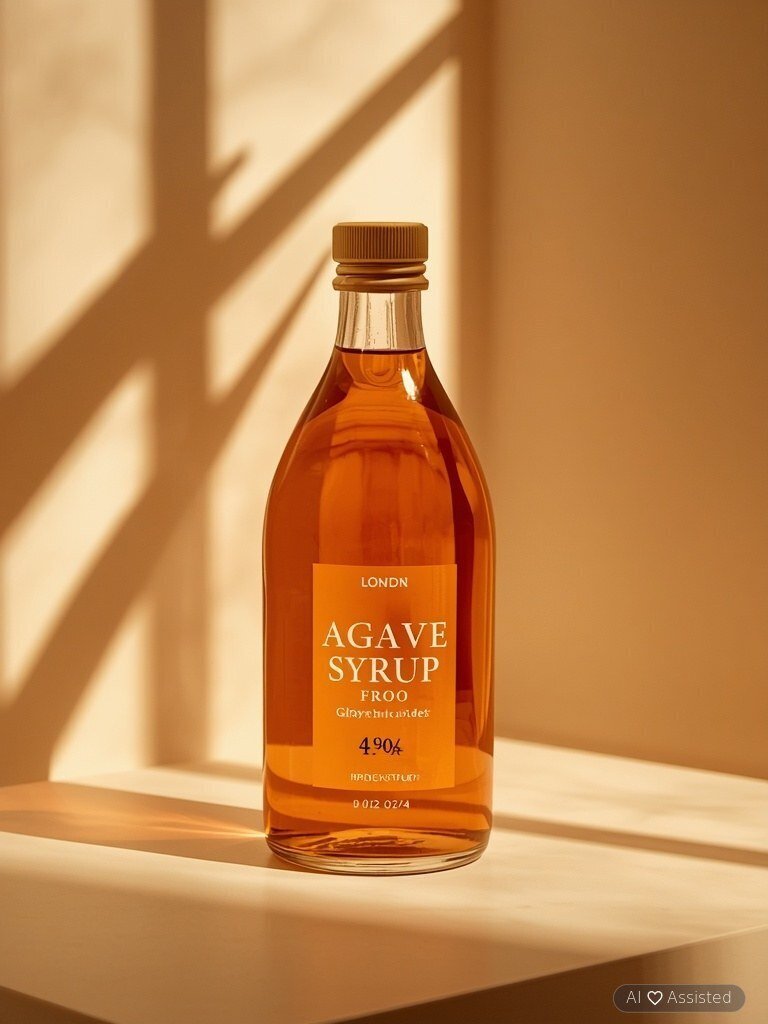
Agave syrup is an extract derived from the bark of various agave varieties, particularly americana and tequilana and salana. These plants are commonly found in western Mexico, where the production of syrups, also known as nectars, takes place. This type of Agave preparation gained its greatest popularity only in the 1990s due to their exceptional sweetness and wide culinary use. About 10% of the agave crops are used for syrup production, while the remaining portion is used in the manufacture of alcoholic beverages such as mezcal and tequila.
Meal Plan

Want to apply these guidelines in your daily diet?

Our smart diet generator creates a tailored meal plan in 3 minutes based on the recommendations in this article.

Extraction and Production of Agave Syrup – Traditional Processing Methods

The production of agave syrup necessitates meticulous selection of plants that have reached optimal maturity, with manual harvesting occurring approximately six years after initial planting. Prior to processing, each agave undergoes rigorous quality and ripeness assessment. The harvested raw materials are then subjected to mechanical grinding, followed by extraction using heated water maintained at a controlled temperature. The subsequent phase involves precise filtration alongside hydrolysis conducted under thermal conditions of approximately eighty degrees Celsius.

Further stages incorporate advanced filtration techniques designed to ensure the removal of impurities, succeeded by an evaporation process carried out at elevated temperatures exceeding ninety-five degrees Celsius. The final manufacturing step entails homogenization, which aims to achieve a uniform consistency with a smooth, lustrous surface—hallmarks of premium-grade agave syrup.

Agave nectar: Nutritional composition, metabolic properties, and comparative advantages over conventional sweeteners

Derived from the agave plant, this syrup exhibits an exceptionally concentrated profile of simple carbohydrates, constituting approximately 95% of its total mass. The predominant sugar component is fructose, which may comprise between 60% and 90% of the product’s weight. Owing to this substantial fructose content, agave syrup demonstrates a higher degree of sweetness while simultaneously presenting a lower glycemic index compared to refined table sugar, honey, or maple syrup. These characteristics position it as a potentially more favorable option for weight management strategies, and its plant-based origin further establishes it as a valuable inclusion in vegan and vegetarian dietary patterns.

Agave nectar – cost evaluation, glycemic index, and practical affordability in daily consumption

Agave, a plant native to climatic regions starkly contrasting with those found in Poland, cannot be viably cultivated within the country’s geographical boundaries, necessitating the importation of all agave-derived products—including its syrup—from overseas plantations. This logistical requirement directly translates into elevated retail prices that reflect the cumulative costs of transportation and customs duties. Standard containers of agave nectar, typically ranging in volume from 250 to 350 milliliters, are readily available through both digital marketplaces and brick-and-mortar retailers, with price points fluctuating between ten and twenty units of local currency. Assuming a single serving size of twenty milliliters, one container yields between twelve and seventeen servings, resulting in a per-serving cost of approximately eighty-four cents to one unit and eighteen cents. Owing to the predominant presence of fructose within its carbohydrate composition, agave syrup exhibits a lower glycemic index compared to conventional table sugar or honey. However, pinpointing an exact glycemic value proves challenging due to the inherent variability among agave species—some cultivars possess a higher fructose concentration, while others contain a more balanced ratio of glucose and fructose. A synthesis of data from academic literature and online sources suggests that the average glycemic index for high-fructose varieties hovers around thirty, whereas those with a more moderate sugar profile register closer to fifty.

Which viable alternatives to agave nectar should be considered for everyday use and beyond?

From both a health and environmental perspective, locally produced honey represents a far more advantageous choice compared to imported agave nectar. This natural sweetener undergoes minimal thermal processing—thereby preserving its valuable bioactive compounds—and boasts a wide range of applications extending beyond culinary uses to include homemade skincare and hair treatments. It is worth emphasizing that agave, the plant from which the syrup is derived, is cultivated primarily in subtropical regions, necessitating that the product travel thousands of kilometers before reaching European consumers. Such an extended supply chain not only incurs higher ecological costs but also increases the risk of nutritional degradation. An additional benefit of honey lies in its role in supporting local beekeeping operations, which contributes to the protection of pollinators—crucial agents in maintaining biodiversity. Furthermore, the choice between plant-based and animal-derived products like honey is not straightforward from an ethical standpoint; both beekeeping and monoculture agave farming carry environmental consequences, making it essential to make informed decisions that account for both health and ecological factors. Notably, the extraction of agave syrup requires the destruction of a mature, multi-year plant, which typically takes six to ten years to reach full growth.
Alicja Kowalska

Alicja Kowalska

✓

Diets Premium Expert

Diets Premium team expert. Specializes in nutrition plans, strength sports, and training plans.

View Profile →
Recommended articles in this category

Related Articles

Discover similar publications and expert insights.

Comprehensive Analysis of the Adverse Health Effects of Sugar-Sweetened Beverages and Juices
Pregnancy & Motherhood
Comprehensive Analysis of the Adverse Health Effects of Sugar-Sweetened Beverages and Juices
⏱ 2 min czytania 📚 Pregnancy & Motherhood
#Simple Carbohydrates #Obesity
Moderate Alcohol Consumption - Also Dangerous?
Alcoholic Beverages
Moderate Alcohol Consumption - Also Dangerous?
⏱ 4 min czytania
#Alcoholic Beverages #Beverages
Alcoholic Beverages in an Athlete’s Diet – Impact on Health and Physical Performance
Alcoholic Beverages
Alcoholic Beverages in an Athlete’s Diet – Impact on Health and Physical Performance
⏱ 5 min czytania
#Alcoholic Beverages #Alcoholic Drinks
Alcohol – What Not to Mix with Alcohol: Essential Knowledge
Health Consequences
Alcohol – What Not to Mix with Alcohol: Essential Knowledge
⏱ 6 min czytania
#Health Consequences #Alcoholic Beverages
Molasses – a viscous, sweet byproduct of sugar refining: characteristics, merits, and industrial as well as culinary applications
Food & Ingredients
Molasses – a viscous, sweet byproduct of sugar refining: characteristics, merits, and industrial as well as culinary applications
⏱ 4 min czytania 📚 Food & Ingredients
#Alcoholic Beverages #Bioactive Compounds
Traditional Danish cuisine: distinctive features, dining customs, and regional alcoholic beverages
Alcoholic Beverages
Traditional Danish cuisine: distinctive features, dining customs, and regional alcoholic beverages
⏱ 5 min czytania
#Alcoholic Beverages #Vegetarian Diet
Beer as a fermented beverage – classification of types, diversity of varieties, and comprehensive manufacturing process from raw materials to finished product
Alcoholic Beverages
Beer as a fermented beverage – classification of types, diversity of varieties, and comprehensive manufacturing process from raw materials to finished product
⏱ 6 min czytania
#Alcoholic Beverages #Fermented Drink
Homemade Blackcurrant Preserves: Artisanal Recipes for Jams, Syrups, Traditional Tinctures, and Fruit Wines
Nutritional Properties
Homemade Blackcurrant Preserves: Artisanal Recipes for Jams, Syrups, Traditional Tinctures, and Fruit Wines
⏱ 5 min czytania
#Nutritional Properties #Alcoholic Beverages
Homemade Cough Syrup with Onion, Garlic, and Ginger – How to Prepare It?
Nutrition
Homemade Cough Syrup with Onion, Garlic, and Ginger – How to Prepare It?
⏱ 4 min czytania 📚 Nutrition
#Onion #Onions
Aronia – Properties, Syrup, and Recipes. How to Use Aronia?
Fruit
Aronia – Properties, Syrup, and Recipes. How to Use Aronia?
⏱ 5 min czytania
#Fruit #Syrup
Agave – Fiber, Flower, Agave Syrup
Fiber
Agave – Fiber, Flower, Agave Syrup
⏱ 4 min czytania
#Fiber #Syrup
Aloe – Juice, Beverage, Ointment, Syrup… Recipes for the Aloe Beverage
Beverage
Aloe – Juice, Beverage, Ointment, Syrup… Recipes for the Aloe Beverage
⏱ 4 min czytania
#Beverage #Drink
Properties, Application, and Syrup from Ribwort Plantain Leaves (*Plantago lanceolata*) – for Wound Healing
Syrup
Properties, Application, and Syrup from Ribwort Plantain Leaves (*Plantago lanceolata*) – for Wound Healing
⏱ 3 min czytania
#Syrup
Medicinal properties of garlic - against colds, rhinitis, sinusitis, fungi, dandruff, and herpes
Warming Drinks
Medicinal properties of garlic - against colds, rhinitis, sinusitis, fungi, dandruff, and herpes
⏱ 4 min czytania
#Warming Drinks #Diabetes
Medicinal Properties of Mullein – Syrup, Tincture, and Respiratory Health Benefits
Medicinal Plants
Medicinal Properties of Mullein – Syrup, Tincture, and Respiratory Health Benefits
⏱ 3 min czytania
#Medicinal Plants #Syrup
Maple Syrup Urine Disease
Amino Acids
Maple Syrup Urine Disease
⏱ 3 min czytania
#Amino Acids #Metabolism
What are the characteristics and detrimental effects of glucose syrup?
Metabolic Diseases
What are the characteristics and detrimental effects of glucose syrup?
⏱ 4 min czytania
#Metabolic Diseases #Weight Gain
The onion - properties and applications... the onion in combating acne, scars, and hair care
Vegetables
The onion - properties and applications... the onion in combating acne, scars, and hair care
⏱ 4 min czytania 📚 Vegetables
#Syrup #Vegetable
The properties and function of quince syrup. How to manufacture quince syrup?
Quince
The properties and function of quince syrup. How to manufacture quince syrup?
⏱ 3 min czytania
#Quince #Syrup
Caution for the Glucose-Fructose Syrup!
In Syrup
Caution for the Glucose-Fructose Syrup!
⏱ 3 min czytania
#In Syrup #Syrup
Low-Sugar Peach Jam
Nutrition
Low-Sugar Peach Jam
⏱ 2 min czytania 📚 Nutrition
#Antioxidant #Peach
Guidelines for using melissa syrup during pregnancy and for children – recommended dosages and administration advice
Medicinal Plants
Guidelines for using melissa syrup during pregnancy and for children – recommended dosages and administration advice
⏱ 4 min czytania 📚 Medicinal Plants
#Health Benefits #Kids-friendly
Elderflower and Elderberry Syrup: Evidence-Based Benefits, Immune Support, and Preparation
Syrup
Elderflower and Elderberry Syrup: Evidence-Based Benefits, Immune Support, and Preparation
⏱ 5 min czytania
#Syrup
Spruce syrup is a natural remedy for coughs... How to make spruce syrup at home?
Cough Suppressant
Spruce syrup is a natural remedy for coughs... How to make spruce syrup at home?
⏱ 5 min czytania
#Cough Suppressant #Homemade
Pine cough syrup for children... how to prepare pine syrup?
Essential Oils
Pine cough syrup for children... how to prepare pine syrup?
⏱ 3 min czytania
#Essential Oils #Kids-friendly
Elderberry (Sambucus nigra): Health Benefits, Uses, and Syrup Recipes
Health Benefits
Elderberry (Sambucus nigra): Health Benefits, Uses, and Syrup Recipes
⏱ 6 min czytania
#Health Benefits #Syrup
Ribwort Plantain Syrup (Plantago lanceolata): Properties, Benefits, and Preparation Guide
Raw
Ribwort Plantain Syrup (Plantago lanceolata): Properties, Benefits, and Preparation Guide
⏱ 3 min czytania
#Raw #Syrup
„Nettle syrup – effect and recipe for its creation"
Herb
„Nettle syrup – effect and recipe for its creation"
⏱ 4 min czytania
#Herb #Syrup
Pine syrup... how to concoct a pine syrup?
Pregnancy & Motherhood
Pine syrup... how to concoct a pine syrup?
⏱ 4 min czytania 📚 Pregnancy & Motherhood
#Drink #Syrup
Medicinal lavender – essential oil, infusion, tincture, and lavender-based syrup
Syrup
Medicinal lavender – essential oil, infusion, tincture, and lavender-based syrup
⏱ 5 min czytania
#Syrup

Share