
2 min read
The Truth About the Five-Second Rule – Is It Safe to Eat Food Dropped on the Floor?

Wojciech Wiśniewski
✓
Diets Premium Expert • 23.10.2026
✓
Scientifically reviewed by a clinical dietitian:
This article has been peer-reviewed for adherence to IŻŻ, WHO, and PTGiP clinical nutritional standards.
| Diets Premium Expert Wojciech Wiśniewski | min read 2 min | Scientifically reviewed by a clinical dietitian 23.10.2026 |
Smart Voice
•Listen to the article content live
0:00
/
0:00
Key Takeaways
The five-second rule is one of the most widespread urban food hygiene myths, claiming that dropped food remains free of bacterial contamination if retrieved within five seconds. Rigorous microbiological research conducted by Clemson University and Rutgers University has thoroughly investigated this claim. Discover the scientific realities governing microbial transfer, how floor surface type and food moisture dictate bacterial transmission, and when dropped food must be discarded immediately.
Meal Plan
Want to apply these guidelines in your daily diet?
Our smart diet generator creates a tailored meal plan in 3 minutes based on the recommendations in this article.
Origins and Cultural Lore of the Five-Second Rule
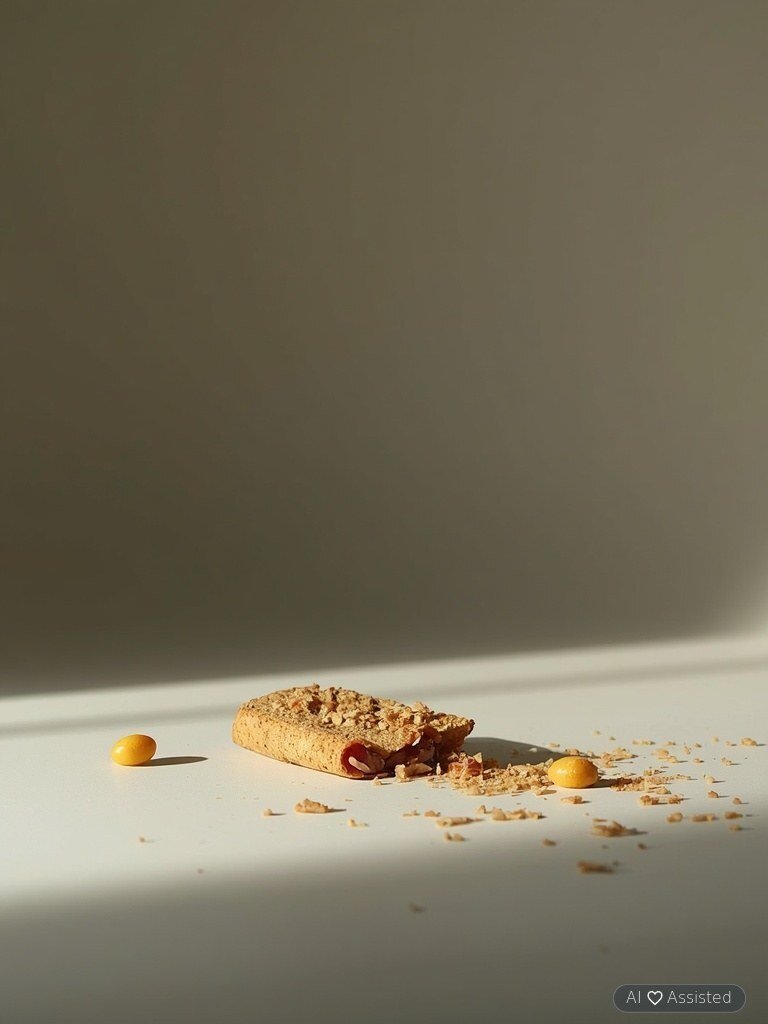
The five-second rule (often phrased as the three- or ten-second rule in different cultures) is a pervasive popular belief asserting that pathogenic microorganisms require several seconds to migrate from a floor surface onto dropped food. While frequently cited casually, many individuals routinely consume dropped bread, snacks, or fruit based on this misconception. However, this folk belief fundamentally overlooks microbiological reality: microbial adhesion is instantaneous upon physical contact, governed by surface adhesion forces rather than an arbitrary countdown timer.
Scientific Investigations – Clemson and Rutgers University Findings
In 2007, food scientists led by Dr. Paul Dawson at Clemson University published landmark findings testing the cross-contamination of Salmonella typhimurium onto food items exposed to contaminated wood, tile, and carpet for 5, 30, and 60 seconds. Bacterial transfer occurred virtually instantaneously. In 2016, Dr. Donald Schaffner at Rutgers University expanded this research across 128 permutations of surface materials, food types, and contact durations down to less than one second. The data unequivocally verified that Enterobacter aerogenes crosses onto food immediately upon impact, disproving any safety window.
Influence of Flooring Material – Carpet, Tile, Laminate, and Hardwood
Research revealed counter-intuitive dynamics regarding flooring materials. Dropping food onto carpet resulted in a microbial transfer rate of less than 1%, because fibrous carpet tufts minimize direct continuous surface contact with the food item. Conversely, smooth and non-porous surfaces such as ceramic tiles, laminate wood, and stainless steel yielded massive bacterial transmission rates ranging from 48% to 70%. Nevertheless, carpets harbor chronic reservoirs of deep-seated dust, pet dander, and spore-forming microbes, rendering consumption from carpets equally hazardous.
Food Moisture and Pathogen Adhesion Dynamics
The single most predictive determinant of microbial transfer is food moisture. High-moisture, sticky, or viscous foods – such as watermelon, sliced meat, soft cheeses, and cooked pasta – rapidly absorb surface moisture and bacteria, exhibiting instantaneous contamination rates. Dry items (such as saltine crackers, hard pretzels, or dry biscuits) experience significantly lower bacterial adhesion. Crucially, however, virulent pathogens such as Salmonella enterica, Listeria monocytogenes, or Shiga toxin-producing E. Coli require an infectious dose of fewer than 10–100 bacterial cells to trigger severe gastrointestinal illness.
Practical Food Hygiene – When to Discard Dropped Food
In light of definitive microbiological evidence, the five-second rule must be recognized as an unsafe myth. Any food dropped on floors in public venues, healthcare facilities, busy walkways, or homes with domestic animals should be discarded without hesitation. Strict adherence to food safety is paramount when preparing food for vulnerable populations, including young children, pregnant women, the elderly, and immunocompromised patients. When in doubt, prioritize gastrointestinal health over avoiding food waste.
Tags

Wojciech Wiśniewski
✓Diets Premium Expert
Diets Premium team expert. Specializes in nutrition plans, strength sports, and training plans.
View Profile →




