PRO
6 min read
Strategies against cellulite - tablets, massaging device, coffee scrub, and Chinese bubbles

Mia Hoffmann
✓
Diets Premium Expert • 24.09.2026
✓
Scientifically reviewed by a clinical dietitian:
This article has been peer-reviewed for adherence to IŻŻ, WHO, and PTGiP clinical nutritional standards.
| Diets Premium Expert Mia Hoffmann | min read 6 min | Scientifically reviewed by a clinical dietitian 24.09.2026 |
Smart Voice
•Listen to the article content live
0:00
/
0:00
Key Takeaways
Cellulite is becoming an increasingly common ailment primarily affecting women - it is not just an unsightly appearance of the skin's surface, but also comprises a series of serious disturbances within the body. With the advancement of medical and cosmetic knowledge, as well as the impact of proper nutrition on the development of cellulite, various skin issues can be effectively prevented and treated.
Meal Plan
Want to apply these guidelines in your daily diet?
Our smart diet generator creates a tailored meal plan in 3 minutes based on the recommendations in this article.
PRO Content
PRO
This article is professional premium content (PRO) provided in its entirety.
Subcutaneous adipositas dysmorphia (colloquially: "orange-peel skin phenomenon") – aetiological factors, classification, and progressive stages
Subcutaneous adipositas dysmorphia, colloquially referred to as the "orange-peel skin" phenomenon, represents a structural disruption of the hypodermis, dermis, and epidermis, precipitated by impairments in lymphatic drainage and microcirculatory blood flow. These alterations result in the thickening of connective tissue fibres within adipose deposits and the formation of characteristic dimples and nodules. The condition predominantly manifests in anatomical regions with the highest concentration of subcutaneous fat—namely the abdomen, hips, buttocks, and thighs. The classification outlined below incorporates both clinical criteria and the severity of pathological changes, distinguishing variants such as the oedematous type (accompanied by heaviness and pain in the limbs), the aqueous form (linked to peripheral circulatory disorders), the firm variant (common in women over 40 with sedentary lifestyles), the lipidic type (associated with dysregulated lipid metabolism), and the mixed presentation. Disease progression occurs in distinct stages—ranging from subtle reductions in skin elasticity (Stage I) to pronounced thickening and furrowing (Stage IV), often coexisting with oedema and painful symptoms. The aetiology of cellulite is multifactorial, with oestrogens, genetic predispositions, lifestyle factors (including dietary habits and physical activity levels), and adipose tissue distribution playing pivotal roles. Owing to anatomical and hormonal disparities, this condition predominantly affects women, among whom the percentage of body fat is statistically higher than in men.
Oral dietary supplements in tablet form designed to support the reduction of "orange peel" skin texture irregularities
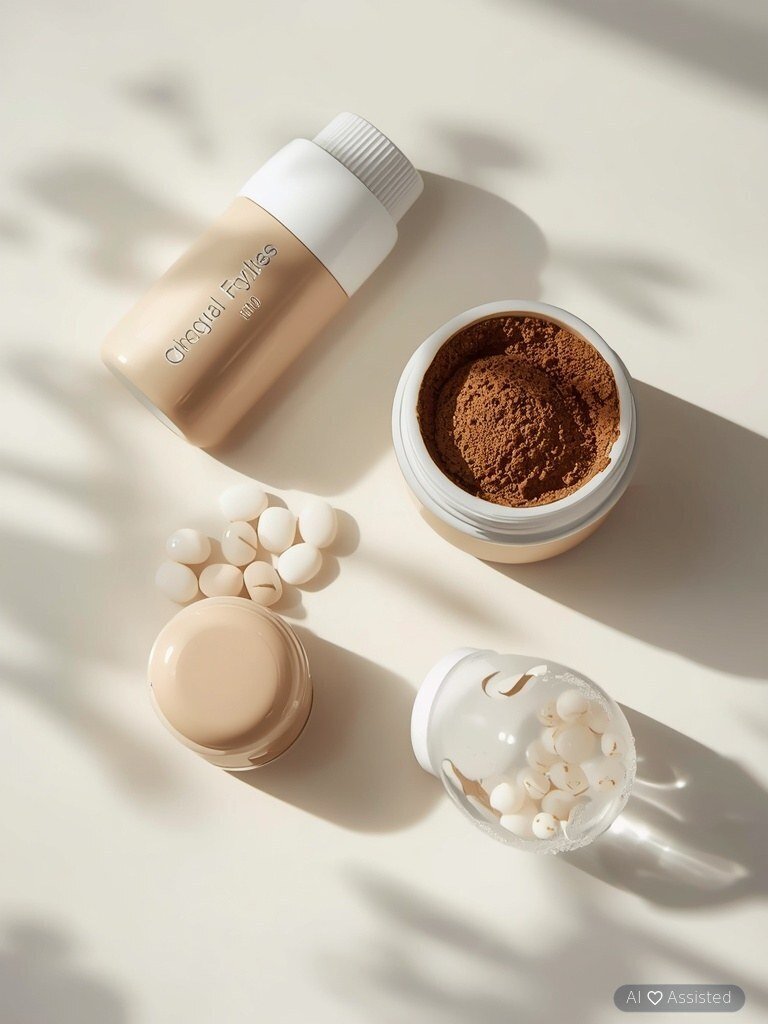
Pharmacies and drugstores offer oral tablet formulations specifically designed for women experiencing or predisposed to developing cellulite—commonly referred to as the "orange peel" skin texture. The primary active constituents of these supplements typically include polyunsaturated fatty acids from the omega-3 family (most frequently derived from fish oil) and omega-6 fatty acids (such as those found in evening primrose oil), alongside standardized botanical extracts, including *Centella asiatica* (Asiatic pennywort), common nettle (*Urtica dioica*), and brown seaweed from the *Fucus* genus (bladderwrack).
The biochemical mechanism of polyunsaturated fatty acids involves enhancing cellular membrane fluidity, which consequently improves skin elasticity, smoothness, and overall resilience. Nettle, rich in flavonoids and potassium salts, exerts a mild diuretic effect that facilitates the elimination of excess interstitial fluid—particularly beneficial during the premenstrual phase when subcutaneous edema tends to worsen. *Centella asiatica*, a herb with a long history in traditional Asian medicine, demonstrates vasoprotective and microcirculatory benefits: it promotes angiogenesis in peripheral tissues, stimulates fibroblast proliferation (cells responsible for extracellular matrix synthesis), and upregulates the production of structural proteins such as type I/III collagen, elastin, and hyaluronic acid. These processes collectively contribute to skin repair, enhanced hydration, improved oxygenation, and a reduction in visible surface irregularities.
A systematic review conducted by Bylka et al. suggests that formulations containing standardized *Centella asiatica* extract may be recommended as an adjunctive treatment for cellulite. However, current evidence does not establish a definitive therapeutic dosage or duration of supplementation required to achieve clinically meaningful aesthetic improvements. Further large-scale, randomized controlled trials are therefore warranted to ascertain both the long-term efficacy and safety profile of these ingredients.
Anti-cellulite therapeutic device employing vacuum and mechanical tissue stimulation
Vacuum massage therapy represents one of the most widely endorsed and evidence-based approaches for both preventing and mitigating the manifestations of *orange-peel skin*. Its operational mechanism relies on controlled negative pressure, which lifts and methodically kneads sections of skin affected by cellulitic alterations. This process enhances microcirculation within subcutaneous adipose tissue, stimulates lipid metabolism, and facilitates lymphatic drainage—thereby promoting the expulsion of accumulated toxins and excess interstitial fluid. Consistent adherence to a personalized treatment schedule is essential for achieving and sustaining optimal long-term therapeutic outcomes.
Homemade coffee scrub: An effective method for cellulite reduction and skin condition enhancement
A body scrub is a specialized cosmetic formulation designed to gently yet effectively exfoliate dead skin cells from the skin’s surface. This process facilitates deeper penetration of bioactive compounds present in skincare products—such as oils, lotions, creams, or balms—thereby significantly enhancing their therapeutic efficacy. In recent years, coffee has emerged as a highly sought-after ingredient in premium skincare formulations due to its remarkable properties. Chief among these is caffeine, a natural alkaloid that accelerates cellular metabolism, stimulates microcirculation within tissues, and expedites lipolysis—the breakdown of fat molecules stored in adipocytes, which are subsequently utilized by the body as an energy source. Additionally, coffee beans contain valuable organic acids, including malic acid, acetic acid, and chlorogenic acid, which exert keratolytic effects: they smooth the skin’s surface, reinforce its elasticity, and improve overall texture. For these reasons, mechanical exfoliation using ground coffee serves as an invaluable adjunct in treatments aimed at reducing adipose tissue, contouring the body, and mitigating the appearance of "orange peel" skin. Notably, this procedure can be easily performed at home by combining finely ground coffee beans with a preferred shower gel or plant-based oil to create a thick, spreadable paste. Regular massages with this homemade scrub not only effectively remove keratinized skin layers but also stimulate blood and lymphatic circulation, contributing to tissue detoxification. An added benefit is the invigorating aroma of coffee, which introduces a relaxing element, making the at-home spa experience even more enjoyable. However, it is worth noting that coffee particles may leave temporary residue on bathtub or shower surfaces, representing the sole, albeit minor, drawback of this skincare method.
Chinese Cupping Massage for Cellulite Reduction: Efficacy and Practical Applications
As the final procedure in our comprehensive evaluation of cellulite reduction methods, we examine Chinese cupping massage—a specialized vacuum therapy widely adopted in aesthetic clinics for its dual capacity to diminish the appearance of "orange peel" skin while simultaneously enhancing overall skin firmness and body contouring. While individual results may vary based on physiological factors, this technique is consistently ranked among the most efficacious non-surgical anti-cellulite interventions by both practitioners and patients. The therapeutic mechanism relies on controlled negative pressure generated by a flexible silicone cup, which, when applied to the skin, stimulates microcirculation, accelerates lymphatic drainage, and facilitates the removal of metabolic waste products. Although the procedure may initially cause mild discomfort—particularly in individuals with sensitive skin—regular sessions yield measurable improvements in subcutaneous tissue elasticity and localized edema reduction. Strict contraindications must be observed, including venous insufficiency, active dermatological inflammation, coagulation disorders, menstruation, and pregnancy, as disregard for these precautions may lead to adverse health outcomes. For enhanced results, clinicians often recommend complementing cupping with mechanical exfoliation treatments (e.g., coffee scrub peels), which further amplify the skin-smoothing and rejuvenating effects of the therapy.

Mia Hoffmann
✓Diets Premium Expert
Diets Premium team expert. Specializes in nutrition plans, strength sports, and training plans.
View Profile →