Leek (*Allium porrum*): Health Benefits, Nutritional Composition, and Culinary Insights

| Diets Premium Expert Olivia Davis | min read 3 min | Scientifically reviewed by a clinical dietitian 23.10.2026 |
Smart Voice
•Listen to the article content live
Leek (Allium porrum L.) is a robust, aromatic vegetable with a venerable culinary and medicinal heritage, belonging to the Amaryllidaceae family and the genus Allium. Cultivated across the Mediterranean and Europe for millennia, leeks serve not merely as an essential aromatic foundation for broths, stews, and soups, but as a nutritionally dense functional food with validated health benefits. Like its botanical relatives garlic and onion, leek is abundant in bioactive organosulfur compounds, cardioprotective polyphenols (notably kaempferol), and soluble prebiotic fibers such as inulin. With an exceptionally modest caloric density, it delivers significant amounts of phylloquinone (vitamin K1), ascorbic acid, and folates, promoting cardiovascular health, gut microbiome equilibrium, and immune function. This guide explores the botanical traits, nutrient density, and cultural legacy of the leek.
Want to apply these guidelines in your daily diet?
Our smart diet generator creates a tailored meal plan in 3 minutes based on the recommendations in this article.
Leek (*Allium porrum*) – Botanical Characteristics and Historical Background
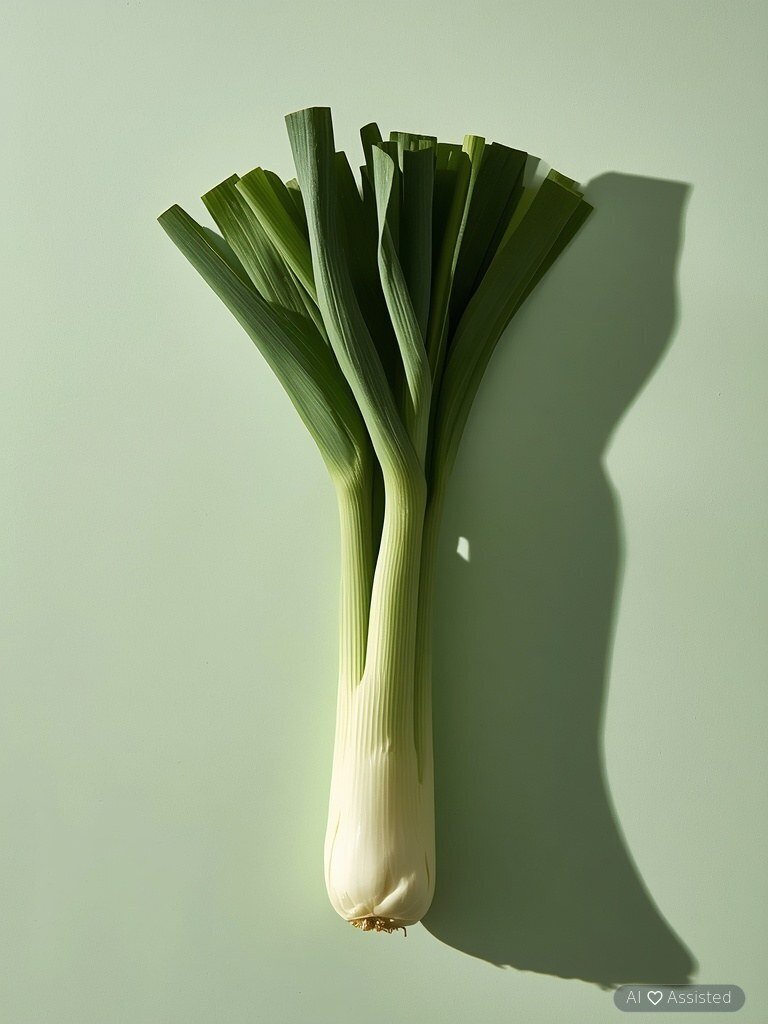
Leek (Allium porrum L., taxonomically classified also as Allium ampeloprasum var. porrum) is a biennial herbaceous plant typically cultivated as an annual crop. During its initial vegetative cycle, it develops a long, cylindrical pseudostem composed of tightly wrapped, etiolated leaf sheaths terminating in broad, fan-like dark green leaves. Indigenous to wild progenitors scattered across the eastern Mediterranean basin and Asia Minor, leeks were widely cultivated and revered in ancient Egypt, classical Greece, and Rome. Roman Emperor Nero earned the historical moniker 'Porrophagus' (the leek-eater) due to his daily consumption of stewed leeks, which he believed safeguarded the resonance, pitch, and stamina of his singing voice. Roman legions subsequently introduced leeks throughout central and western Europe, where monastic gardens cemented their agricultural status.
Cardiovascular and Health-Promoting Bioactive Compounds in Leeks
The pungent aroma and characteristic flavor of leeks stem from volatile organosulfur compounds, including alliin and diallyl trisulfides. Upon cellular maceration, the endogenous alliinase enzyme catalyzes the generation of thiosulfinates possessing robust antibacterial, antifungal, and antioxidant capabilities. Furthermore, leeks represent one of the richest botanical sources of kaempferol—a dietary flavonol with profound cardioprotective and anti-inflammatory properties. Kaempferol protects vascular endothelium against oxidative stress, stimulates endothelial nitric oxide synthase (eNOS) to promote vasodilation, and helps maintain healthy blood pressure levels. Additionally, leeks provide substantial concentrations of inulin, a prebiotic soluble fructan that nourishes beneficial colonic bacteria, improves lipid profiles by reducing LDL cholesterol, and enhances glycemic control.
Nutritional Value, Vitamins, and Micronutrient Density
Leek is an exceptionally nutrient-dense vegetable with minimal caloric density—delivering only 25 to 30 kcal per 100 g of fresh edible portion—making it an exemplary staple for calorie-controlled, weight-management, and metabolic diets. It comprises more than 85% water while providing 1.5 g of plant protein and nearly 2 g of dietary fiber. In terms of micronutrients, leek stands out for its high concentration of phylloquinone (vitamin K1), where a 100 g serving fulfills roughly 40% of the recommended daily intake required for hepatic synthesis of clotting factors and osteocalcin carboxylation. Leek also supplies ascorbic acid (vitamin C, ~12 mg/100 g), beta-carotene (provitamin A, concentrated in the green tops), folates (vitamin B9), and essential minerals including potassium (supporting fluid-electrolyte homeostasis), iron, magnesium, and manganese.
Cultural Heritage, Welsh National Symbolism, and Culinary Applications
Leek carries deep cultural significance, most notably serving as the proud national emblem of Wales. Legend recounts that during a 6th-century clash against Saxon invaders (often tied to Saint David), the patron saint of Wales commanded Welsh warriors to attach leeks to their caps to readily distinguish comrades from adversaries in the fray. Today, the leek proudly adorns Welsh military insignia, and rugby union fans famously brandish leeks in stadium stands during the Six Nations Championship. In international gastronomy, leek forms the foundational cornerstone of French culinary classics, including creamy vichyssoise and potage Parmentier. Its mellow, subtly sweet allium profile harmonizes elegantly with baked fish, quiches, savory tarts, and braised vegetable medleys, providing refined culinary versatility.
Tags

Olivia Davis
✓Diets Premium Expert
Diets Premium team expert. Specializes in nutrition plans, strength sports, and training plans.
View Profile →