5 min read
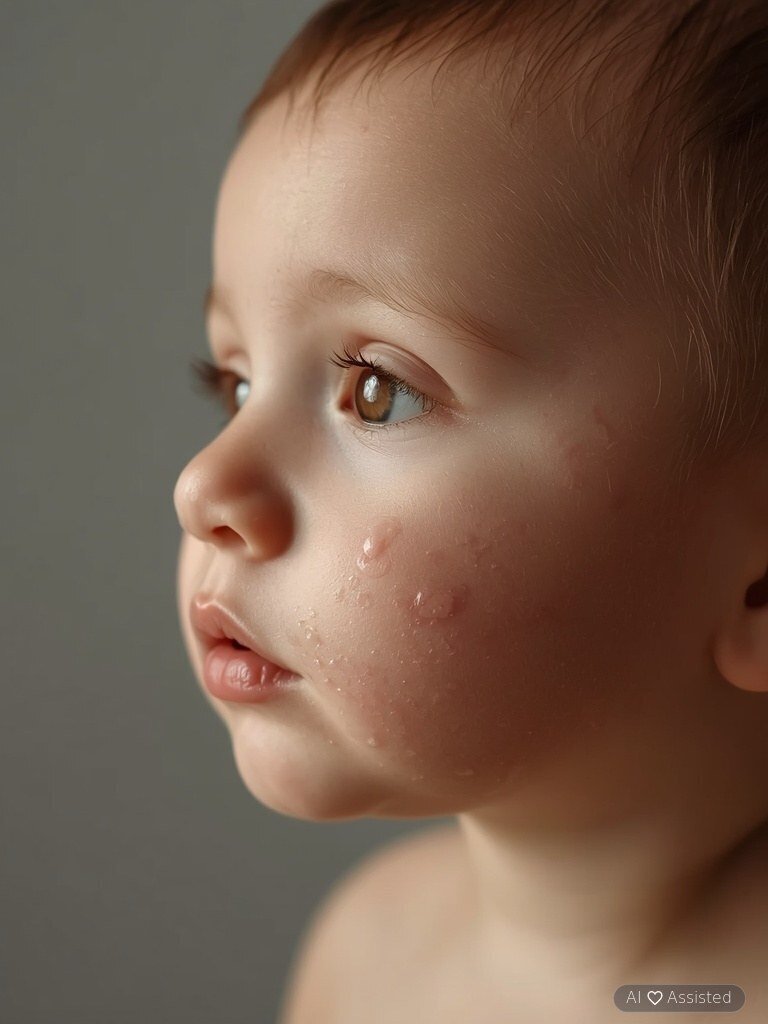
Infant acne treatment - what about infant acne?

Oliwia Kaczmarek
✓
Diets Premium Expert • 24.09.2026
✓
Scientifically reviewed by a clinical dietitian:
This article has been peer-reviewed for adherence to IŻŻ, WHO, and PTGiP clinical nutritional standards.
| Diets Premium Expert Oliwia Kaczmarek | min read 5 min | Scientifically reviewed by a clinical dietitian 24.09.2026 |
Smart Voice
•Listen to the article content live
0:00
/
0:00
Key Takeaways
The skin of newborns varies from that of adults in several respects... It is in the process of maturation, making it more challenging for it to carry out its intended functions... The corneal layer is thinner and more sensitive, offering inadequate protection against external elements... The sebaceous and sweat glands are not yet fully developed in infants... Because of these factors, diverse skin conditions frequently emerge in the early months of a baby's life... Among the benign and temporary skin symptoms that appear in the early stages of life is infant acne [1]... Let's explore this subject further.
Meal Plan
Want to apply these guidelines in your daily diet?
Our smart diet generator creates a tailored meal plan in 3 minutes based on the recommendations in this article.
Neonatal acneiform eruption in infants
Approximately one-fifth of all newborn infants exhibit inflammatory cutaneous lesions characterized by small papules, pustules, and, less frequently, closed comedones. These dermatological manifestations primarily localize to the facial region—most prominently on the cheeks, with occasional involvement of the forehead or chin [2]. Epidemiological data indicate a higher prevalence among male infants compared to females. The precise pathophysiological mechanisms underlying this condition remain incompletely elucidated within pediatric dermatology. The prevailing scientific hypothesis attributes the development of these efflorescences to excessive stimulation of the sebaceous glands by androgens—both those endogenously produced by the infant and maternal hormones transmitted transplacentally during gestation or via breast milk during lactation. Clinical symptoms typically emerge either immediately postpartum or within the first few weeks of life. The lesions classically present as pink-to-red inflammatory papules and pustules, whereas traditional comedones are comparatively rare. Unlike acne vulgaris, this neonatal variant does not affect the trunk, with no involvement of the back or chest. In certain documented instances, the eruption may also arise as an adverse reaction to skincare products containing mineral oils, which occlude the sebaceous duct openings [3].
Duration of infantile acne: When does it resolve and what distinguishes early from late-onset forms?
Infantile acne may occasionally be present at birth, though its initial manifestations typically emerge between the second and fourth week of a newborn’s life. In most instances, the cutaneous lesions resolve spontaneously within the window of the sixth to twelfth month of the child’s development, as documented in clinical observations [2]. A delayed variant also exists, which only becomes apparent between the third and sixth month of infancy. Under these circumstances, symptoms subside prior to the child reaching three years of age, thereby categorizing this condition as either infantile or early childhood acne in accordance with specialized diagnostic criteria [4].
Baby acne and protein spoilage
Protein stain on the baby's skin is one of the most common symptoms of food allergy. It causes crumbs and redness. It most commonly occurs on the cheeks and behind the ears. It also causes a rash on the neck, pelvis and limbs. In case of cow's milk allergy, skin symptoms sometimes disappear and disease occurs elsewhere, e.g. in the respiratory tract. Allergies may also be accompanied by vomiting, lack of appetite, central arthritis, etc. [5]. If symptoms appear, a doctor may ask if the protein is allergic to the cow.
Neonatal and infantile acne therapy – management strategies and pharmacological guidelines
Infantile acne, clinically referred to as *acne neonatorum* or *acne infantum*, typically resolves spontaneously as sebaceous glands regress, usually within the first few months of life. However, in cases of severe cutaneous lesions or prolonged persistence, targeted topical therapy may become necessary. The most frequently prescribed agent is erythromycin, available as a gel or solution for twice-daily application. Alternatively, combinations of erythromycin with zinc-based preparations or custom-compounded zinc formulations are employed in clinical practice. Medical literature further substantiates the efficacy of oral isotretinoin in managing severe infantile acne, particularly in cases refractory to topical treatments and oral antibiotics. Isotretinoin is also indicated when there is a significant risk of scarring. The optimal dosing regimen for this retinoid remains undefined—some clinicians advocate for a cumulative total dose of 120 mg/kg body weight, whereas others recommend discontinuing therapy immediately upon symptom resolution. Conventional dosing ranges from 0.2 to 2.0 mg/kg body weight per day, with treatment durations spanning four to fourteen months. Isotretinoin is generally well tolerated in pediatric patients, and adverse effects, when they occur, are typically mild and transient in nature.
How to manage neonatal acne? Evidence-based home care and skincare recommendations
Neonatal acne, clinically referred to as *acne neonatorum*, is a benign and transient dermatological condition that typically resolves spontaneously within a few weeks to months without requiring medical intervention. Research indicates that its occurrence does not predispose infants to adolescent acne during puberty [1]. While pharmacological treatment is seldom necessary, several evidence-based home care strategies can facilitate healing and alleviate symptoms. It is critical to avoid any mechanical disruption of lesions—such as squeezing or scratching—as this may precipitate inflammation, secondary bacterial infections, and exacerbation of acneiform eruptions. Gentle, fragrance-free cleansers are strongly recommended; conversely, the excessive application of emollients (e.g., oils, lotions) or layered skincare products may compromise the skin’s barrier function and worsen the condition. Clothing selection also plays a pivotal role: synthetic fabrics should be replaced with breathable, natural fibers (e.g., cotton) to minimize irritation. Additionally, preventing overheating is essential, as elevated body temperature can stimulate sebum production, thereby promoting lesion formation. Given that neonatal skin remains structurally immature and highly susceptible to environmental stressors, a minimalist yet consistent skincare regimen is advised. Should the acne persist beyond three to four months or demonstrate severe progression, consultation with a pediatrician or dermatologist is warranted to evaluate the potential need for targeted therapeutic measures.
Tags

Oliwia Kaczmarek
✓Diets Premium Expert
Diets Premium team expert. Specializes in nutrition plans, strength sports, and training plans.
View Profile →