PRO
7 min read
How to Strengthen Your Energy Before the Upcoming Autumn and Winter Months

Alicja Kowalska
✓
Diets Premium Expert • 25.09.2026
✓
Scientifically reviewed by a clinical dietitian:
This article has been peer-reviewed for adherence to IŻŻ, WHO, and PTGiP clinical nutritional standards.
| Diets Premium Expert Alicja Kowalska | min read 7 min | Scientifically reviewed by a clinical dietitian 25.09.2026 |

Smart Voice
•Listen to the article content live
0:00
/
0:00
Key Takeaways
The imminent autumn and winter are associated with a series of weather changes that can affect our health. Lower temperatures, shorter days, and less sunlight can increase the risk of contracting infections. Therefore, it is important to take care of one's health to avoid catching a cold and to prepare the body for the approaching autumn and winter period.
Meal Plan
Want to apply these guidelines in your daily diet?
Our smart diet generator creates a tailored meal plan in 3 minutes based on the recommendations in this article.
PRO Content
PRO
This article is professional premium content (PRO) provided in its entirety.
The role of consistent physical exercise in enhancing immune defense mechanisms: a scientific evidence review and practical guidelines
Insufficient levels of physical activity or complete sedentary behavior constitute a significant risk factor for the development of numerous pathological conditions, including atherosclerotic cardiovascular disease, insulin-resistant type 2 diabetes mellitus, and depressive affective disorders. The systematic practice of exercise serves not only as a preventive measure against these diseases but also exerts a multifaceted, beneficial influence on the functional efficiency of the immune system. The underlying mechanisms encompass: (1) the enhancement of natural killer (NK) cell activity, whose cytotoxic capabilities facilitate the elimination of aberrant cells—such as malignant or pathogen-infected cells—as demonstrated in studies by Weyh, Krüger, and Strasser (2020); (2) the modulation of inflammatory responses through the suppression of pro-inflammatory cytokines and monocytes, concomitant with an increase in regulatory T lymphocytes, thereby improving defense against diverse microorganisms (analysis by Gleeson et al., 2011); (3) the counteraction of immunodepression, a phenomenon characterized by diminished immune reactivity to antigens (research by Romeo et al., 2010). However, it is critical to emphasize that excessively intense training regimens may yield counterproductive effects—namely, the weakening of immunological barriers—as evidenced by observations of 100 young men (75 American football players and 25 control subjects), among whom a 12-month period of exhaustive training correlated with an elevated incidence of upper respiratory tract infections (Fahlman & Engels, 2005). In contrast, moderate activity (e.g., 45 minutes daily, five days per week) in 115 postmenopausal women reduced the frequency of common cold episodes from 48% to 30% compared to a group performing only stretching exercises (study by Chubak et al., 2006).
The significance of nutritional intake and supplementation in fortifying the body’s immune defenses: a scientific and applied perspective
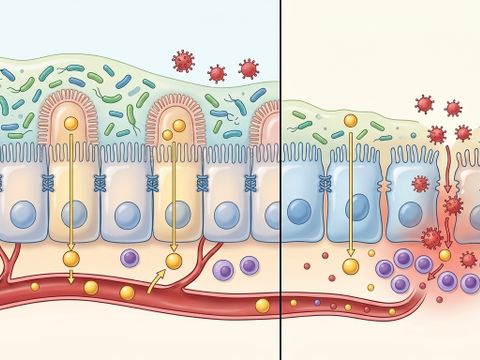
Clinical evidence, including findings from a 2019 study by D.C. Nieman and L.M. Wentz, strongly advises against engaging in strenuous physical activity during active infection or at the onset of initial symptoms. A meticulously balanced daily diet exerts a profound influence on overall health, with particular relevance to the optimal performance of the immune system. This relationship arises because food serves as the primary source of essential macro- and micronutrients, deficiencies of which may disrupt physiological equilibrium. It is critical to acknowledge, however, that the bioavailability of exogenous amino acids, trace elements, and vitamins derived from dietary sources is frequently suboptimal—particularly among populations with elevated metabolic demands, such as elite athletes, individuals experiencing chronic stress, or pregnant women. In these scenarios, the strategic incorporation of high-quality supplemental formulations may provide meaningful support. Persistent deficiencies in vitamins and minerals commonly manifest as impaired immune competence, thereby predisposing individuals to heightened susceptibility to viral and bacterial pathogens. While all micronutrients contribute vitally to bodily functions, emerging scientific consensus—including a 2023 publication by A. Gasmi et al.—highlights that certain compounds play an especially pivotal role in modulating immune responses. Beyond the well-documented benefits of ascorbic acid and cholecalciferol, researchers have identified additional key factors whose mechanisms warrant further systematic investigation: these prominently include zinc, selenium, targeted probiotics, and omega-3 fatty acids, which are explored in detail throughout the following chapters.
Zinc – an indispensable trace mineral in human nutrition
Zinc represents an essential nutritional micronutrient primarily sourced from animal-derived foods, including dairy products (such as milk, cheese, and yogurt), various meats, and fish or seafood. Smaller yet meaningful quantities of this mineral are also present in whole-grain cereals—such as brown rice or oats—as well as in legumes like lentils or chickpeas. Comprehensive scientific reviews, including a 2020 meta-analysis conducted by Wang M.X., Win S.S., and Pang J., suggest that consistent zinc supplementation may accelerate recovery from upper respiratory viral infections, including the common cold, while simultaneously alleviating the severity of associated symptoms. Consequently, this reduces the overall physiological burden imposed by the illness on the body.
Magnesium – an indispensable mineral for cellular metabolic regulation and physiological equilibrium
Magnesium constitutes an essential dietary mineral that serves as a cofactor in over 300 enzymatic reactions within the human body, including protein synthesis, blood pressure modulation, and neuromuscular transmission. Primary dietary sources of this bioelement include walnuts, sunflower seeds, spinach, brown rice, and dark chocolate with a minimum cocoa content of 70%. Epidemiological research underscores that chronic magnesium deficiency is associated with heightened systemic inflammation of metabolic origin, potentially contributing to the progression of non-communicable diseases. A notable insight emerges from a meta-analysis published in *Nutrients* (2022), wherein Mark and Razzaque demonstrated a statistically significant correlation between optimal magnesium levels and a reduced risk of severe SARS-CoV-2 infection outcomes among hospitalized patients, thereby suggesting a potential prophylactic role for magnesium supplementation in mitigating complication risks.
Seleno-compounds and their bioactive derivatives in health applications
Owing to its highly potent antioxidative properties, selenium plays a pivotal role in counteracting reactive oxygen species that inflict damage upon cellular architectures. Consequently, targeted supplementation with selenium assumes heightened significance for individuals battling neoplastic diseases, wherein pronounced impairments in immune system functionality are commonly observed—factors that further exacerbate both therapeutic interventions and the body’s intrinsic capacity for recovery.
Folic acid (vitamin B9) – immunological mechanisms and microbiome interactions
Folic acid, naturally found in foods such as nuts, sunflower seeds, and asparagus, plays a pivotal role in modulating immune responses, particularly through its influence on B lymphocytes, which exhibit anti-inflammatory and antiviral properties. However, scientific evidence suggests that prolonged supplementation with high doses of this vitamin may lead to a reduction in natural killer (NK) cell populations and impair their cytotoxic functionality, as documented in studies such as those by C. Paniz et al. (2017). Furthermore, contemporary research is increasingly focused on other dietary components that may enhance immune function, including beta-glucans—polysaccharides present in the cell walls of edible fungi and cereals like oats, wheat, and rye. Their primary effects involve the activation of NK cells and macrophages, as well as interactions with receptors on immune cells. Additionally, the gut microbiome plays a critical role in immune regulation, with quantitative or qualitative disruptions often associated with diminished immune defenses and heightened susceptibility to infections. Consequently, the use of probiotic supplements is frequently recommended, with their efficacy substantiated in multiple clinical trials, including those involving endurance athletes and children with recurrent respiratory infections.
Green therapy: How immersion in nature fortifies the body’s immune defenses – empirical evidence and actionable insights
While the crisp, overcast conditions of autumn and winter may discourage outdoor activities, deliberately leveraging periods of favorable weather to maximize exposure to natural environments can yield substantial health dividends. Empirical research confirms that immersion in forested ecosystems extends beyond mere stress alleviation, exerting measurable effects on immunological markers. In a structured experimental protocol involving twelve healthy male participants—all employed in high-stress corporate environments—a three-day field excursion was conducted across wooded terrain. Over the course of the intervention, subjects covered a cumulative distance of approximately 7.5 kilometers before returning to urban settings on the final day. Pre- and post-intervention blood analyses revealed a statistically significant elevation in both the quantitative presence and functional efficacy of natural killer (NK) cells. Notably, these immunological enhancements persisted for a full seven days following the conclusion of the nature-based exposure (Li et al., 2008). Parallel findings regarding NK cell parameters were observed in a separate study involving thirteen healthy women, with beneficial modifications enduring for over 30 days post-intervention (Li et al., 2008). These data collectively suggest that systematic, intentional engagement with natural settings may serve as a viable strategy for bolstering immune resilience and sustaining elevated defensive capacity over time. The underlying mechanism is plausibly linked to phytoncides—volatile bioactive compounds emitted by vegetation that constitute the essential oil profiles of coniferous and deciduous trees. Constituents such as α-pinene and limonene exhibit well-documented antimicrobial and immunomodulatory properties, which have been harnessed in aromatherapy applications (Li, 2010). A comprehensive approach to immune fortification should integrate physical activity, balanced nutrition, targeted supplementation, and consistent nature exposure—elements that can be seamlessly incorporated into daily routines year-round, irrespective of seasonal variations.
Tags

Alicja Kowalska
✓Diets Premium Expert
Diets Premium team expert. Specializes in nutrition plans, strength sports, and training plans.
View Profile →