Edible Insects as a New Class of Food Products

Wojciech Wiśniewski
✓
Diets Premium Medical Expert • 23.03.2026
Smart Voice
Listen to the article content live
✓
Scientifically reviewed by a clinical dietitian:
This article has been peer-reviewed for adherence to IŻŻ, WHO, and PTGiP clinical nutritional standards.
| CLINICAL KNOWLEDGE MAGAZINE Diet | min read 9 min |
| Diets Premium Medical Expert Wojciech Wiśniewski | Scientifically reviewed by a clinical dietitian 23.03.2026 |

Key Takeaways
The food market continuously adopts new products, as well as food groups for consumption. In recent years, the significance of edible insects, which are classified as a new class of food products, known as Novel Food, has substantially increased. Therefore, it is important to consider their nutritional value and respond to the benefits and dangers associated with their consumption, as well as contemplate whether insects should be a part of our daily diet.
Meal Plan
Want to apply these guidelines in your daily diet?
Our smart diet generator creates a tailored meal plan in 3 minutes based on the recommendations in this article.
PRO Content
PRO
This article is professional premium content (PRO) provided in its entirety.
Significance of new food products and legal aspects of insect consumption
A new food product, as defined in Regulation (EU) 2015/2283 of the European Parliament and of the Council, is a type of food that was not extensively used in the European Union before 15 May 1997 for human consumption, irrespective of the date of accession of the Member States to the Union. To be placed on the market, manufacturers must obtain the appropriate authorisations and be registered in the EU list. In legal terms, animal-derived products that were not extensively used in the European Union before May 1997 also fall under this definition. Currently, four species of insects are included on the list of authorised products: Tenebrio molitor in the form of frozen or dried larvae or as a powder; Locusta migratoria in the form of dried or powdered or frozen larvae; Acheta domesticus in the form of dried or powdered (including partially defatted powder) or frozen larvae; Alphitobius diaperinus in the form of paste, frozen, dried or powdered. Legal provisions for these insects regulate, among other things, the application conditions, labelling requirements, potential allergic reactions and data protection information.
The nutritional value of insects and their health effects through consumption
The nutritional value of insects depends on the species, but also on the developmental stage, sex, or breeding conditions of the individual individuals. This means that even representatives of the same species may show significant differences from each other. However, in general, high protein content is emphasized, ranging from 7 to 48% of fresh mass, which is a value comparable to its share in beef (19-26%), poultry (17-23%) or fish and seafood (13-27%) and even higher. However, when it comes to quality (understood as a sufficient amount of all essential amino acids that the organism cannot produce on its own and must be provided from food), it differs depending on the insect order. Insects from the order of beetles, hymenoptera (e.g. flies, bees, ants), butterflies and orthoptera (including crickets) contain a complete protein, similar to most animal protein sources. However, insects from the order of cockroaches, bugs, flies, and termites provide an insufficient amount of at least one essential amino acid (lysine, leucine, isoleucine, methionine) – similar to what is the case with many plant sources. However, this does not mean that it has no value in the diet – like in the case of plants, it can also be combined with other sources that provide the 'missing' amino acid. The digestibility of insect protein is quite good, but can be limited in some species by the chitin-built exoskeleton. Insects differ in terms of fat content depending on the species, developmental stage, or sex (it is higher in younger individuals and females). However, they can be considered a significant source of fat. They consist mainly of saturated fatty acids (which should be present in limited amounts in the human diet) and monounsaturated fatty acids. They also provide a small amount of polyunsaturated fatty acids, but cannot be considered a good source of them. Carbohydrates, on the other hand, occur in insects in small amounts – from a few to a few dozen percent. Insects contain micronutrients such as iron, zinc, copper, or phosphorus. The iron concentration is particularly high – similar to that in beef. However, there is a lack of data on bioavailability, i.e. the amount of iron that is actually absorbed by the body. Insects can also be a source of vitamins A, B1, B2, B6, C, D, E, and K, but further analyses are needed to determine the amount of these vitamins in the individual species. In the table, the macronutrient content in insect species allowed for consumption in the European Union is presented (values for dry mass). Own compilation based on Commission Implementing Regulation (EU) 2017/2470
Impact of insect breeding on the natural environment
In the debate on edible insects, the environmental impact of their production is discussed. Compared to other sources of protein, they are characterised by high availability for consumption (butterflies can be eaten whole and crickets 80% while the edible parts are only 55% of chicken and 40% of cows). In addition, they consume much less natural resources. To produce the same amount of insect protein, much less water and land is also needed than for other animal protein sources (dairy, poultry, pork, or beef) and similar or less energy. Insect breeding is also associated with lower emissions of greenhouse gases such as methane and carbon dioxide. This issue is particularly important in the context of constantly increasing demand for food, declining natural resources, space (currently animal husbandry occupies about 70% of agricultural land) and associated climate change.
Insect consumption in consumer perception
In many regions of the world, insects have been an integral part of the diet for years, being also one of the main sources of protein for consumers. However, in cultures that traditionally did not consume insects, consumers are often skeptical about including them in their diet. Insects evoke strong emotions – disgust and fear – as they are associated with dirt, decay and lack of hygiene, and are also associated with fear of infections and diseases transmitted by them.
Safety during insect consumption
Some consumers may question the safety of consuming food containing insects due to the risk of transmitting infections and diseases, the presence of pesticide residues and toxins, as well as the potential to trigger an allergic reaction. However, the Food and Agriculture Organization of the United Nations (FAO) indicates that insect pathogens are typically not harmful to humans. Additionally, insects are subjected to thermal processing (e.g. cooking, freezing, drying, or frying) before consumption, which further reduces the microbiological risk. It is important to note that the introduction of new foods (including insects) onto the market is legally regulated through appropriate regulations that come into force after the European Food Safety Authority confirms the product's safety. These regulations establish the forms and quantities in which a particular food can be consumed, as well as labelling rules. Furthermore, they contain information on the nutritional value and contaminants of food. On every product containing insect raw materials, this information must be clearly indicated so that it is not accidentally consumed. Insect consumption can trigger allergic reactions in some consumers - particularly in individuals allergic to crustaceans and their derivatives as well as house dust mites. This information is also placed on the packaging.
Where to buy edible insects
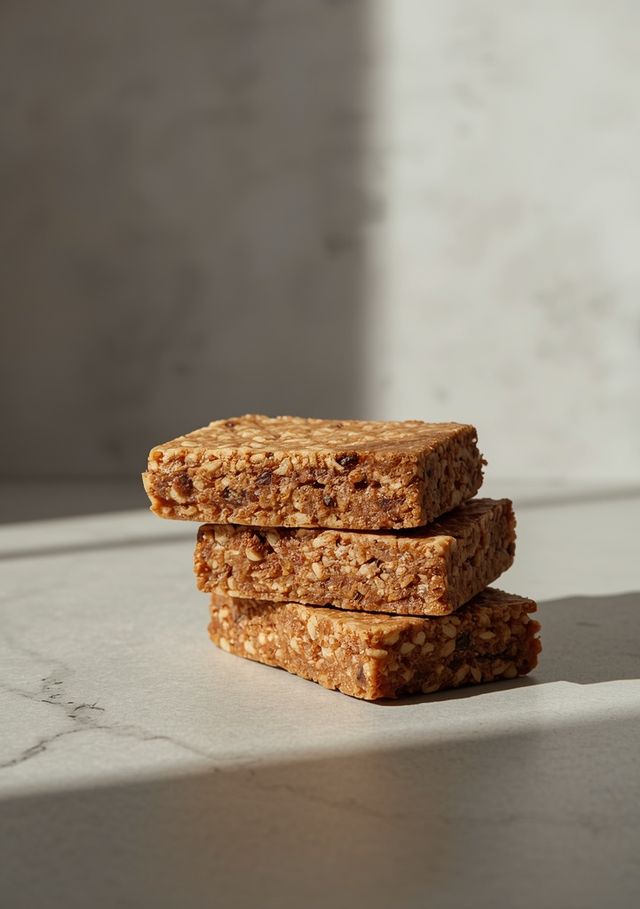
Edible insects have only recently been approved for sale, so they are not yet widely available. They are most commonly sold in online stores, where they can be found in the form of sweet or salty snacks, powder (meats), as well as an ingredient in pasta, batons, chocolate, or granules.
Summary
Edible insects have been gaining popularity for several years due to their high protein content and provision of essential micronutrients and macronutrients. Their production is less environmentally harmful than traditional protein sources, making their introduction into the food market advantageous. However, there are challenges such as gathering more data on their nutritional value and optimising insect breeding. There are also obstacles for consumers in countries where insect consumption is not typical. Currently, the food offerings containing insects are primarily limited to snacks, suggesting that it will take time before they become a regular part of daily diets. It is also worth noting that the introduction of edible insects does not mean that they will replace traditional protein sources (meat, dairy, plant-based products) and their consumption will be based solely on individual consumer decision.
Wojciech Wiśniewski
Diets Premium Medical Expert
Member of the Diets Premium clinical editorial board. Specializes in medical diet therapy, metabolic health, and nutritional planning.
View Profile →