1 min read
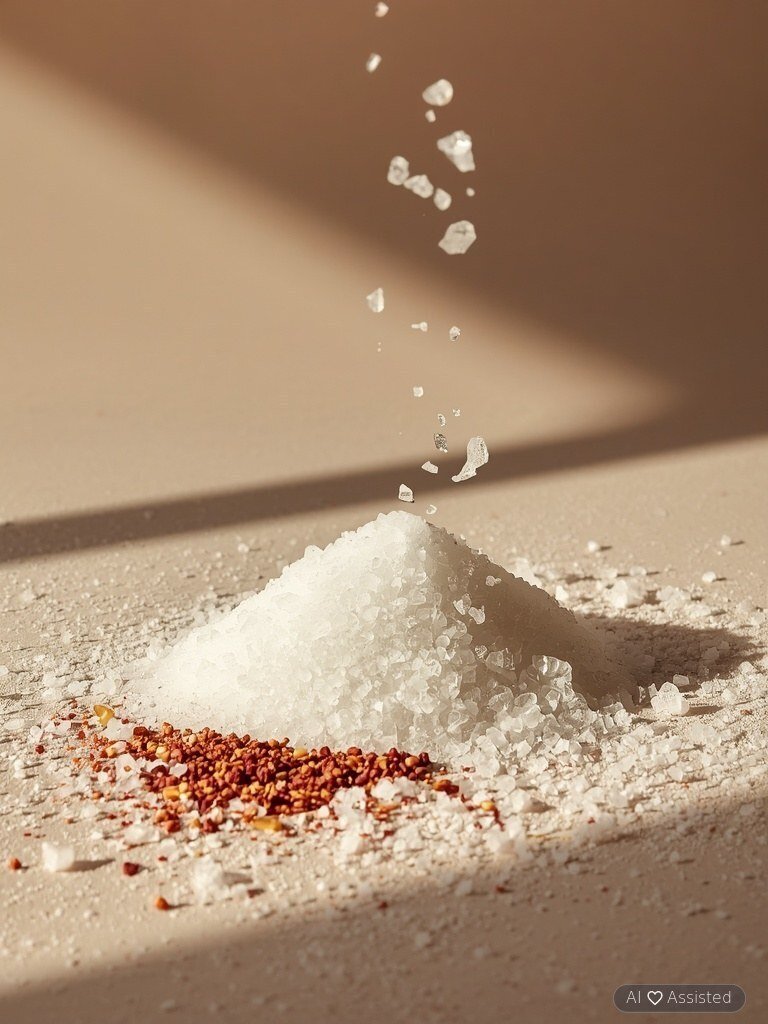
Perilous salty seasonings, the avoidance of which is increasingly challenging

Isabella Taylor
✓
Diets Premium Expert • 23.10.2026
✓
Scientifically reviewed by a clinical dietitian:
This article has been peer-reviewed for adherence to IŻŻ, WHO, and PTGiP clinical nutritional standards.
| Diets Premium Expert Isabella Taylor | min read 1 min | Scientifically reviewed by a clinical dietitian 23.10.2026 |
Smart Voice
•Listen to the article content live
0:00
/
0:00
Key Takeaways
The modern diet is inundated with hidden salt, and spicy seasoning blends, bouillon cubes, and processed sauces are among its most insidious sources. Discover why excessive sodium chloride in commercial seasoning mixes threatens cardiovascular health and how to replace them with natural aromatic herbs without compromising on bold flavor.
Meal Plan
Want to apply these guidelines in your daily diet?
Our smart diet generator creates a tailored meal plan in 3 minutes based on the recommendations in this article.
Health implications of consistently exceeding recommended dietary sodium chloride consumption in contemporary nutrition
The World Health Organization explicitly stipulates that the optimal daily intake of table salt should not exceed five grams. While at first glance it might appear sufficient to merely reduce the amount of salt added during meal preparation—such as using less when boiling potatoes—the reality proves far more intricate. The core issue lies in the fact that sodium chloride is not confined solely to household salt shakers but is ubiquitously present in numerous food products, often consumed unknowingly by the average person. Beyond its role in enhancing culinary flavors, salt also serves as an effective preservative—a property extensively leveraged by the food manufacturing industry. This practice results in ready-made and highly processed food items containing salt levels that frequently surpass daily recommended limits by severalfold. Products ranging from cottage and processed cheeses to various cold cuts, smoked or salted fish, an array of bread types, and even common breakfast cereals based on corn often exhibit elevated sodium concentrations. Persistent exceedance of these guidelines may contribute to the development of hypertension, which in turn constitutes a major risk factor for severe cardiovascular events, including myocardial infarction and cerebrovascular accidents. Consequently, it is of paramount importance to conscientiously monitor salt consumption by meticulously examining food labels and adhering to dietary recommendations designed to safeguard cardiovascular health.
Where Hidden Salt Lurks: Spicy Seasoning Blends, Bouillon Cubes, and Processed Sauces
Most consumers associate high sodium intake strictly with the table salt shaker, yet epidemiological surveys demonstrate that over 75% of dietary sodium derives from processed foods and commercially formulated culinary aids. Among the most potent contributors are all-purpose seasoning blends, pre-packaged barbecue and taco rubs, bouillon cubes, and concentrated broth pastes. In numerous commercial products, refined sodium chloride accounts for 50% to over 80% of the total product weight, acting as an inexpensive bulk filler. Furthermore, in spicy blends, the pungency of chili peppers and black pepper partially desensitizes taste receptors to saltiness, inadvertently prompting individuals to over-season dishes. Liquid condiments represent a parallel hazard: popular items such as soy sauce, barbecue glaze, sriracha, and commercial marinades frequently deliver 40% to 50% of the recommended daily sodium ceiling in a single tablespoon.
Healthy Salt-Free Alternatives: Enhancing Rich Flavors with Herbs and Natural Spices
Eliminating heavily salted commercial seasoning mixes by no means condemns home cooking to bland or unpalatable meals. The secret to culinary excellence on a sodium-restricted regimen lies in mastering herbal synergies, natural spices, acidity, and umami depth. Combining smoked paprika, granulated garlic, toasted onion powder, ground cumin, coriander, ginger, and cayenne creates a complex, multidimensional flavor profile that easily compensates for the absence of added salt. Furthermore, Mediterranean herbs such as rosemary, thyme, oregano, marjoram, and savory release volatile essential oils that intensely stimulate olfactory and gustatory receptors. Incorporating freshly squeezed lemon juice, apple cider vinegar, or aged balsamic vinegar introduces organic acids that biochemically amplify the perception of natural saltiness, while unfortified nutritional yeast flakes provide a profound savory, cheese-like umami resonance without adding any sodium chloride.
Practical Label-Reading Guide: Converting Sodium to Salt and Making Smart Grocery Choices
Successfully managing dietary sodium necessitates the ability to accurately interpret nutritional fact panels on packaged foods. Consumers must keep in mind the fundamental conversion ratio: 1 gram of elemental sodium (Na) equals approximately 2.5 grams of table salt (NaCl). Consequently, a food product declaring an ostensibly modest 800 mg of sodium per 100 grams actually delivers 2 grams of salt—representing 40% of the entire daily upper intake limit recommended for adults. Under European Union nutritional regulations, an item qualifies as 'low in sodium/salt' only when it contains no more than 0.12 g of sodium (0.3 g of salt) per 100 g of product. When grocery shopping, prioritize ingredient lists where salt is not featured among the leading positions, and remain vigilant for other industrial sodium-containing food additives, including monosodium glutamate (E621), sodium benzoate (E211), sodium nitrite (E250), and sodium bicarbonate.
Tags

Isabella Taylor
✓Diets Premium Expert
Diets Premium team expert. Specializes in nutrition plans, strength sports, and training plans.
View Profile →