How to Select Meals in the Summer Season? A Practical Guide to the Summer Diet

David Janitzek
✓
Diets Premium Expert • 23.03.2026
✓
Scientifically reviewed by a clinical dietitian:
This article has been peer-reviewed for adherence to IŻŻ, WHO, and PTGiP clinical nutritional standards.
| Diets Premium Expert David Janitzek | min read 6 min | Scientifically reviewed by a clinical dietitian 23.03.2026 |
Smart Voice
•Listen to the article content live
0:00
/
0:00
Key Takeaways
During the summer heatwaves, appetite generally wanes considerably, and substantial, highly satiating meals are substituted with light snacks and refreshing dishes. The body then instinctively craves foods that do not impose a heavy burden on the digestive system but at the same time effectively hydrate and deliver essential nutrients. Hence, the summer diet should be founded on products available in the particular season and on simple, easily digestible snacks that provide energy and well-being even on the hottest days.
Meal Plan
Want to apply these guidelines in your daily diet?
Our smart diet generator creates a tailored meal plan in 3 minutes based on the recommendations in this article.
PRO Content
PRO
This article is professional premium content (PRO) provided in its entirety.
How your appetite changes in the heat
Certain studies suggest that exposure to high temperatures might impact the regulation of appetite, however, the mechanisms remain not fully elucidated. An example is the observation of soldiers conducting physical exercises under different thermal conditions. They noted a decrease in the level of ghrelin (a hormone that strongly stimulates appetite) and an increase in concentration of YY peptide (responsible for satiety signaling). However, it should be emphasized that these hormonal changes might have been a result not only of high-temperature activity but also of intense physical exertion and the preferential adaptation of other environmental factors to the heat. The authors of the mentioned study underscored that the increase in PYY levels was not unequivocally related to the surrounding temperature (I. Mandic et al. 2019). These results should be treated as an interesting hypothesis that may partially explain observed changes in appetite during heatwaves, but this requires further, more detailed analysis. Similar conclusions emerge from other studies that did not show a significant influence of high temperature on total energy intake, subjective feelings of hunger, or appetite. However, a noticeable change in dietary preferences was observed – in hot days, cool, light meals are chosen more frequently, and hot, fatty dishes are chosen less often. These types of reactions constitute a natural adaptive mechanism of the body that, in high temperatures, aims to limit heat production and maintain thermal comfort (M. Coca et al. 2024). Additionally, increased water intake, changes in physical activity, and daily rhythm might also impact appetite and the size of consumed meals.
Seasonal vegetables and fruits - the foundation of summer menu
Vegetables and fruits play a significant role in the diet, especially in the summer when the availability of fresh, local produce is highest. They are rich in valuable nutrients such as vitamins (e.g. C, A, K, and B vitamins), minerals (like potassium, magnesium, manganese), fibre, and diverse bioactive compounds such as polyphenols, carotenoids, and anthocyanins. Regular intake of vegetables and fruits can contribute to improving immune function, regulating blood pressure, maintaining a healthy body weight, and protecting cells from oxidative stress. Furthermore, it can reduce the risk of heart disease, Type 2 diabetes, certain types of cancer, and support the health of the digestive system and eyes (T. C. Wallace et al. 2019).
Why it is beneficial to utilize seasonal products
The selection of seasonal fruits and vegetables offers numerous health, environmental and economic benefits. These products boast higher nutritional value and greater antioxidant content because they are harvested at full maturity and reach consumers shortly after harvest, which also impacts their more intense flavor, aroma and juiciness. The ability to meet demand during specific times of the year makes them generally more financially accessible to consumers, and their choice supports local producers and the economy, while reducing carbon dioxide emissions associated with transport and long-term food storage (B. Boon, R. Schifferstein 2022).
What fruits and vegetables are best during the summer season?
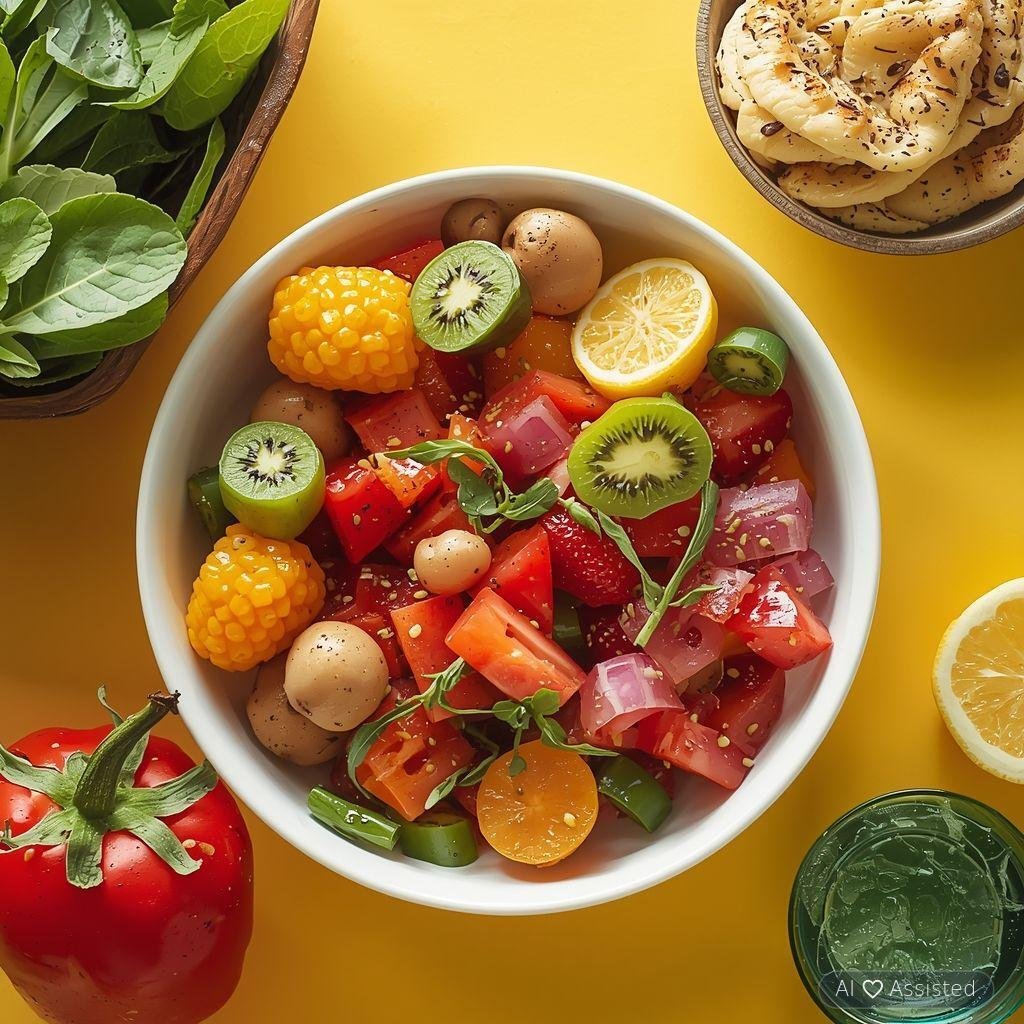
During June, July and August, the following reach the peak of their season: - strawberries, sour cherries, plums, raspberries, gooseberries, blueberries, blackberries, peaches, apricots, nectarines, watermelons, melons, grapes; - tomatoes, cucumbers, zucchini, eggplants, bell peppers, cauliflower, broccoli, asparagus beans, young potatoes, carrots, salads, radishes, onions, dill and parsley.
How to craft summer meals to enhance health and well-being
Recommendations for crafting summer meals remain consistent with current dietary guidelines that consider proper intake of all macronutrients. Each meal should contain a source of complete protein (poultry, fish, eggs, fermented dairy products, legume seeds), unsaturated fatty acids (vegetable oils, nuts, seeds, avocados, seafood fat), and complex carbohydrates (whole grain products, grains, rice, pasta). An essential component is the share of vegetables and fruits that should make up at least half the volume of each meal. This ensures adequate intake of vitamins, minerals, fiber, and bioactive compounds with antioxidative and anti-inflammatory effects. In the summer season, dishes with lower energy density are preferred, which are easy to digest and rich in water and promote maintaining appropriate hydration and relieving the digestive tract. It is recommended to use cooking techniques that minimize the loss of nutrients and reduce the amount of fat, such as steaming, stewing, baking, or serving dishes cold.
Which food items should be avoided in the summer to prevent feeling heavy
During the summer months, the body is particularly susceptible to high-temperature burdens, which is why proper nutrition is of crucial importance. Foods that provide a sense of lightness, improve digestion, and promote general well-being should be chosen. It is advisable to limit: -
- fatty, heavy and fried foods such as cakes, fries, or breaded meats, -
- fast foods and highly processed products, -
- products with a high salt content such as chips, seasoned snacks, or melted cheeses, -
- sauces based on mayonnaise, cream, or fatty cheeses, -
- products made from white bread and sweet pastries, -
- hot and spicy spices and warming products such as chili, pepper, or ginger, -
- alcohol. Reducing these products in daily nutrition helps achieve lightness, facilitates digestion, and better copes with summer heat.
Indispensable role of adequate hydration during heatwaves
During periods of high temperatures, adequate hydration plays a critical role in maintaining health and proper functioning of the body. During heatwaves, the body loses fluids much faster, mainly through intense sweating, leading not only to water loss but also to the loss of electrolytes such as sodium, potassium, and magnesium. Adequate hydration is necessary to maintain efficient thermoregulation, transport of nutrients, and removal of metabolic products, as well as proper functioning of the heart, muscles, and nervous system. Even a small deficit of water can lead to discomforts such as fatigue, decreased concentration, headaches, weakness, or coordination problems. The risk of dehydration is particularly high in children, the elderly, and chronically ill, which can lead to serious complications such as heatstroke (N. A. Shaheen et al. 2018). Nutritional recommendations for the Polish population advise a daily fluid intake of at least 2 liters for adult women and 2.5 liters for men (E. Rychlik et al. 2024). Other recommendations suggest drinking around 30 ml of water per kg of body weight. The need for fluids increases with intense physical activity or prolonged sun exposure, and it is therefore advisable to assess individual needs. The best option is to drink clean water regularly in small amounts throughout the day, before the onset of thirst. Depending on preferences and needs, filtered, natural, or mineral water can be chosen. It is also recommended to consume water-rich foods such as fresh vegetables and fruit, and in cases of increased electrolyte loss, e.g., due to intense physical activity, consider isotonic drinks, which are best prepared at home. Proper hydration is not just a matter of comfort, but primarily a preventive measure against serious health problems that may arise due to dehydration during heatwaves.

mgr David Janitzek
✓Diets Premium Expert
Diets Premium team expert. Specializes in nutrition plans, strength sports, and training plans.
View Profile →